
Dead & Company: The Ultimate Guide to the Band, Members, Tours & Music
Introduction
When the Grateful Dead performed their Fare Thee Well shows in the summer of 2015, many fans believed they were witnessing the final chapter of one of the most influential bands in American music history. After more than five decades of psychedelic rock, improvisational jams, and a devoted global fanbase, it seemed like the journey had finally come to an end.
But the music had other plans.
Later that same year, Dead & Company was formed. The band brought together several original members of the Grateful Dead with a new generation of musicians, creating a powerful continuation of a legendary musical tradition.
Dead & Company is not simply a tribute band or a nostalgia act. Instead, it is a living extension of the Grateful Dead’s musical universe. By blending the experience of founding members with the fresh energy of guitarist John Mayer, the band managed to introduce the music to an entirely new generation of listeners.
Fans who once followed the Grateful Dead across the country in the 1970s suddenly found themselves standing next to younger audiences discovering these songs for the very first time. The result was a powerful revival of one of the most iconic song catalogs in rock history.
For a deeper look at how everything began, read our guide on how Dead & Company was formed.
The Origins of Dead & Company
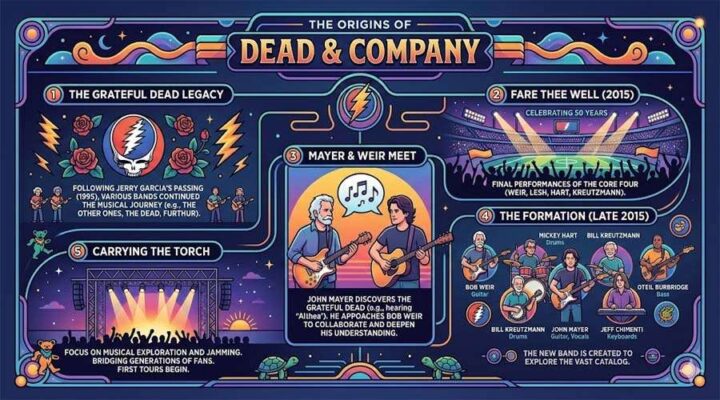
The Legacy of the Grateful Dead
To understand Dead & Company, you first need to understand the impact of the Grateful Dead.
Formed in San Francisco in 1965, the Grateful Dead became one of the most influential bands in American music. Their sound blended rock, folk, blues, country, bluegrass, and psychedelic experimentation. The band also pioneered the idea of extended improvisational live performances that later defined the jam band genre.
At the center of the band was Jerry Garcia, whose expressive guitar playing and soulful voice shaped the group’s musical identity. When Garcia passed away in 1995, the Grateful Dead officially disbanded.
However, the music never truly stopped. Over the following years, the surviving members performed in several projects including The Other Ones, The Dead, and Furthur. These bands continued to play Grateful Dead songs, but none fully captured the scale and energy of the original group.
How the Idea for Dead & Company Began
The story of Dead & Company started in an unexpected way.
In 2011, guitarist John Mayer was listening to music on Pandora when the Grateful Dead song “Althea” played. Mayer was immediately fascinated by the song’s groove and the unique guitar phrasing.
Curious to learn more, he began exploring the entire Grateful Dead catalog. Over time, he became deeply immersed in the music and studied Jerry Garcia’s playing style in great detail.
In early 2015, Mayer invited Bob Weir to perform with him on The Late Late Show. During the appearance, the two musicians played “Althea” and “Truckin’” together. The chemistry between them was clear from the start.
Behind the scenes, discussions began about forming a new band that could continue performing the Grateful Dead songbook.
Formation of the Band in 2015
After the Fare Thee Well reunion concerts in July 2015, Bob Weir, Mickey Hart, and Bill Kreutzmann decided they still wanted to keep playing together.
They officially teamed up with John Mayer and began building a new lineup.
The band added bassist Oteil Burbridge and keyboardist Jeff Chimenti to complete the group. The six musicians formed what would soon become known as Dead & Company.
Their first concert took place on October 29, 2015 in Albany, New York. Soon after, the band performed several shows at Madison Square Garden, which confirmed that this new project had captured the spirit of the Grateful Dead while developing its own musical identity.
You can read the full story in our article about the history of Dead & Company.
Dead & Company Band Members
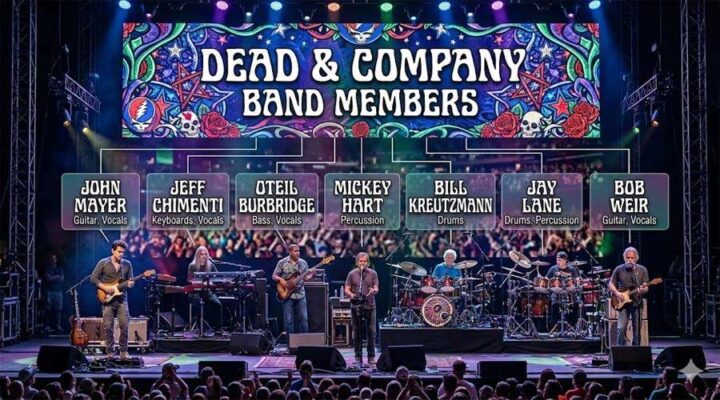
One of the most fascinating aspects of Dead & Company is the balance between veteran musicians and newer talent.
Bob Weir
Bob Weir is a founding member of the Grateful Dead and serves as the rhythm guitarist and one of the lead vocalists in Dead & Company. His guitar style is known for complex chord structures and unusual rhythmic patterns that give the band’s music its distinctive texture.
Weir also sings many of the songs originally performed by Jerry Garcia, bringing a deeper and more reflective tone to the lyrics.
John Mayer
John Mayer joined the band as lead guitarist and vocalist. While some fans were initially skeptical of his involvement, Mayer quickly earned respect for his dedication to the music.
Rather than copying Jerry Garcia’s playing style, Mayer developed his own interpretation while still honoring the spirit of the original songs. His blues background and technical skill brought new energy to the band’s live performances.
Mickey Hart
Mickey Hart is one half of the famous Rhythm Devils percussion duo. His drum setup often includes a wide range of instruments such as gongs, electronic pads, and world percussion instruments.
Hart helps create the psychedelic rhythmic landscapes that have long been associated with Grateful Dead style improvisation.
Bill Kreutzmann
Bill Kreutzmann is the other half of the Rhythm Devils. His drumming style is heavily influenced by jazz and swing, allowing the band’s music to flow naturally during long improvisational sections.
During later tours, drummer Jay Lane occasionally filled in when Kreutzmann faced health issues.
Oteil Burbridge
Oteil Burbridge handles bass duties for the band. Known for his work with the Allman Brothers Band, Burbridge brings a melodic and groove oriented approach to the bass.
His positive stage presence and occasional lead vocals quickly made him a fan favorite among Deadheads.
Jeff Chimenti
Jeff Chimenti plays keyboards and has been part of Bob Weir’s musical projects for decades. His work on piano, organ, and synthesizers adds depth and atmosphere to the band’s sound.
Chimenti’s improvisational chemistry with John Mayer has become one of the defining elements of Dead & Company performances.
For a more detailed breakdown, check our guide to Dead & Company band members.
Dead & Company Music and Style
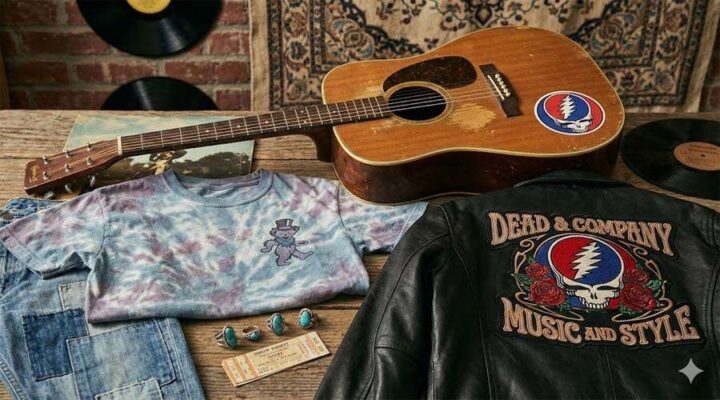
Musical Influences
Dead & Company draws from a wide range of American musical traditions including:
Rock and roll
Blues
Folk and Americana
Psychedelic rock
Jazz improvisation
This diverse mix of influences allows the band to reinterpret classic songs in unique ways during live shows.
Signature Sound of Dead & Company
The defining feature of Dead & Company is improvisation.
Instead of playing songs exactly the same way every night, the band treats each performance as a new musical exploration. A single song can evolve into a 15 or 20 minute jam, with each musician contributing ideas in real time.
John Mayer and Jeff Chimenti often trade solos while Bob Weir guides the harmonic direction. Meanwhile the rhythm section keeps the groove steady even during the most experimental moments.
Songs Often Played in Concert
Dead & Company has performed over one hundred songs in their live repertoire. However, several tracks appear regularly in setlists.
Truckin’
Althea
Ripple
Scarlet Begonias
Fire on the Mountain
You can explore a full list in our guide to the best Dead & Company songs.
Dead & Company Tours and Live Shows
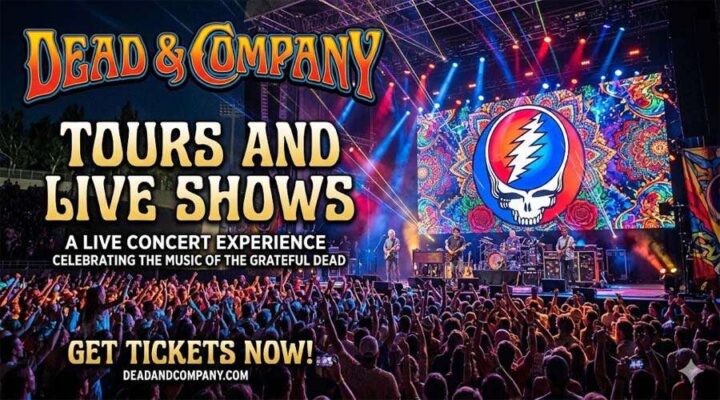
Dead & Company is primarily a touring band. Like the Grateful Dead before them, live concerts are at the heart of their identity.
Fans often travel from city to city following the band on tour, creating a vibrant community around the shows.
Major tours between 2015 and 2019 helped establish Dead & Company as one of the most successful touring acts in rock music. The band regularly performed at iconic venues including Wrigley Field, Fenway Park, and Boulder’s Folsom Field.
After a break during the pandemic, the group returned with several emotional tours in 2021 and 2022 that featured some of their most powerful performances.
You can explore the full timeline in our article about Dead & Company tour history.
The Deadhead Fan Community
Few bands in music history have a fanbase as dedicated as the Deadheads.
Originally associated with the Grateful Dead, Deadheads are known for following tours across the country and building a unique culture centered around music, community, and artistic expression.
Before many shows, fans gather in the parking lot area known as Shakedown Street. Here they sell handmade art, clothing, food, and memorabilia while celebrating the spirit of the music.
Dead & Company successfully continued this tradition, bringing together both longtime fans and younger audiences discovering the culture for the first time.
Dead & Company Final Tour
In late 2022 the band announced that their Summer 2023 tour would be their final large scale tour.
The announcement created huge excitement across the fan community. Tickets quickly sold out as fans wanted one last chance to experience the band live.
The tour included memorable performances at venues such as Wrigley Field, Folsom Field, and The Gorge Amphitheatre. The journey concluded with an emotional three night run at Oracle Park in San Francisco.
Fans from around the world attended the shows, celebrating the band’s music and the incredible legacy they created.
You can read more about it in our guide to the Dead & Company final tour.
Dead & Company vs Grateful Dead
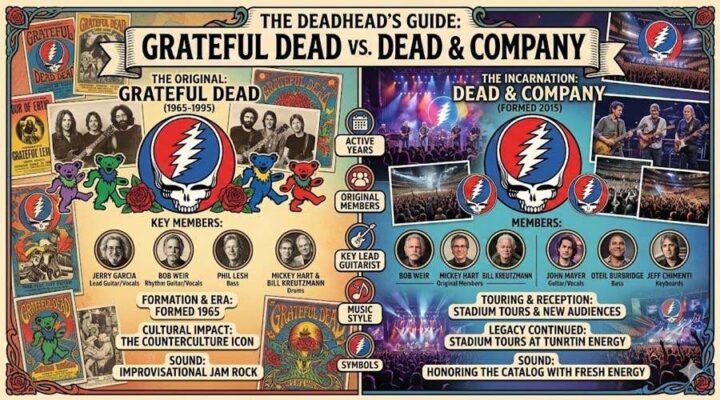
Because Dead & Company performs many songs from the Grateful Dead catalog, comparisons between the two bands are inevitable.
Both groups share the same musical philosophy of improvisation and spontaneous live performance. They also feature multiple original Grateful Dead members.
However, Dead & Company developed its own sound. Their performances are often slightly slower and more groove focused, while John Mayer’s blues influenced guitar style creates a different tonal character compared to Jerry Garcia’s approach.
The result is a band that honors the past while still offering a fresh interpretation of classic music.
For a deeper comparison, read our article Dead & Company vs Grateful Dead.
The Legacy of Dead & Company
Dead & Company played an important role in keeping the Grateful Dead songbook alive in the modern era.
The band introduced the music to younger listeners while giving longtime fans a chance to experience these songs again in a live setting.
Their success also helped spark renewed interest in jam band culture. Many newer artists in the scene continue exploring improvisational rock in the tradition that the Grateful Dead helped create decades ago.
Even after the end of large scale touring, the music and influence of Dead & Company will likely continue through special events, collaborations, and new projects.
Dead & Company Merchandise and Culture
Music has always been closely connected to visual art within the Grateful Dead universe.
One of the most recognizable aspects of this culture is band merchandise. Fans proudly collect posters, vinyl releases, and especially graphic band shirts.
T shirts featuring iconic imagery such as the Steal Your Face skull, dancing bears, and psychedelic roses have become symbols of the Deadhead community.
For many fans, wearing a Dead & Company graphic t shirt is more than just fashion. It represents a shared love of the music and a connection to a long tradition of live concerts and creative expression.
Vintage style band shirts remain one of the most popular ways fans celebrate the culture and carry a piece of the concert experience with them long after the music ends.
Conclusion
Dead & Company represents a remarkable continuation of one of the most important musical legacies in rock history.
By bringing together founding members of the Grateful Dead with musicians like John Mayer, Oteil Burbridge, and Jeff Chimenti, the band created a powerful bridge between generations of fans.
Their tours revived the spirit of the original band while introducing the music to millions of new listeners. Even though their large scale touring era has come to an end, the influence of Dead & Company will continue through the songs, the community, and the culture that surrounds them.
The long strange trip may change form over time, but the music itself will never truly stop.