
Grateful Dead History: How the Legendary Band Was Formed
The history of the Grateful Dead began in the vibrant and experimental music scene of San Francisco during the mid-1960s. What started as a group of musicians exploring folk, blues, and rock music eventually evolved into one of the most influential bands in American music history.
The band became widely known for its improvisational live performances, unique musical style, and devoted fanbase known as Deadheads. Over time, the Grateful Dead became more than just a band – they represented a cultural movement that blended music, art, and community.
If you want to explore their music, culture, and legacy in more depth, you can read our complete guide to the Grateful Dead.
Understanding how the band formed helps explain why their music and fan culture remain influential decades later.
The Origins of the Grateful Dead
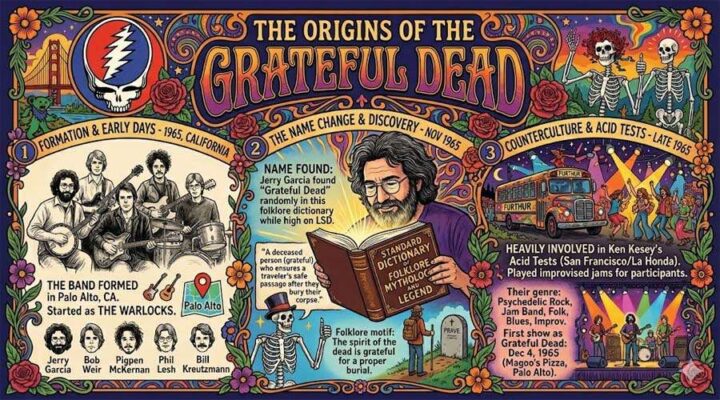
The San Francisco Music Scene That Shaped the Grateful Dead
To understand the origins of the Grateful Dead, it is important to look at the environment where the band formed.
During the early 1960s, San Francisco was quickly becoming a center for artistic experimentation and counterculture movements. Musicians, writers, and artists were gathering in neighborhoods like Haight-Ashbury, creating a vibrant community that encouraged creative expression.
The city soon became one of the most important locations for the development of psychedelic rock. Bands were encouraged to experiment with sound, explore improvisation, and challenge traditional song structures.
During this period, San Francisco was producing several influential psychedelic bands. However, the Grateful Dead quickly stood out because of their improvisational performances and their unique relationship with fans.
This environment helped shape the creative freedom that later defined the Grateful Dead’s music.
Early Musical Influences Behind the Grateful Dead Sound
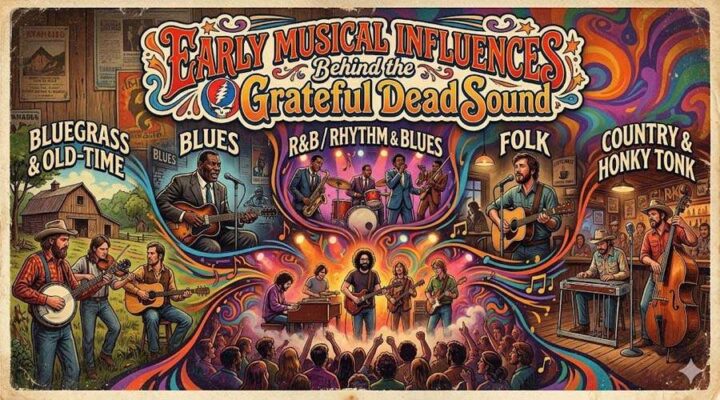
Before forming the band, several members of the Grateful Dead were involved in the folk and bluegrass music scenes.
Jerry Garcia, who later became the band’s lead guitarist, spent years performing traditional American folk music and bluegrass. His early influences included country musicians, blues artists, and folk songwriters.
Bob Weir shared Garcia’s interest in exploring new musical ideas and expanding the boundaries of rock music.
Ron “Pigpen” McKernan was heavily influenced by blues and rhythm-and-blues, which added a soulful element to the band’s early sound.
Phil Lesh had a very different background. He studied classical music and composition before joining the group, and his melodic approach to bass playing helped create a sound that was unlike any other rock band at the time.
These diverse influences helped shape the distinctive style that later defined the Grateful Dead.
Mother McCree’s Uptown Jug Champions
Before becoming the Grateful Dead, several future band members performed together in a group called Mother McCree’s Uptown Jug Champions.
The jug band focused on acoustic instruments and traditional folk songs. Their performances were energetic and playful, reflecting the folk revival movement that was popular during the early 1960s.
However, the band soon began exploring new musical directions. As rock music gained popularity, they gradually transitioned from acoustic jug music to electric instruments and more experimental sounds.
This transformation laid the foundation for the musical direction that would eventually lead to the formation of the Grateful Dead.
The Formation of the Grateful Dead
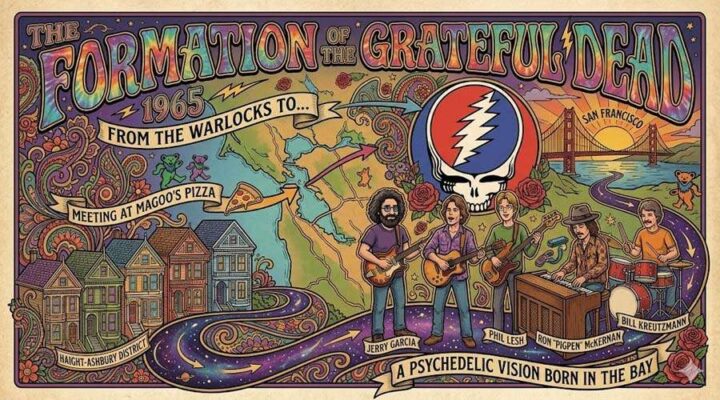
By 1965, the core members of the band had come together and began performing regularly.
The original lineup included:
-
Jerry Garcia — lead guitar and vocals
-
Bob Weir — rhythm guitar and vocals
-
Phil Lesh — bass guitar
-
Bill Kreutzmann — drums
-
Ron “Pigpen” McKernan — organ, harmonica, and vocals
Each musician contributed a unique influence, which allowed the band to blend multiple genres including rock, folk, blues, and psychedelic music.
Unlike many bands that focused on short commercial songs, the Grateful Dead embraced improvisation and collaborative musical exploration.
You can learn more about the musicians and their roles in our guide to Grateful Dead band members.
The Acid Tests and the Birth of Psychedelic Rock
One of the most important moments in the early history of the band occurred during the famous Acid Tests organized by author Ken Kesey and the Merry Pranksters.
These experimental events combined music, art, psychedelic light shows, and communal experiences.
The Grateful Dead often performed at these gatherings, where they experimented with extended jams and unpredictable musical structures.
These performances helped the band develop their improvisational style and connect with the emerging psychedelic culture of the 1960s.
The experience also shaped the musical identity that would later define many of their live concerts.
Early Performances and Growing Popularity
After gaining attention from the Acid Tests, the band began performing regularly throughout California.
Their concerts quickly became known for their length and unpredictability. Instead of simply playing songs from start to finish, the band would often extend songs into long improvisational jams.
Each performance was unique, which made their concerts exciting for audiences.
Fans began returning to multiple shows because no two performances were ever the same.
Many of the musical ideas developed during these performances later appeared in some of the band’s most famous Grateful Dead songs.
Choosing the Name “Grateful Dead”
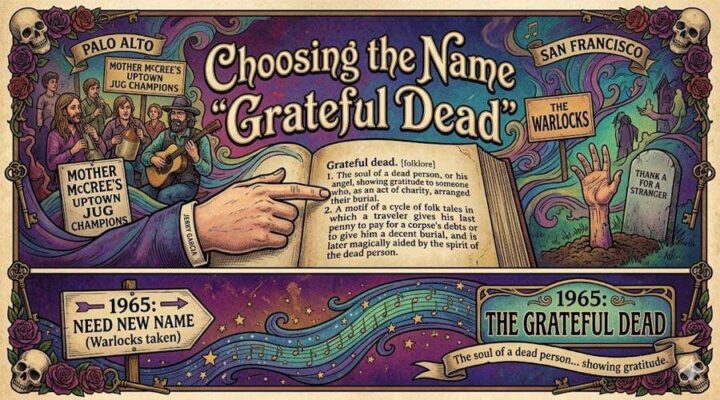
Originally, the band performed under several different names before choosing the one that would become legendary.
According to band history, Jerry Garcia discovered the name while flipping through a dictionary.
His finger landed on the phrase “Grateful Dead.”
The term referred to a folklore theme describing a spirit who rewards someone for giving them a proper burial.
Although the name sounded unusual at first, it soon became one of the most recognizable names in rock music.
The Rise of the Deadhead Community
As the band’s popularity grew, a loyal fanbase began to form.
Fans who traveled from show to show eventually became known as Deadheads.
Unlike typical concertgoers, Deadheads often followed the band across the country, attending dozens or even hundreds of concerts.
This traveling fan community created a culture built around music, shared experiences, and a sense of community.
The relationship between the Grateful Dead and their fans became one of the most unique aspects of the band’s legacy.
The Birth of Grateful Dead Visual Culture
Another major part of the band’s identity was its visual artwork.
Concert posters, album covers, and merchandise often featured psychedelic designs inspired by the artistic movements of the 1960s.
Some of the most recognizable images include:
-
the Steal Your Face skull
-
the Dancing Bears
-
psychedelic concert posters
These designs became symbols of the band’s culture and remain iconic today.
Many of these graphics continue to appear on modern Grateful Dead logos and merchandise.
Today, vintage Grateful Dead shirts featuring these designs are highly collectible among fans and music enthusiasts.
The Lasting Legacy of the Band’s Formation
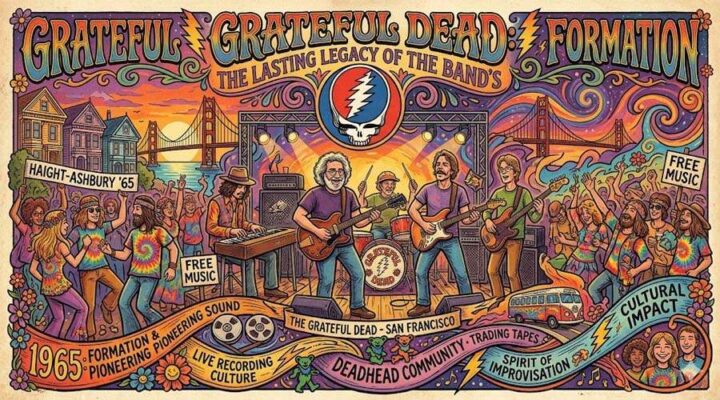
Although the Grateful Dead formed in the 1960s, the ideas developed during their early years had a lasting impact on music.
Their improvisational approach inspired later jam bands and experimental musicians.
More importantly, the band demonstrated that music could create community and shared experiences.
The cultural movement surrounding the Grateful Dead continues to influence music, art, and fan communities around the world.
Conclusion
The history of the Grateful Dead began with a small group of musicians experimenting with folk, blues, and rock music in the creative environment of 1960s San Francisco.
Through experimentation, improvisation, and collaboration, the band developed a sound that shaped the future of psychedelic rock.
From their early jug band roots to their legendary concerts, the Grateful Dead created a musical legacy that continues to influence artists and fans today.
FAQs About the Formation of the Grateful Dead
When was the Grateful Dead formed?
The Grateful Dead formed in 1965 in the San Francisco Bay Area.
Who were the original members of the Grateful Dead?
The original members were Jerry Garcia, Bob Weir, Phil Lesh, Bill Kreutzmann, and Ron “Pigpen” McKernan.
Why is the band called Grateful Dead?
The name came from a dictionary reference to a folklore story about a spirit rewarding someone who arranged their burial.
Where did the Grateful Dead originate?
The band originated in the San Francisco Bay Area, which became the center of psychedelic rock during the 1960s.
What genre of music did the Grateful Dead play?
The Grateful Dead blended rock, folk, blues, country, and psychedelic music.
Why were Grateful Dead concerts unique?
Their concerts featured long improvisational jams, meaning every performance was different.