
Dead & Company Band Members: Complete Lineup and Musicians
Dead & Company Band Members
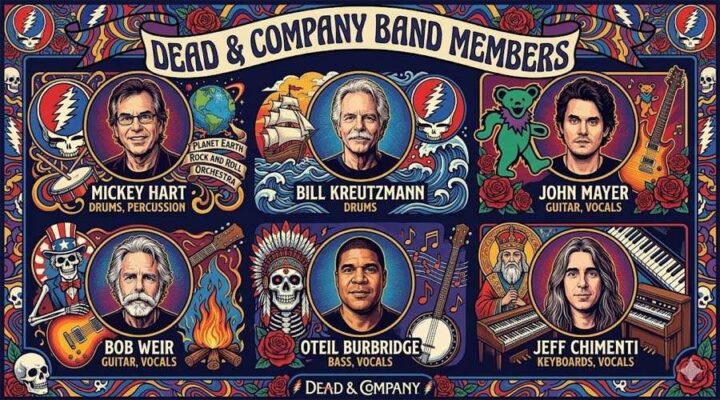
The legacy of Grateful Dead is legendary in the world of American music. For decades, the band built an entire subculture around improvisation, community, and the radical idea that every live performance should feel unique.
Their concerts were more than just shows. They were gatherings for a passionate community of fans known as Deadheads.
When the band played its historic Fare Thee Well concerts in 2015, celebrating fifty years of music, many fans believed the journey had finally reached its conclusion. The final chords rang out, the stadium lights dimmed, and it seemed like the book had closed on one of the most influential bands in rock history.
But the long, strange trip rarely moves in a straight line.
Soon after those farewell shows, a new band emerged to carry the music forward into a new era: Dead & Company.
The group blends surviving members of the Grateful Dead with a new generation of highly skilled musicians. Together, they have built a bridge between the original jam band culture of the 1960s and modern audiences discovering the music today.
If you want to explore how this band first came together, you can read our complete Dead & Company guide, where we break down the band’s full history, tours, and long-term legacy.
In this article, we’ll take a closer look at the Dead & Company band members, exploring who they are, what they bring to the stage, and how their musical chemistry keeps the spirit of the Grateful Dead alive.
Bob Weir – Rhythm Guitar and Vocals
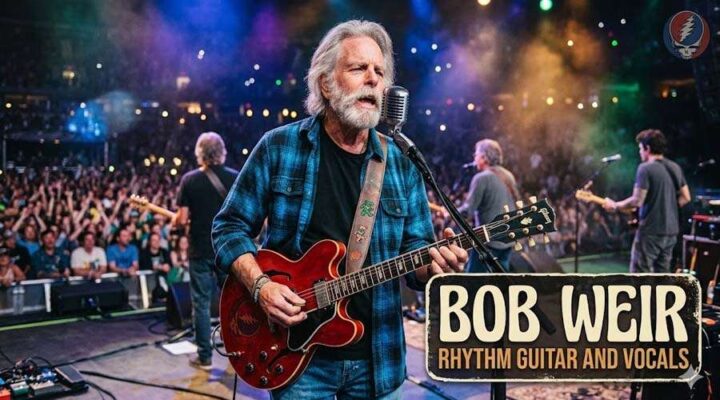
To understand Dead & Company, you have to begin with Bob Weir.
As a founding member of the Grateful Dead, Weir represents the direct connection between the original psychedelic era of the band and its modern incarnation. His presence ensures that the musical philosophy and improvisational spirit of the original group remain at the heart of Dead & Company.
More than five decades after forming the Grateful Dead alongside Jerry Garcia, Phil Lesh, Bill Kreutzmann, and Ron “Pigpen” McKernan, Weir continues performing with remarkable energy and dedication.
A Unique Rhythm Guitar Style
Bob Weir is widely considered one of the most innovative rhythm guitarists in rock music.
Instead of simply strumming chords, he plays unusual chord voicings across the neck that create space for improvisation. His guitar parts often move around the beat rather than directly on it, producing a rhythmic texture that blends jazz, folk, and blues influences.
This distinctive style creates the musical foundation that allows the rest of the band to explore long improvisational jams.
Carrying the Vocal Legacy
Weir is also the primary vocalist for many classic songs from the Grateful Dead catalog.
Over the years his voice has evolved into a deeper and more weathered tone, giving songs like Sugar Magnolia, Truckin’, and Stella Blue a different emotional character than the original recordings.
For longtime fans, hearing Weir sing these songs live creates a powerful link between the past and present of the band.
John Mayer – Lead Guitar and Vocals
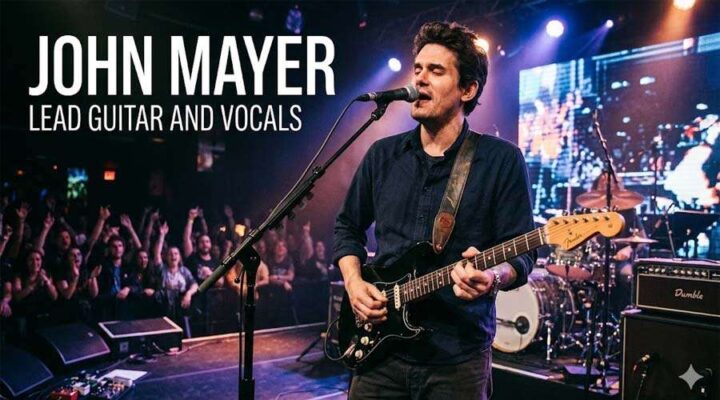
When John Mayer was first announced as the lead guitarist for Dead & Company, many fans were surprised.
At the time Mayer was best known for mainstream pop hits and blues-rock albums. The Grateful Dead catalog, however, is famous for its complex improvisational style and extensive live performances.
But Mayer quickly proved that he was more than capable of handling the role.
A Blues Foundation That Fits the Dead
Although Mayer gained fame as a pop artist, his musical roots are deeply connected to blues guitar.
Inspired by players such as Stevie Ray Vaughan and B.B. King, Mayer developed a style built on expressive phrasing and improvisation. Those qualities translate perfectly into the Grateful Dead songbook.
Instead of attempting to imitate Jerry Garcia’s exact tone or phrasing, Mayer interprets the songs through his own voice while maintaining deep respect for the original music.
Studying the Grateful Dead Catalog
Before performing with the band, Mayer spent years studying live recordings from different eras of the Grateful Dead.
This dedication allowed him to understand the improvisational language that defines the music. Today his guitar playing brings new energy to songs like Althea, Scarlet Begonias, and Eyes of the World.
If you want to learn more about how this collaboration started, check out our article on how Dead & Company was formed, where we explore the unexpected partnership between Mayer and Bob Weir.
The Rhythm Section: The Heartbeat of the Band
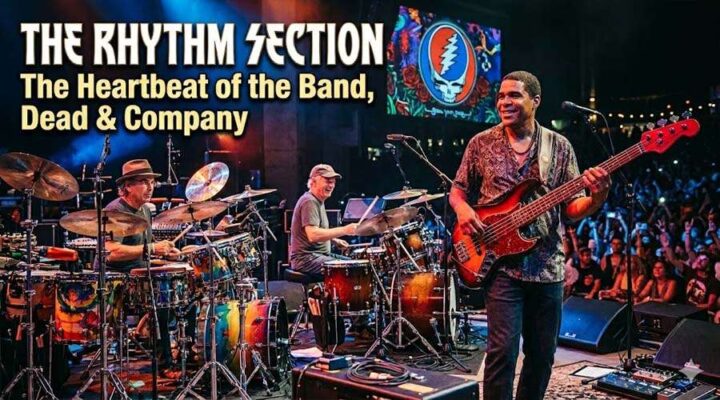
The rhythm section of Dead & Company blends original Grateful Dead members with experienced musicians from the broader jam band scene.
Their combined chemistry creates the groove that drives the band’s improvisational performances.
Mickey Hart – Drums and Percussion
Mickey Hart joined the Grateful Dead in 1967 and helped expand the band’s rhythmic possibilities.
He is known not only as a drummer but also as a percussion innovator who experiments with instruments and rhythms from cultures around the world.
During Dead & Company shows, Hart’s creativity shines during the famous Drums and Space segment, where the band explores experimental percussion and ambient soundscapes.
Bill Kreutzmann and Jay Lane – Drums
Bill Kreutzmann was the Grateful Dead’s original drummer and played a major role in shaping the band’s early sound.
His playing style combines steady rock rhythms with a loose, swinging feel that supports extended improvisation.
In 2023, Kreutzmann stepped away from touring with Dead & Company for health reasons. Veteran drummer Jay Lane stepped in to continue the role.
Lane already had strong connections to the Grateful Dead community through his work with Bob Weir’s band RatDog and the rock group Primus, making the transition seamless.
Oteil Burbridge – Bass and Vocals
Replacing longtime Grateful Dead bassist Phil Lesh was a challenging task, but Oteil Burbridge proved to be an excellent choice.
Before joining Dead & Company, Burbridge gained recognition as a member of the Allman Brothers Band and several other jam-oriented projects.
A Groove-Driven Bass Style
Burbridge brings a blend of funk, soul, and gospel influences to the band.
While Phil Lesh often played melodic counterpoint lines, Oteil’s bass style locks more tightly with the drums, creating a powerful groove that supports the guitar improvisations.
Adding Vocals to the Lineup
Burbridge also contributes lead vocals during live shows.
Songs like Fire on the Mountain benefit from his soulful voice, giving the band a wider vocal range.
Jeff Chimenti – Keyboards
Keyboardist Jeff Chimenti may be one of the most underrated members of the lineup.
He has performed alongside Bob Weir for over two decades in several projects, including RatDog and Furthur. This long history gives him deep familiarity with the Grateful Dead catalog.
The Musical Glue of the Band
On stage, Chimenti connects the rhythm section with the lead instruments.
Whether playing Hammond organ, piano, or synthesizers, he provides the harmonic framework that allows the guitars to explore extended jams.
His improvisational keyboard solos have become a highlight of many Dead & Company performances.
How the Band Works Together on Stage
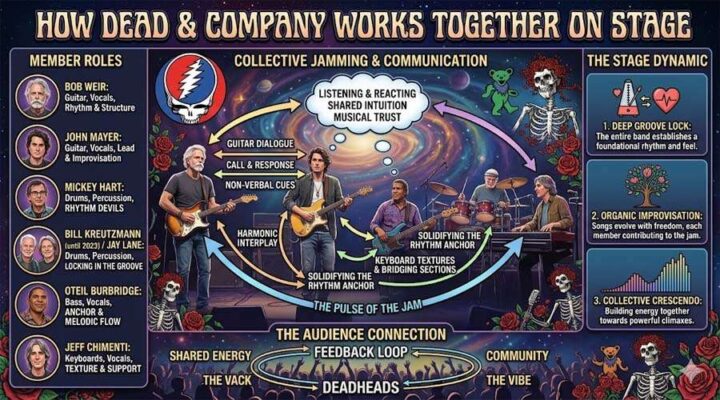
Understanding the individual members is important, but the real magic of Dead & Company happens when they perform together live.
The Art of Improvisation
Dead & Company operates as a classic jam band, meaning songs are rarely played exactly the same way twice.
Instead of following a strict structure, the musicians listen closely to one another and allow the music to evolve naturally during the performance.
A song like Playing in the Band might turn into a ten-minute groove one night and expand into a twenty-minute psychedelic jam the next.
This unpredictability is one reason fans continue to follow the band from show to show.
To explore how these concerts evolved over the years, check out our detailed guide to Dead & Company tour history.
Final Thoughts
The lineup of Dead & Company represents a powerful convergence of musical generations.
On one side, you have original members of the Grateful Dead carrying the history of the band forward. On the other side, a new generation of musicians brings fresh energy and interpretation to the music.
Together, Bob Weir, John Mayer, Mickey Hart, Jay Lane, Oteil Burbridge, and Jeff Chimenti have created something that goes beyond nostalgia.
They have shown that the music of the Grateful Dead is not frozen in the past.
It is still evolving.
And for fans around the world, that means the journey continues.