
Grateful Dead Band Members: Who Was in the Lineup?
If you have ever found yourself completely mesmerized, lost in a sprawling twenty-five-minute live version of “Dark Star” from a crackling bootleg cassette, you already know the feeling. Maybe you have also felt the sudden urge to throw on a vintage tie-dye Grateful Dead band shirt, roll down the windows, and hit the open highway.
The Grateful Dead were never just another rock band. They became a traveling psychedelic circus, a cultural movement, and one of the most influential pioneers of the modern jam band scene.
For more than thirty years, the group ignored the traditional rules of the music industry. Instead of chasing radio hits, they built a massive fan community known as Deadheads through relentless touring and improvisational live performances where no two shows were ever the same.
If you want to understand the band completely, start with our Grateful Dead pillar guide, which explores the band’s history, music, culture, and legacy.
Overview of the Grateful Dead Band Members
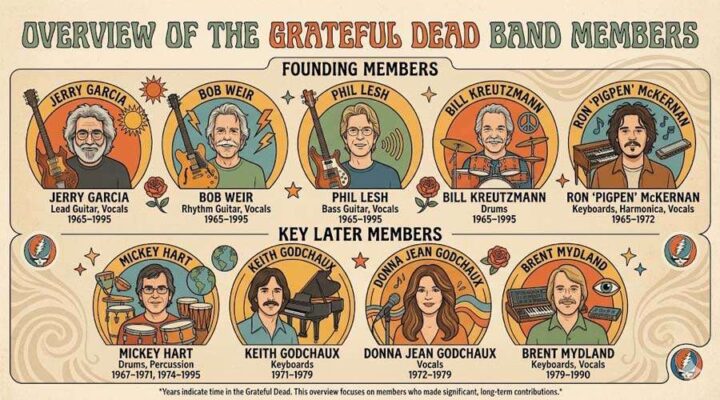
Over the course of their thirty-year career, the Grateful Dead featured several musicians. While the lineup evolved many times, a core group formed the foundation of the band’s identity.
The band included:
-
Jerry Garcia (lead guitar)
-
Bob Weir (rhythm guitar)
-
Phil Lesh (bass)
-
Bill Kreutzmann (drums)
-
Mickey Hart (drums)
Across different eras, several keyboardists also played important roles in shaping the band’s sound.
Together, these musicians created a musical style that blended:
-
rock
-
blues
-
folk
-
jazz
-
psychedelic improvisation
Their chemistry allowed the band to turn even simple songs into long exploratory live jams.
If you’re interested in their music catalog, check out our guide to the most famous Grateful Dead songs.
The Core Members of the Grateful Dead
Although the lineup changed several times throughout the band’s history, three musicians remained central to the Grateful Dead sound:
-
Jerry Garcia
-
Bob Weir
-
Phil Lesh
Each of them brought a completely different musical background, which helped create the band’s unique improvisational style.
Jerry Garcia: The Heart and Soul of the Band
Jerry Garcia was widely considered the spiritual center of the Grateful Dead.
With his signature beard, glasses, and relaxed stage presence, Garcia became one of the most recognizable figures in the entire jam band world.
As the band’s lead guitarist and primary vocalist, Garcia created a style that blended:
-
bluegrass
-
blues
-
folk
-
jazz
Before the psychedelic San Francisco scene exploded in the 1960s, Garcia was deeply involved in folk and bluegrass music. He originally played banjo and performed acoustic music before transitioning to electric guitar.
This background gave his guitar solos a melodic and conversational feel that separated him from many other rock guitarists of the era.
Garcia also formed one of the most famous songwriting partnerships in rock history with lyricist Robert Hunter.
Together they wrote many classic songs, including:
-
Ripple
-
Truckin’
-
Friend of the Devil
-
Touch of Grey
Bob Weir: The Innovative Rhythm Guitarist
Bob Weir joined the band as a teenager after meeting Jerry Garcia at Dana Morgan’s Music Store in Palo Alto.
Instead of playing traditional rhythm guitar, Weir developed a highly unusual style.
Because Garcia played complex lead lines and Phil Lesh used melodic bass lines, Weir filled the musical space with rhythmic textures rather than simple chords.
Inspired by jazz pianists, he used unusual chord voicings and syncopated rhythms that became a defining feature of the Grateful Dead sound.
Weir also sang lead vocals on many classic songs such as:
-
Jack Straw
-
Sugar Magnolia
-
Playing in the Band
-
Mexicali Blues
-
El Paso
Working with lyricist John Perry Barlow, he helped bring strong storytelling and Americana themes into the band’s music.
Phil Lesh: Reinventing the Bass Guitar
Phil Lesh approached the bass guitar very differently than most rock musicians.
Before joining the band, Lesh studied classical composition and played trumpet. When Jerry Garcia invited him to join the group, he had never played bass before.
Because of this background, Lesh treated the bass as a melodic instrument instead of simply following the drums.
His bass lines often moved freely across the music and interacted with Garcia’s guitar improvisations.
Fans often refer to the powerful low-end sound of his playing as the “Phil Zone.”
His bass became especially famous during the band’s legendary Wall of Sound concert system in 1974.
The Rhythm Devils: Two Drummers Driving the Band
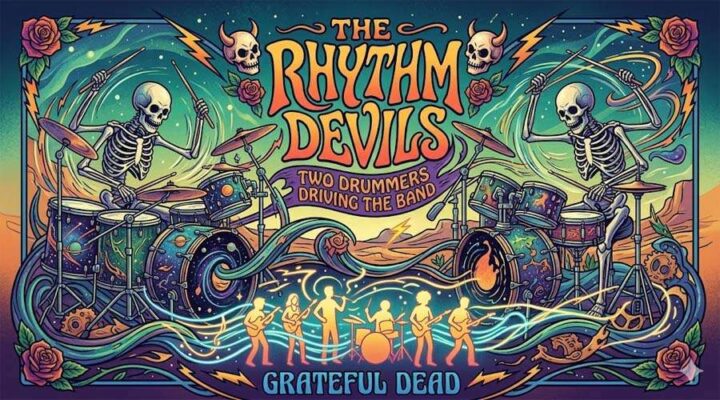
Unlike most rock bands, the Grateful Dead used two drummers at the same time.
This percussion duo became known as the Rhythm Devils and created the driving rhythmic engine behind the band’s improvisational jams.
Bill Kreutzmann
Bill Kreutzmann was the band’s original drummer and one of its most consistent members.
Aside from Jerry Garcia, Kreutzmann performed at nearly every Grateful Dead concert during the band’s thirty-year career.
His jazz-influenced drumming provided the rhythmic foundation that allowed the band’s improvisations to remain cohesive.
Mickey Hart
Mickey Hart joined the band in 1967 and brought a deep interest in world percussion.
While Kreutzmann maintained traditional drum patterns, Hart introduced experimental percussion instruments including:
-
gongs
-
bells
-
global drums
During many concerts the band performed a segment called Drums, where the two drummers performed extended percussion improvisations.
Keyboard Players Throughout the Years
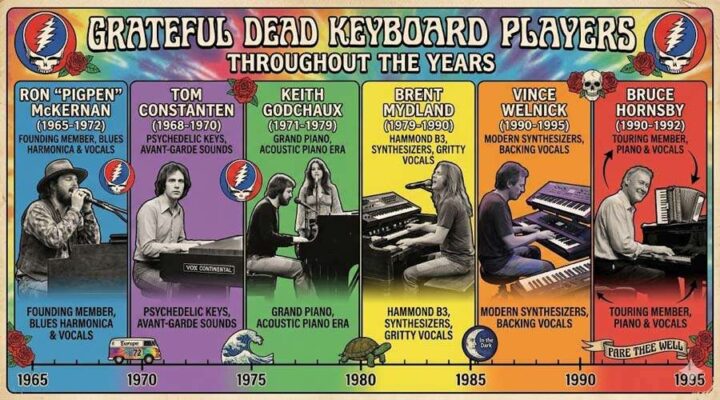
The keyboard position in the Grateful Dead changed multiple times throughout the band’s history. Each keyboardist helped shape a specific musical era.
Ron “Pigpen” McKernan (1965–1972)
Pigpen was one of the original founding members and the band’s early blues frontman.
He played organ, harmonica, and sang lead vocals on many early songs.
Tom Constanten (1968–1970)
Tom Constanten joined during the band’s most experimental psychedelic period and contributed unusual textures to albums like:
-
Anthem of the Sun
-
Aoxomoxoa
Keith Godchaux (1971–1979)
Keith Godchaux brought a jazz-influenced piano style to the band during the early 1970s.
Many fans consider this era the band’s musical peak, particularly during the legendary Europe ’72 tour.
Brent Mydland (1979–1990)
Brent Mydland introduced modern synthesizers and a stronger rock sound during the 1980s.
He also contributed emotional vocals and wrote several songs for the band.
Vince Welnick & Bruce Hornsby (1990–1995)
After Mydland’s death, Vince Welnick became the band’s primary keyboardist.
At the same time, pianist Bruce Hornsby frequently toured with the band as a guest performer.
Deadhead Culture and Grateful Dead Merch
The Grateful Dead created more than just music. They built an entire fan culture.
Their fans, known as Deadheads, followed the band from city to city.
Parking lots outside concerts became vibrant marketplaces where fans traded live recordings and sold handmade merchandise. This scene became known as Shakedown Street.
Much of the band’s artwork became iconic, including:
-
Dancing Bears
-
Steal Your Face skull
Today, vintage items like a Grateful Dead band shirt are highly collectible pieces of rock culture.
If you’re interested in the band’s visual identity, read our guide about Grateful Dead logos and artwork.
The Lasting Legacy of the Grateful Dead
The Grateful Dead officially ended in 1995 following the death of Jerry Garcia.
However, the music and culture never disappeared.
Several surviving members continued performing in projects such as:
-
Dead & Company
-
Phil Lesh & Friends
-
Furthur
These projects continue introducing new generations of fans to the band’s improvisational spirit.
Together, the Grateful Dead band members created one of the most influential musical legacies in American rock history.
FAQs About Grateful Dead Band Members
Who were the original members of the Grateful Dead?
The founding lineup included Jerry Garcia, Bob Weir, Phil Lesh, Bill Kreutzmann, and Ron “Pigpen” McKernan.
Why did the Grateful Dead have two drummers?
The band used two drummers to create complex polyrhythms that powered their long improvisational jams.
How many keyboard players were in the Grateful Dead?
Six main keyboardists played with the band: Pigpen, Tom Constanten, Keith Godchaux, Brent Mydland, Vince Welnick, and touring guest Bruce Hornsby.