
Grateful Dead: History, Band Members, Songs, and Cultural Legacy
If you were to trace the roots of American counterculture, psychedelic rock, and the phenomenon of deeply devoted fan communities, all roads would eventually lead to the Grateful Dead.
More than just a rock band, the Grateful Dead became a cultural movement. Their music blended genres in ways few bands had attempted before, mixing rock, folk, blues, bluegrass, country, and jazz improvisation into something entirely new. What emerged was not simply a band with hit songs, but a constantly evolving musical experience.
For over thirty years, the Grateful Dead shaped the landscape of live music. Their concerts were legendary for their improvisation, unpredictability, and communal spirit. Fans did not simply attend shows – they followed the band across cities and states, forming one of the most loyal fan communities in music history.
This guide explores everything about the Grateful Dead, including:
-
The origins of the band
-
Key band members
-
Their unique musical style
-
Their most iconic songs
-
The legendary concert culture
-
The meaning behind their famous logos
-
The devoted Deadhead fan community
-
The band’s lasting influence on music and culture
The Origins of the Grateful Dead
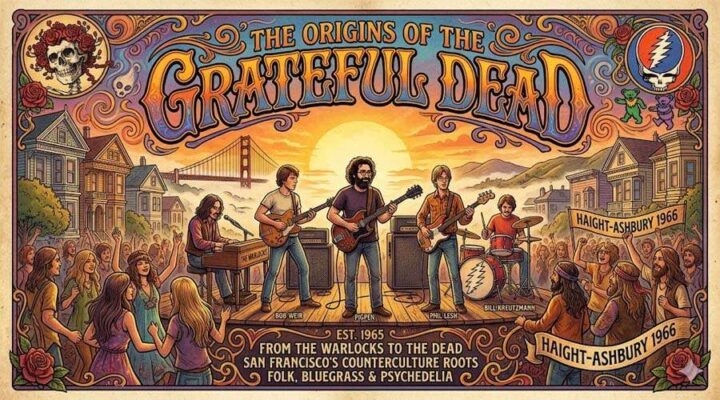
The story of the Grateful Dead begins in the mid-1960s in the San Francisco Bay Area, a region that was quickly becoming the epicenter of the American counterculture movement.
Originally formed in 1965, the band evolved out of several earlier musical projects. At first they performed under different names before eventually settling on the now legendary name: Grateful Dead.
The founding members included:
-
Jerry Garcia – lead guitar and vocals
-
Bob Weir – rhythm guitar and vocals
-
Phil Lesh – bass guitar
-
Bill Kreutzmann – drums
-
Ron “Pigpen” McKernan – keyboards and vocals
Later, Mickey Hart joined as a second drummer, helping define the band’s distinctive rhythmic complexity.
During this time, the Bay Area was exploding with artistic experimentation. Psychedelic culture, underground art, and experimental music were all converging. The Grateful Dead quickly became central figures in this emerging movement.
Their early performances at small venues and acid-test gatherings helped shape the identity of psychedelic rock. Instead of focusing on tightly structured songs, the band embraced improvisation, allowing each performance to become something unique.
This philosophy would become one of the defining traits of the Grateful Dead.
👉 Read the full story here: Grateful Dead history
Grateful Dead Band Members
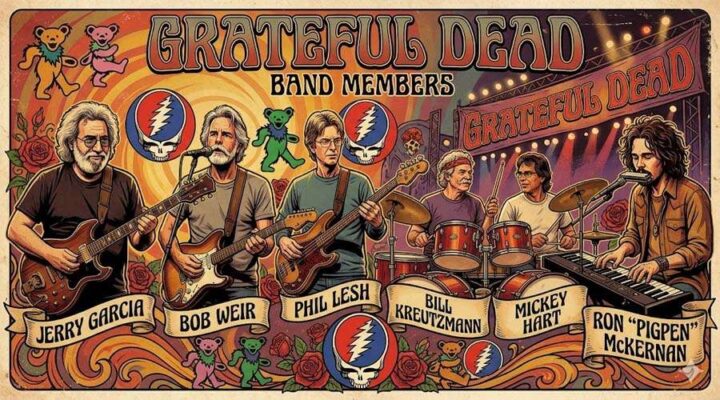
One of the reasons the Grateful Dead developed such a distinctive sound was the unique chemistry between its members.
Each musician brought different influences and musical ideas to the group.
Jerry Garcia
Jerry Garcia was the heart and soul of the band. His expressive guitar playing and warm, emotional vocals helped define the Grateful Dead sound. Garcia was deeply influenced by folk music, bluegrass, and blues, which shaped his distinctive guitar style.
Bob Weir
Bob Weir provided rhythm guitar and an important vocal presence. His unconventional rhythm patterns helped create the open, flowing sound that defined the band’s music.
Phil Lesh
Phil Lesh approached bass guitar differently from most rock musicians. Rather than simply supporting the rhythm, his bass lines were melodic and exploratory, almost functioning as another lead instrument.
Bill Kreutzmann and Mickey Hart
The dual-drummer setup created a layered rhythmic foundation. Kreutzmann and Hart together developed complex percussion patterns that became essential to the band’s live performances.
Ron “Pigpen” McKernan
Pigpen brought blues and soul influences to the early sound of the band. His organ playing and blues vocals helped ground the music during the group’s earliest years.
Together, these musicians formed one of the most unique and influential bands in rock history.
👉 Explore full details: Grateful Dead band members and lineup
The Unique Sound of the Grateful Dead
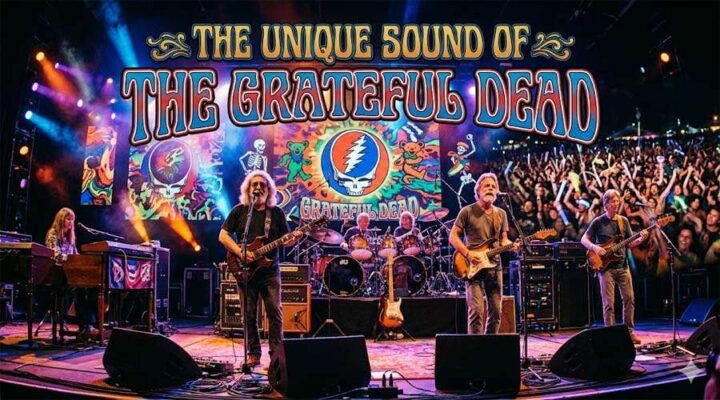
The Grateful Dead cannot easily be categorized into a single genre.
Instead, their music draws from many influences, including:
-
psychedelic rock
-
folk music
-
country
-
blues
-
jazz improvisation
-
bluegrass
What truly set them apart was their commitment to musical exploration.
Rather than performing songs exactly the same way each night, the band often stretched songs into long improvisational journeys. A track that lasted five minutes on an album could evolve into a twenty-minute live performance filled with new melodies, rhythms, and spontaneous ideas.
Because of this approach, every concert was different. Fans never knew exactly what they would hear, which made attending shows an exciting and unpredictable experience.
This improvisational philosophy later influenced the entire jam band scene, inspiring groups such as Phish, Widespread Panic, and many others.
👉 Discover more: Grateful Dead songs and live performances
Best Grateful Dead Songs
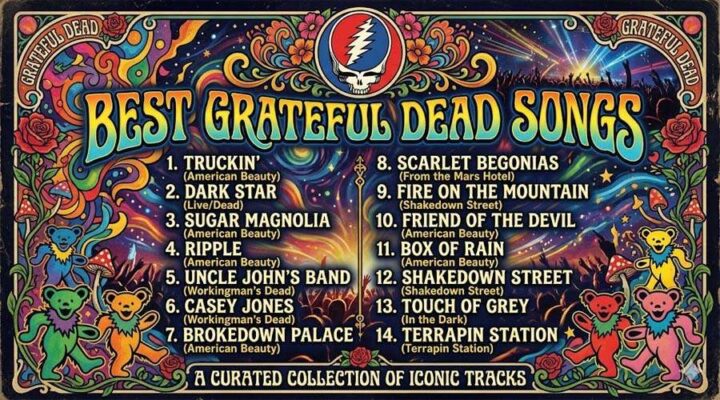
Although the band became most famous for their live performances, they also recorded many beloved songs that remain classics of American rock music.
Some of the most well-known Grateful Dead songs include:
Truckin’
Released in 1970, “Truckin’” became one of the band’s signature songs. Its lyrics about life on the road captured the spirit of touring that defined the band’s career.
Casey Jones
“Casey Jones” blends rock energy with folk storytelling. The memorable chorus made it one of the most recognizable songs in the band’s catalog.
Ripple
A gentle acoustic song, “Ripple” reflects the band’s folk and spiritual influences. It remains one of the most beloved songs among fans.
Friend of the Devil
This track blends country and folk elements, showing the band’s versatility and storytelling ability.
Touch of Grey
Released in 1987, “Touch of Grey” became the band’s biggest commercial hit and introduced a new generation of listeners to the Grateful Dead.
These songs represent only a small part of the band’s massive catalog, but they remain essential listening for anyone discovering the Grateful Dead.
👉 See the full list: most famous Grateful Dead songs
Grateful Dead Concert Culture
Live concerts were the heart of the Grateful Dead experience.
Unlike most bands, the Grateful Dead encouraged fans to record their shows and share tapes with other listeners. This practice helped spread the band’s music across the country long before the internet existed.
Fans often traveled from city to city following the band on tour. Parking lots outside venues became temporary communities where people gathered to share music, art, and friendship.
This environment created a sense of belonging that went far beyond the music itself.
For many fans, attending a Grateful Dead concert was not just entertainment – it was a cultural and spiritual experience.
👉 Learn more: Deadhead culture
Deadheads: The Legendary Fan Community
The Grateful Dead fan base became known as Deadheads, one of the most passionate and dedicated communities in music history.
Deadheads were known for:
-
traveling long distances to attend concerts
-
collecting and trading live recordings
-
creating artwork inspired by the band
-
building friendships across the touring community
This fan culture became a major part of the band’s identity.
Instead of maintaining distance from their audience, the Grateful Dead embraced this community and encouraged the connection.
Even decades after the band’s original run ended, the Deadhead community continues to thrive.
The Meaning Behind Grateful Dead Logos
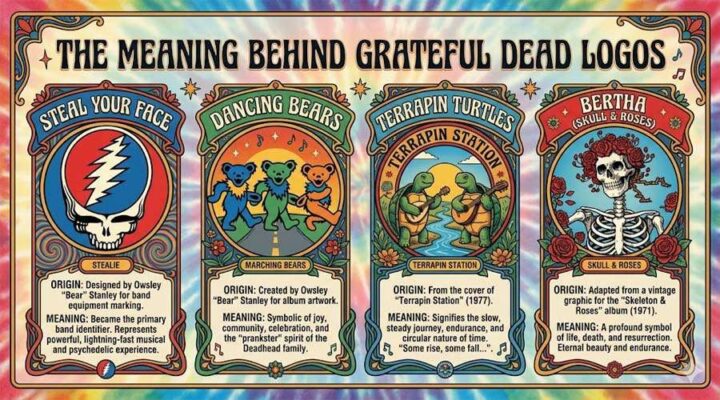
The visual identity of the Grateful Dead is just as famous as their music.
Several symbols have become iconic within rock culture.
Steal Your Face Skull
One of the most recognizable logos features a skull split by a lightning bolt. Often called the “Steal Your Face” skull, this image became closely associated with the band during the 1970s.
Dancing Bears
Another beloved symbol is the series of colorful dancing bears. Despite their playful appearance, the bears were originally created as part of the band’s artwork for album packaging.
Skeleton and Roses
This classic imagery comes from the artwork associated with one of the band’s early albums and reflects the psychedelic aesthetic of the era.
These images have become staples of music culture and remain popular in posters, merchandise, and fan art.
👉 Learn more: Grateful Dead logos and artwork
Grateful Dead Shirts and Cultural Influence
Because of their distinctive artwork and loyal fan base, Grateful Dead imagery has become incredibly popular in fashion and merchandise.
Classic designs like the Steal Your Face skull, Dancing Bears, and psychedelic concert posters are now widely recognized cultural symbols.
Grateful Dead inspired shirts remain especially popular among music fans and collectors. These designs celebrate the band’s history while keeping the spirit of the Deadhead community alive.
For fans who appreciate the band’s iconic imagery, exploring Grateful Dead themed apparel is another way to celebrate the legacy of this legendary group.
From Grateful Dead to Dead & Company
Although the original Grateful Dead stopped performing after the death of Jerry Garcia in 1995, the music did not disappear.
Former band members later formed new projects that continued performing the band’s songs.
One of the most notable of these groups is Dead & Company, which features former members alongside new musicians. Their tours have introduced the Grateful Dead catalog to younger generations of fans.
These performances keep the music alive while honoring the legacy of the original band.
The Lasting Legacy of the Grateful Dead
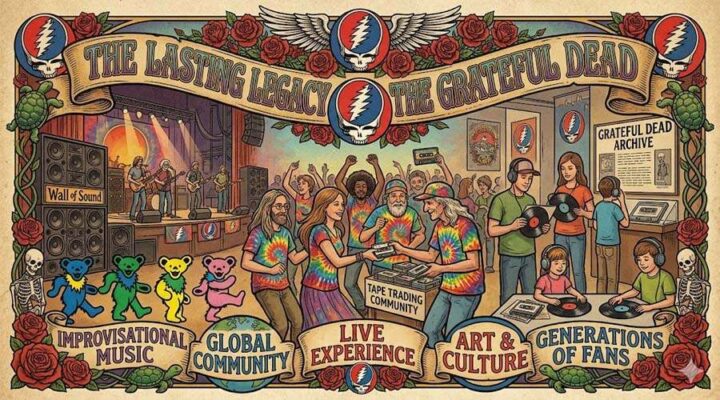
Few bands have had an influence as deep or long-lasting as the Grateful Dead.
Their impact can be seen in:
-
the rise of jam band culture
-
the tradition of live concert recording
-
fan-driven music communities
-
psychedelic rock and improvisational music
Perhaps more importantly, the band demonstrated that music could create a community built on shared experiences and creativity.
Decades after their earliest performances, the Grateful Dead continue to inspire musicians and fans around the world.
Frequently Asked Questions About the Grateful Dead
Who founded the Grateful Dead?
The Grateful Dead were founded in 1965 by Jerry Garcia, Bob Weir, Phil Lesh, Bill Kreutzmann, and Ron “Pigpen” McKernan.
Why are fans called Deadheads?
The term “Deadheads” refers to the band’s devoted fan community, many of whom traveled across the country to attend multiple concerts.
What genre is the Grateful Dead?
The Grateful Dead blend many genres including rock, folk, blues, country, and psychedelic music. They are widely considered pioneers of the jam band style.
Why were Grateful Dead concerts so famous?
Their concerts were known for improvisation and long musical jams, making each show unique.