
The Story of Van Halen: From Pasadena Garage Band to Rock Legends
The Story of Van Halen: From Local Band to Rock Legends
If you want a complete overview of the band’s history, albums, songs, and legacy, check out our full guide: Van Halen: The Complete Guide to the Band, Albums, Songs & Legacy.
Few rock bands have transformed the sound of electric guitar the way Van Halen did.
When rock fans talk about the moment guitar playing changed forever, many point to a short instrumental track called “Eruption.” Released in 1978, the song introduced the world to Eddie Van Halen’s revolutionary guitar technique and helped launch one of the most influential bands in rock history.
From backyard parties in Southern California to sold-out arena tours across the world, the history of Van Halen is filled with groundbreaking music, larger-than-life personalities, and unforgettable performances.
In this guide, we’ll explore how a group of young musicians from Pasadena became one of the most iconic rock bands of all time.
Early Years in California
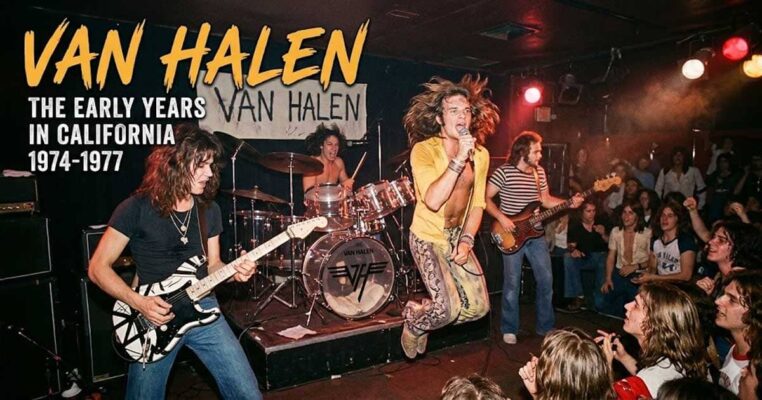
Every legendary band starts somewhere. For Van Halen, the journey began with two brothers whose musical background would eventually reshape rock guitar.
From the Netherlands to Pasadena
Eddie Van Halen and Alex Van Halen were born in the Netherlands before moving with their family to Pasadena, California in the early 1960s.
Their father, Jan Van Halen, was a professional jazz musician who played piano, clarinet, and saxophone. Because of this, both brothers were trained as classical pianists during childhood and often competed in piano competitions.
But as the 1960s rock explosion spread across America, their musical interests began to change. Bands like The Beatles and The Dave Clark Five inspired them to pick up electric instruments.
Interestingly, Eddie originally played drums while Alex played guitar. Eventually the brothers switched instruments after realizing Alex had stronger rhythm skills. Eddie picked up the guitar, and the decision would change rock music forever.
Mammoth and the Arrival of David Lee Roth
In the early 1970s, the brothers formed a band called Mammoth and began performing at local parties and small venues around Los Angeles.
Around this time they met David Lee Roth, an energetic singer known for his wild personality and theatrical stage presence. Roth initially rented sound equipment to the band, but he soon joined as lead vocalist.
Bassist Michael Anthony later completed the lineup. His strong bass playing and distinctive high backing vocals became an important part of the band’s signature sound.
After renaming the group Van Halen, the band quickly became one of the most popular live acts in Southern California. Their performances at famous Sunset Strip venues like Gazzarri’s and the Whisky a Go Go built a loyal fanbase.
In 1977, Warner Bros. producer Ted Templeman saw the band perform at the Starwood club and immediately offered them a recording contract.
Breakthrough Success

Once signed to Warner Bros., Van Halen’s rise to fame happened incredibly fast.
The Legendary Debut Album (1978)
In 1978, the band released their self-titled debut album Van Halen, widely considered one of the greatest debut albums in rock history.
The album introduced the world to Eddie Van Halen’s innovative guitar style, including his famous two-handed tapping technique.
Along with the instrumental “Eruption,” the album included several songs that became classic rock staples:
-
Runnin’ With the Devil
-
Ain’t Talkin’ ’Bout Love
-
Jamie’s Cryin’
-
You Really Got Me
The record immediately established Van Halen as one of the most exciting new rock bands of the era.
Arena Rock Domination
Throughout the late 1970s and early 1980s, the band released a series of successful albums including:
-
Van Halen II (1979)
-
Women and Children First (1980)
-
Fair Warning (1981)
-
Diver Down (1982)
During this period, Van Halen became famous for their high-energy live performances and party-driven rock sound.
Their biggest commercial breakthrough arrived in 1984 with the release of the album 1984.
The lead single “Jump” became the band’s only number-one hit on the Billboard Hot 100, while songs like “Panama” and “Hot for Teacher” received heavy rotation on MTV.
Lineup Changes and the “Van Hagar” Era

Despite their massive success, internal tensions within the band began to grow.
David Lee Roth Leaves the Band
In 1985, creative differences between Eddie Van Halen and David Lee Roth led to Roth leaving the band to pursue a solo career.
Many fans believed the band would struggle without their charismatic frontman.
Instead, Van Halen entered another successful chapter.
The Sammy Hagar Years
Sammy Hagar joined the band in 1985, beginning the era often called “Van Hagar.”
With Hagar as lead vocalist, the band’s sound became more melodic and keyboard-driven while still maintaining Eddie’s signature guitar style.
The band released four consecutive number-one albums:
-
5150 (1986)
-
OU812 (1988)
-
For Unlawful Carnal Knowledge (1991)
-
Balance (1995)
Hit songs from this era include Why Can’t This Be Love, Dreams, and Right Now.
Later Years and Final Reunion
After Hagar left the band in the mid-1990s, Van Halen briefly worked with Gary Cherone, the former singer of Extreme.
The album Van Halen III (1998) received mixed reviews from fans and critics.
In 2007, David Lee Roth returned for a major reunion tour. The lineup included Wolfgang Van Halen, Eddie’s son, who replaced Michael Anthony on bass.
In 2012, the band released their final studio album A Different Kind of Truth, which returned to the heavier sound of their early years.
The Death of Eddie Van Halen
On October 6, 2020, guitarist Eddie Van Halen passed away after a long battle with cancer.
His death marked the end of the band’s long career.
Eddie is widely considered one of the greatest guitarists in rock history. His innovative playing style, homemade Frankenstrat guitar, and pursuit of the famous “brown sound” influenced generations of musicians.
Eddie Van Halen’s revolutionary guitar techniques changed rock music forever. See our list of The Best Van Halen Songs That Defined Rock History to hear his most iconic riffs.
Van Halen’s Cultural Impact

The influence of Van Halen goes far beyond their albums.
The band helped shape the sound of 1980s rock and inspired countless groups that followed, from glam metal bands to modern hard rock artists.
Their imagery also became iconic. The winged VH logo, Eddie’s striped guitar, and the album cover from 1984 remain recognizable symbols in rock culture.
Even today, vintage Van Halen shirts and band merchandise remain popular among music fans around the world.
Why Van Halen Still Matters Today
Decades after their debut, Van Halen continues to influence rock music and guitar players everywhere.
Their music still appears on classic rock radio, streaming playlists, and movie soundtracks. New generations continue discovering the band and celebrating their legacy.
From the explosive intro of “Eruption” to the unforgettable chorus of “Jump,” Van Halen created songs that remain timeless.
Their story is more than just the history of a band. It is the story of how innovation, talent, and fearless creativity can change music forever.