
Understanding BTS Through Symbolism, Eras, Visual Identity & Fan Culture
Long-term BTS fandom rarely works like casual music consumption. Fans often describe attaching themselves not only to songs, but also to emotional eras, recurring symbols, visual references, and personal meanings that begin quietly following them into adulthood. Over time, BTS fandom develops an internal language, one where a whale can mean loneliness, purple can mean trust, Magic Shop can mean refuge, and entire life periods can become tied to specific albums.
This guide explains how fans interpret BTS through eras, symbolism, member connection, visual identity, and subtle fan expression. The goal is not to reduce BTS to a single meaning. It is to show why different fans can enter the same fandom through completely different emotional doors.
Some fans connect first through lyrics. Some connect through the visual world of an era. Some find themselves reflected in a specific member. Others carry the fandom quietly through clothing, colors, jewelry, room decor, or symbols that only another fan would immediately recognize.
That is what makes BTS fan culture unusually layered. It is not only about liking music. It is about how music, image, memory, and identity become part of a fan’s inner life.
To understand why BTS fandom remains emotionally powerful over time, it helps to look at the culture through several connected layers: eras, symbols, member identification, visual identity, apparel, and the way fans reinterpret the music as they grow older.
Why BTS Feels Different to Different Fans

Depending on what a fan is going through in their own life, they may take away something entirely different from the exact same music. BTS does not function as a one-size-fits-all pop act. Instead, different fans stay for different reasons.
Some are meaning-first fans. These listeners connect primarily through lyrics, emotional honesty, and songs that speak directly to pressure, loneliness, ambition, self-doubt, burnout, or the desire to survive a difficult period. For them, BTS matters because the music says things they may have struggled to say out loud.
Some are era-first fans. They attach themselves to a specific creative period, not only because of the songs, but because of the emotional atmosphere around that era. HYYH may feel like youth and instability. Wings may feel like temptation and inner conflict. Love Yourself may feel like healing. Map of the Soul may feel like identity crisis and emotional exhaustion.
Some are symbol-first fans. They may feel connected to purple, the whale, Magic Shop, flowers, doors, moons, or other motifs that carry emotional meaning inside ARMY culture. These fans often use symbols as shorthand for feelings that are difficult to explain directly.
Some are member-first fans. They may feel especially close to RM, Jin, Suga, J-Hope, Jimin, V, or Jungkook because that member represents a form of comfort, understanding, honesty, aspiration, or self-recognition.
Some are visual-first fans. They are drawn to styling, color palettes, stage design, music video imagery, fashion, photography, and the way each era creates a distinct visual mood. For these fans, BTS is not only heard. It is also seen and carried into daily aesthetic choices.
These categories often overlap. A fan may begin with one song, stay for one member, later attach to one era, and eventually carry the fandom through subtle symbols in daily life. That movement is part of what makes BTS culture feel alive rather than fixed.
Understanding BTS Through Eras
In BTS fandom, an era is rarely just an album rollout. An era is a specific emotional language. Each period introduces a mood, visual vocabulary, and psychological focus that fans continue returning to long after the promotional cycle ends.
HYYH: Youth and Transition
HYYH, also known as The Most Beautiful Moment in Life, is one of the most emotionally important periods in BTS’s creative history. It captures the instability of youth: beauty, fear, friendship, risk, loneliness, and the painful feeling of standing between childhood and adulthood.
Visually, HYYH often feels cinematic and fragile. Empty roads, train tracks, abandoned spaces, soft light, casual clothing, and restless movement create the feeling of youth as something both beautiful and unsafe. Fans attach to this era when they are wrestling with transition, nostalgia, or the fear of being left behind by life.
That is why many long-term fans still return to why HYYH feels different from other BTS eras. HYYH does not simply represent being young. It represents the emotional confusion of becoming someone while not yet knowing who that person will be.
Wings: Temptation and the Shadow Self
For many fans, Wings feels like the emotional consequence of HYYH. If HYYH captures youth before it fully breaks open, Wings explores what happens when innocence begins to crack.
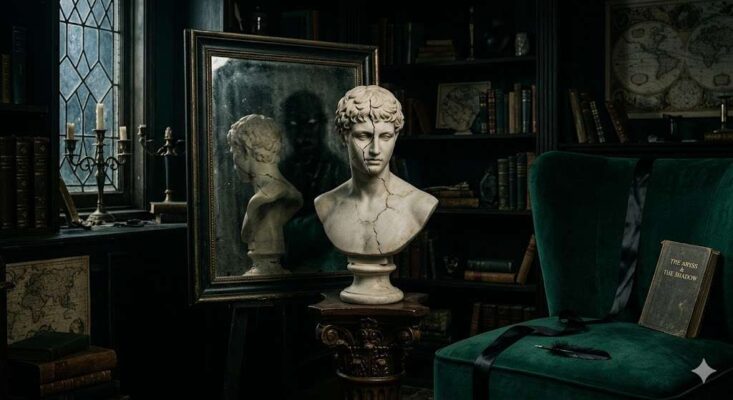
This era moves into darker psychological territory. It deals with temptation, shame, desire, self-division, and the frightening realization that identity is not simple. The visual language is more surreal and symbolic: blindfolds, mirrors, statues, wings, shadows, and references to Hermann Hesse’s Demian.
Fans often connect to Wings when they are facing their own inner contradictions. The era gives visual shape to feelings that are difficult to admit: wanting something harmful, feeling divided, being ashamed of desire, or realizing that growth often includes uncomfortable self-knowledge.
Readers drawn to this darker emotional language can explore the psychological themes and visual language of the BTS Wings era for a deeper look at why Wings still feels so intense years later.
Love Yourself: The Architecture of Healing
If Wings is about confronting the shadow, Love Yourself becomes the necessary attempt to heal. But the strength of this era is that healing is not presented as simple positivity. It is an architecture: something built slowly, imperfectly, and with repeated effort.
The Love Yourself trilogy explores self-acceptance, false happiness, heartbreak, self-worth, and the long process of learning to treat oneself with more compassion. Visually, the era includes flowers, gradients, soft color palettes, visual illusions, and the recurring tension between beauty and pain.
Fans often gravitate toward Love Yourself when they are seeking a forgiving space after hardship. The era does not say healing is easy. It says healing is necessary, and that the relationship with the self may be one of the hardest relationships to repair.
That is why the BTS Love Yourself era and the architecture of healing remains such an important part of the wider BTS emotional ecosystem.
Map of the Soul: Identity, Persona and Exhaustion
Map of the Soul moves the emotional journey inward again, but in a more structural way. It explores persona, shadow, ego, public identity, private self, and the exhaustion of performing versions of oneself for the world.
This era resonates strongly with fans who understand the pressure of appearing functional while feeling internally divided. It speaks to people who perform confidence at work, competence in family roles, friendliness in social spaces, or stability online while carrying a more complicated inner life.
The visual language of Map of the Soul often uses stages, mirrors, contrast, repetition, and theatrical presentation. These images reinforce the central question of the era: who are you when the public mask becomes too heavy?
For fans interested in identity and emotional performance, Map of the Soul and the exhaustion of the persona offers one of the clearest examples of how BTS connects pop music to psychological language.
The Meaning Behind BTS Symbolism
Because BTS fandom spans languages, countries, ages, and cultures, symbols became an unusually efficient emotional shorthand. Fans often recognize visual references long before they need a full explanation. A color, animal, flower, door, or small image can carry a history that words would take much longer to explain.
Symbols rarely stay inside music videos or lyrics. Over time, fans begin carrying them into daily routines through journals, phone wallpapers, room decor, accessories, tattoos, stationery, subtle clothing choices, and digital profiles. These symbols become part of how ARMY remembers, communicates, and comforts itself.
Purple
Purple is one of the most recognizable symbols in BTS fan culture. It is connected to the phrase “I purple you,” coined by V, and has grown into a shorthand for trust, loyalty, and long-term connection between BTS and ARMY.
What makes purple powerful is that it does not need a logo to function. A purple heart, scarf, phone charm, sweater, ring, or lightstick ocean can carry the same emotional code. It is both public and private, simple and deeply layered.
For a deeper explanation, the meaning of purple in BTS fan culture shows how one spontaneous phrase became a lasting emotional language.
The 52-Hertz Whale
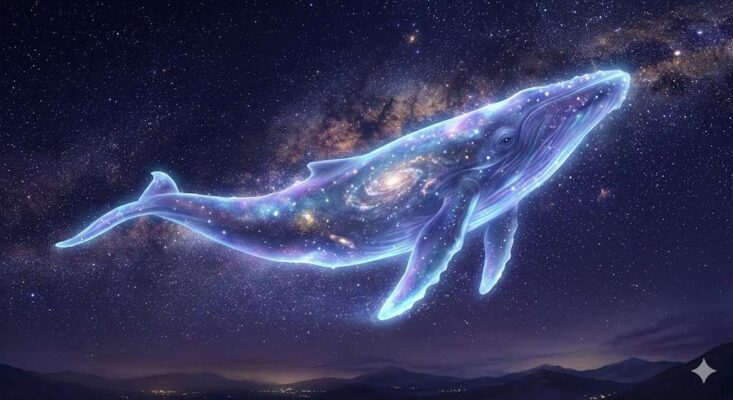
The 52-Hertz whale became one of BTS culture’s most emotionally specific symbols because it represents more than loneliness. It represents being unheard.
The whale is powerful because it captures the pain of calling out from a frequency others may not understand. It is not silent. It is trying to communicate. That is what makes the symbol so personal for fans who have felt misunderstood, emotionally distant, or invisible even while surrounded by people.
This is why the 52-Hertz whale became an emotional symbol in BTS culture. It gives fans a softer way to express the pain of having a voice but not knowing whether that voice reaches anyone.
Magic Shop
Magic Shop operates differently from many BTS symbols because it is not only a sign or motif. It is imagined as a place.
Fans often use Magic Shop to describe a mental refuge: somewhere to go when they feel anxious, exhausted, lonely, grieving, or emotionally overwhelmed. The concept does not erase pain. It gives fans a room inside the mind where difficult feelings can be admitted, held, and softened.
This is why Magic Shop works as a psychological refuge beyond its role as a song title. It gives fans more than reassurance. It gives them somewhere to go.
Flowers, Doors and Pathways
Other BTS symbols also carry emotional weight, even when they do not yet have separate articles in this cluster.
Flowers often represent healing, fragility, self-compassion, beauty, and the difficulty of showing one’s true self. For some fans, floral imagery connects to Love Yourself, Smeraldo references, and the slow process of becoming softer toward oneself.
Doors and pathways often represent transition. They suggest crossing from one state into another: fear into comfort, hardship into hope, confusion into self-recognition, or one life stage into the next. These symbols work especially well in fan apparel because they are subtle enough to look ordinary while still holding emotional meaning for those who understand the reference.
Together, these symbols show how BTS fan culture turns visual details into emotional tools.
How Fans Emotionally Relate to Different Members
The connection fans feel toward individual BTS members goes far beyond basic celebrity preference. Within the fandom, many fans perceive the members as representing different ways to move through life.
These are fan interpretations and emotional patterns, not fixed definitions of the members themselves. No member can be reduced to one trait. Still, the way fans connect to them reveals a lot about how BTS functions emotionally.
RM is often seen as the reflective thinker. Fans may connect to him through introspection, leadership, language, art, uncertainty, and the burden of making meaning. He resonates with fans who think deeply, question themselves often, or feel responsible for holding complicated things together.
Jin is often connected to comfort through humor. His playfulness can feel like emotional relief, especially for fans who are tired of seriousness, pressure, or perfection. For many fans, Jin shows that laughter can be a form of care, not avoidance.
Suga is often associated with quiet honesty and emotional weight. Fans connect to him through realism, ambition, burnout, pain, and survival. He resonates with people who do not want their darkness rushed away or softened into shallow positivity.
J-Hope is often seen as disciplined brightness. His hopefulness is not understood only as cheerfulness, but as effort, structure, and the active choice to keep creating light. Fans who need momentum often connect deeply to him.
Jimin is often linked with vulnerability, elegance, tenderness, and emotional openness. Fans may connect to him when they need softness, reassurance, or the feeling that fragility does not make them unworthy of care.
V is often associated with artistic individuality, vintage emotion, softness, and the courage to remain unusual. Fans who feel out of sync with conventional expectations may see him as permission to trust their own rhythm.
Jungkook is often connected to passion, growth, sincerity, and becoming. Because fans have watched him grow publicly, he can represent ambition, curiosity, self-improvement, and the messy process of figuring out who you are.
This is why fans may emotionally connect to different BTS members at different points in life. A bias is not always just a favorite performer. It can be a mirror for the emotional language a fan needs most.
Apparel and Expression: Carrying BTS Into Daily Life

The way fans interact with BTS-related apparel has changed over time. Many long-term fans still love bold concert shirts, tour hoodies, and obvious logo designs. But adult fans often begin gravitating toward subtler pieces: a tiny whale on a sleeve, a purple stitch, a small door icon, a flower graphic, a moon, or an abstract design connected to a specific era.
This shift is not about hiding fandom. It is about integration.
As fans grow older, they move through workplaces, universities, family events, professional environments, travel, and everyday routines where loud fan expression may not always fit. The emotional connection remains, but the visual volume changes.
That is the heart of workplace-safe fandom. Fans are not abandoning BTS. They are learning how to carry BTS into adult spaces without needing every piece of clothing to announce itself publicly.
Subtle fan apparel works because the meaning already exists internally. A small whale can hold the memory of being unheard. A purple accent can carry long-term trust. A Magic Shop key can remind the wearer to rest. A flower can represent healing. A Wings-inspired dark visual can feel like emotional armor. A Map of the Soul reference can express the tension between public identity and private self.
This is also why symbolic BTS designs often feel more personal than loud merch. A large logo says what the wearer supports. A small symbol can remind the wearer why that support mattered in the first place.
For many adult fans, BTS clothing is no longer only merchandise. It becomes emotional memory made wearable.
Growing Up With the Fandom

One of the strongest signs of BTS’s lasting connection with fans is how the music changes as the listener grows older.
A teenage fan may first connect with BTS through validation. Early songs about pressure, school expectations, ambition, and frustration can feel like someone finally taking youth seriously. At that stage, BTS may function like a megaphone for anger and self-defense.
In early adulthood, the meaning often shifts. The fan may no longer be fighting only school pressure or family expectations. They may be facing career uncertainty, identity confusion, financial anxiety, relationship changes, and the fear of not becoming who they thought they would be. BTS begins to feel less like rebellion and more like an anchor.
Later, as fans move into deeper adulthood, the emotional function can shift again. They may no longer seek escape as much as comfort. Responsibilities become heavier. Grief becomes more familiar. Work becomes repetitive. The need for emotional shelter becomes quieter but stronger.
This is why BTS meaning changes as fans grow older. The same song can meet the same listener more than once, each time speaking to a different version of who they have become.
A song that once felt rebellious may later feel nostalgic. A lyric that once sounded encouraging may become painful. An era that once looked beautiful may become emotionally devastating years later. This does not mean the fan misunderstood it before. It means they have lived long enough to hear another layer.
Long-term fandom is not simply repetition. It is reinterpretation.
How the BTS Emotional Ecosystem Fits Together
The BTS ecosystem can feel overwhelming because fans rarely enter it from only one direction. Some begin with an era. Some begin with a symbol. Some begin with a member. Others begin with the quieter experience of carrying BTS into adult life through subtle clothing, private rituals, and emotional memory.
For readers interested in eras, HYYH, Wings, Love Yourself, and Map of the Soul form a strong foundation. These eras explain how BTS uses different periods of its discography to explore youth, temptation, healing, identity, and public masks.
For readers interested in symbolism, purple, the 52-Hertz whale, and Magic Shop show how BTS fan culture turns color, sound, and imagined spaces into emotional language. These symbols help fans communicate feelings that are sometimes too private or complicated to explain directly.
For readers interested in fan psychology, member connection and age-based reinterpretation explain why long-term fandom is not static. The same song, symbol, or member can answer different emotional needs depending on what the fan is living through.
For readers interested in visual identity and apparel, subtle clothing and symbolic designs show how fan expression becomes more personal and wearable as fans move through adult life. A small symbol can hold an entire emotional history without needing to announce itself loudly.
Understanding BTS rarely comes down to memorizing discographies or statistics. Instead, long-term fans often navigate the group through overlapping layers of meaning: emotional eras, recurring symbols, personal identification with members, and subtle rituals that extend into everyday life.
Taken together, these layers form a cultural ecosystem. They explain why BTS fandom continues evolving long after the first listen, and why the same song, symbol, or era can keep becoming meaningful again as fans change.
Conclusion
BTS fan culture remains powerful because it gives fans multiple ways to understand themselves.
For some, BTS is an era that captures the instability of youth. For others, it is a symbol that gives shape to loneliness, trust, or comfort. For others, it is a member whose personality or artistic growth reflects a personal emotional need. For many adult fans, BTS becomes part of daily life through subtle apparel, quiet references, and private rituals that keep the music close without needing public explanation.
That range is the reason BTS continues to feel personal across different ages, countries, and life stages. The fandom is not held together by one meaning. It is held together by a shared ability to keep making meaning.
A whale, a color, a room, a flower, an era, a lyric, or a small design can all become part of the same emotional language. Each fan may enter through a different door, but the larger system remains connected.
Understanding BTS means understanding that the music does not end when the song stops playing. It continues through memory, symbolism, identity, clothing, community, and the private ways fans carry meaning into the rest of their lives.