
Why Black Sabbath’s Paranoid Still Speaks to Anxious Generations
Listen to Paranoid as an album, not as a list of famous songs.
That is harder than it sounds. Black Sabbath’s second album has become so familiar that many of its tracks now exist outside the record itself. “War Pigs,” “Paranoid,” and “Iron Man” are not only album tracks anymore. They are rock standards, playlist staples, radio fixtures, and entry points into heavy metal history.
But the album becomes more interesting when you put those songs back together.
Paranoid is not powerful only because it contains classic riffs. It is powerful because it moves through several kinds of pressure: political anger, mental unrest, social rejection, apocalyptic fear, drug damage, cosmic distance, and the need for release. The record feels direct, but it is not one-dimensional.
This is one reason Black Sabbath still matters. Paranoid shows how early heavy metal could turn anxiety into something a listener could feel immediately, without needing polished production or complicated explanation.
The album still speaks to anxious generations because it does not treat fear as an abstract idea. It gives fear a sequence, a rhythm, and a body.
The Album Opens Like an Accusation
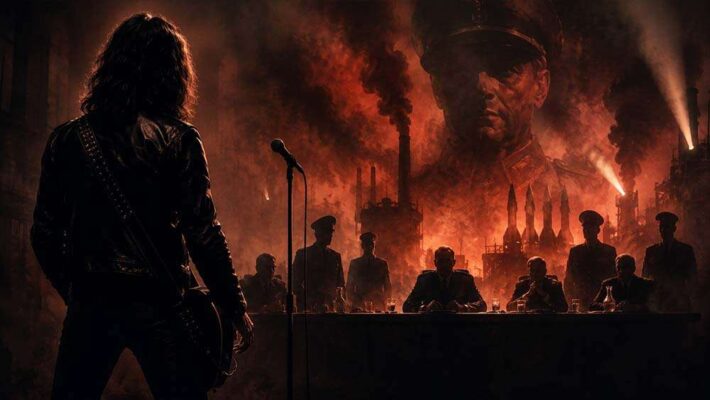
“War Pigs” does not ease the listener into Paranoid. It opens the album with accusation.
The song is slow, heavy, and deliberate at first. It does not sound like a quick protest slogan. It feels like a charge being read aloud. The music gives the lyric enough space to point at power, corruption, and the distance between those who create war and those who suffer inside it.
That opening matters because it gives the album its first emotional frame. Paranoid begins with a world that already feels morally damaged.
The fear in “War Pigs” is not private yet. It is social and political. The listener is placed inside a system where power feels distant, violent, and almost impossible to answer back to. That kind of fear still feels recognizable because it has not disappeared from modern life.
The song also shows why Geezer Butler’s writing is so important to Sabbath’s darkness. His lyrics often turn fear into a moral problem rather than a horror image, a point explored more deeply in Geezer Butler’s Lyrics: The Human Fear Behind Black Sabbath’s Darkness.
As an album opener, “War Pigs” gives Paranoid its first lesson: the outside world is already heavy.
The Title Track Compresses Anxiety Into a Small Space
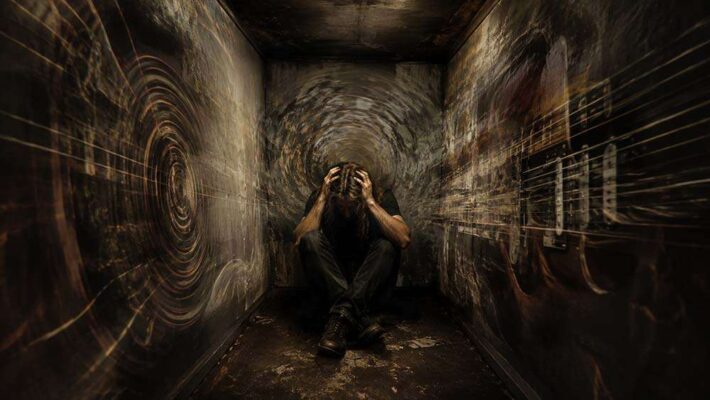
After the large, accusing shape of “War Pigs,” the title track feels smaller, faster, and more trapped.
“Paranoid” does not build a vast scene. It locks into a short burst of mental pressure. The song feels like a thought loop that cannot slow down. The riff moves quickly, the vocal comes in with little distance, and the whole track seems to pass before the listener has time to settle.
That compression is part of its power.
The song does not need elaborate language to communicate distress. Its bluntness is the point. It captures the feeling of being unable to explain what is wrong, only knowing that something inside life no longer feels livable in the normal way.
That is why “Paranoid” still travels across generations so easily. Its production is old, but the emotional rhythm is not. People still recognize the feeling of being stuck inside their own head.
The title track turns mental pressure into speed. It does not describe anxiety from the outside. It sounds like anxiety while it is happening.
“Planet Caravan” Makes the Album Stranger
One reason Paranoid remains stronger as an album than as a simple greatest-hits collection is “Planet Caravan.”
The song changes the emotional temperature of the record. After the force of “War Pigs” and the nervous drive of “Paranoid,” “Planet Caravan” does not try to become heavier in the obvious sense. It drifts.
That drift matters.
“Planet Caravan” is quiet, distant, and almost weightless, but it does not feel carefree. The vocal effect, slow movement, and dreamlike atmosphere create a sense of separation from ordinary life. The song feels like looking at the world from far away, not escaping it completely.
This gives the album an important contrast. Anxiety is not always frantic. Sometimes it feels detached. Sometimes it feels like floating outside your own surroundings, watching life from a distance.
Because of that, “Planet Caravan” makes the heavier songs around it feel more powerful. It creates space inside the album without breaking the mood.
This is where Paranoid becomes more than a collection of heavy tracks. It understands different textures of unease.
“Iron Man” Turns Alienation Into Myth
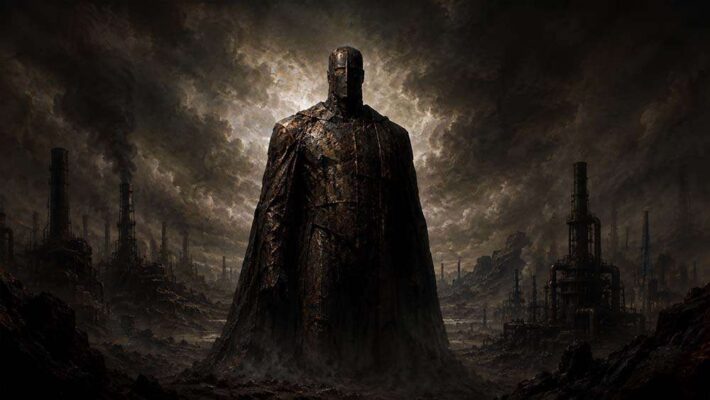
“Iron Man” is often remembered for its riff first, and understandably so. The guitar line is simple, slow, and instantly recognizable. It feels mechanical without feeling lifeless.
But the song’s emotional core is alienation.
The figure at the center of “Iron Man” is not frightening only because he becomes powerful. He is frightening because he is isolated, ignored, and transformed by rejection. The song turns social exclusion into something huge and mythic.
That is why the track still works. The story may have a strange, almost science-fiction shape, but the feeling underneath is familiar. A person tries to warn or reach others, fails to be understood, and becomes something harder and more destructive.
The heaviness comes from that transformation.
Musically, the riff gives the story its body. It moves with slow certainty, as if the character has become too heavy to stop. This is part of the larger riff language Tony Iommi helped create, explored further in How Tony Iommi’s Guitar Riffs Changed the Language of Rock.
“Iron Man” shows how Paranoid turns alienation into sound. It makes rejection feel large enough to shake the room.
The Middle of the Album Expands the Fear
After the album’s most famous tracks, Paranoid does not simply repeat itself.
Songs like “Electric Funeral” and “Hand of Doom” push the album’s anxiety into different forms. One looks outward toward destruction on a massive scale. The other turns inward toward damage, escape, and collapse.
“Electric Funeral” feels warped and apocalyptic. The guitar tone gives the song a melted, unstable quality, as if the world itself is being bent out of shape. The fear is not only that something bad might happen. The fear is that the damage may already be too large to reverse.
“Hand of Doom” is more intimate and more uncomfortable. It deals with self-destruction and the cost of trying to escape pain through dangerous habits. The song does not make damage look glamorous. It makes it feel heavy, repetitive, and difficult to leave behind.
Together, these songs show the range of pressure inside Paranoid.
The album is not about one kind of anxiety. It moves between public fear and private fear, between systems and bodies, between war outside and collapse inside.
That range is part of why the album still feels alive. It does not reduce heaviness to one mood.
The Record Still Feels Heavy Without Modern Production
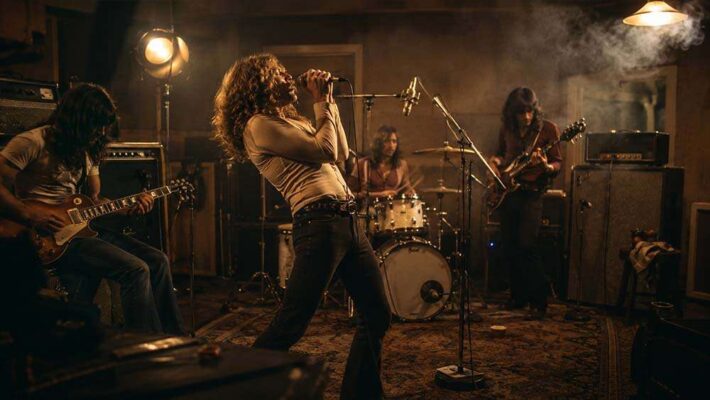
By modern standards, Paranoid does not sound especially polished.
The guitars are not layered into a massive digital wall. The drums are not edited into mechanical perfection. The vocals are not smoothed into distance. The record sounds open, raw, and human.
That old sound is not a problem. It is part of why the album still works.
The performances feel like a band in a room. The instruments have space around them. The riffs can breathe. The drums feel physical rather than programmed. Ozzy Osbourne’s voice sounds exposed enough to make the pressure feel human.
This is also why Black Sabbath still feels heavy without sounding modern. Their heaviness depends less on studio density and more on tempo, timing, space, tone, and the way each part is allowed to land.
On Paranoid, the rawness makes the anxiety sharper. The record does not feel sealed behind production. It feels close.
That closeness is one of the reasons newer listeners can still enter it.
Why Younger Listeners Still Find Themselves in Paranoid

Every generation hears Paranoid from a different distance.
For older listeners, the album may carry memory: the first shock of hearing Black Sabbath, the sound of early heavy metal becoming real, or the feeling of music that refused to be bright and polite.
For younger listeners, the album often works without nostalgia.
They may hear it through modern anxieties: political distrust, economic uncertainty, digital isolation, climate fear, social pressure, or a more general sense that the world feels unstable. The historical details are different, but the emotional structure is easy to recognize.
A younger listener does not need to live in 1970 to understand “War Pigs.” Anger at distant power is not tied to one decade.
They do not need the original context to feel “Paranoid.” The experience of being trapped inside mental pressure is still familiar.
They do not need to treat “Iron Man” as a period piece. The feeling of being ignored, rejected, or misunderstood still has force.
That is why Paranoid continues to cross generations. It is old enough to carry history, but direct enough to remain emotionally useful.
The album does not survive only because people respect it. It survives because people still need it.
What Paranoid Added to Heavy Metal’s Emotional Language
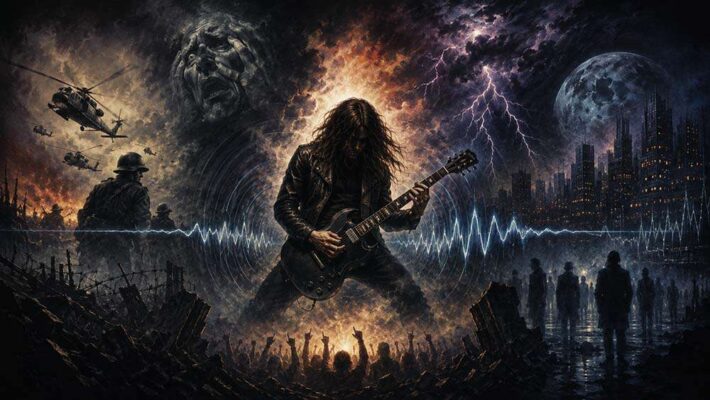
Paranoid helped define what heavy metal could talk about.
It showed that heavy music could be built around more than volume, rebellion, or shock. It could carry fear, anger, alienation, moral disgust, mental pressure, and the need for release.
The album gave heavy metal a clearer emotional vocabulary:
- war as moral horror
- anxiety as physical speed
- alienation as heavy myth
- quietness as distance
- apocalypse as atmosphere
- self-destruction as consequence
- raw sound as emotional truth
That is why the record still matters.
It does not offer easy comfort. It does not tell the listener that everything will be fine. Instead, it does something more honest. It gives shape to pressure that many people already feel.
For anxious generations, that can be powerful. The album does not remove fear, but it makes fear recognizable. It turns private pressure into shared sound.
Paranoid still speaks because it understands that heaviness is not only musical. Sometimes heaviness is the feeling of being alive in a world that keeps pressing back.
Album Note
This article is written from an album-focused listening perspective, looking at how Paranoid works as more than a collection of classic songs. It focuses on track contrast, anxiety, war, alienation, mental pressure, raw production, and emotional release, treating the album as one of Black Sabbath’s clearest statements about why heavy metal could speak to fear across generations.