
Workplace-Safe Fandom: Why Fans Prefer Subtle BTS Clothing
Many long-term BTS fans own fewer logo-heavy shirts than outsiders expect. Instead, they often gravitate toward tiny symbols, hidden references, muted colors, and designs that only other fans would immediately recognize.
To someone outside the fandom, these pieces may look like ordinary minimalist fashion: a lavender sweater, a small whale charm, a flower embroidered on a sleeve, a tiny door icon on a tote bag, or a clean graphic that seems abstract. But inside BTS culture, these details operate as a coded emotional language.
This is where the idea of workplace-safe fandom becomes important.
Workplace-safe fandom is not about hiding love for BTS out of shame. It is about learning how to carry that love into adult environments where loud fan expression may not fit. As fans graduate, start careers, build families, or move through more formal social spaces, their relationship with clothing changes. They may still feel deeply connected to BTS, but they no longer need every piece of clothing to announce that connection publicly.
This shift makes more sense inside the broader system of BTS symbolism, eras, visual identity, and fan culture, where colors, songs, eras, and small visual cues often become emotional tools fans carry into daily life.
For many adult fans, subtle BTS apparel is not a weaker form of fandom. It is often the more intimate one. The smaller the symbol, the more personal the meaning becomes.
Why Fan Expression Changes With Age
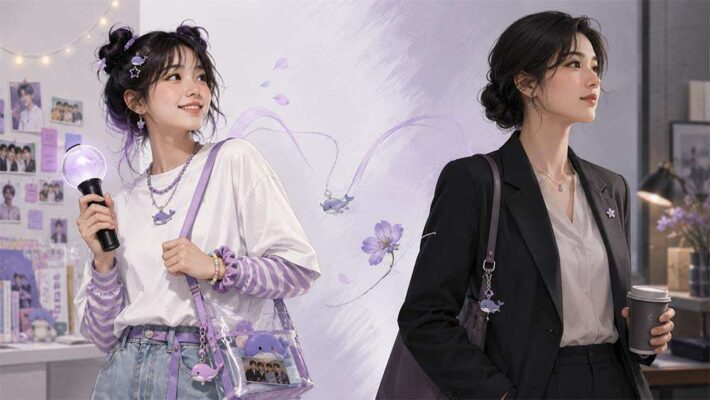
The way people express fandom rarely stays the same forever.
A teenager may have the freedom to wear a bold tour shirt, a member photo hoodie, or a brightly colored logo design every day. At that stage, clothing often becomes part of discovery. The fan is excited, newly attached, and eager to show the world what they love. The outfit becomes a public declaration: this matters to me.
But as fans grow older, their environments change. They graduate. They enter workplaces. They attend professional events. They become parents, partners, managers, teachers, nurses, lawyers, designers, office workers, business owners, or students in more serious academic settings. Their clothes begin to serve more than one purpose.
Adult life often demands translation. A person may still feel emotionally connected to BTS, but they must translate that connection into a version that fits a meeting room, a classroom, a hospital shift, a commute, or a family gathering.
This does not mean the fandom becomes less important. In many cases, the opposite is true. As fans grow older, BTS may become more emotionally meaningful because the music is attached to real periods of survival, healing, grief, ambition, or self-redefinition. This is part of how BTS meaning changes as fans grow older, with the same songs and symbols taking on new emotional uses in adult life.
But the way that meaning appears on the body becomes more selective.
The fan is no longer dressing only for fandom spaces. They are dressing for everyday life.
That is why fan expression matures. The emotion remains, but the visual volume changes.
From Public Display to Personal Meaning
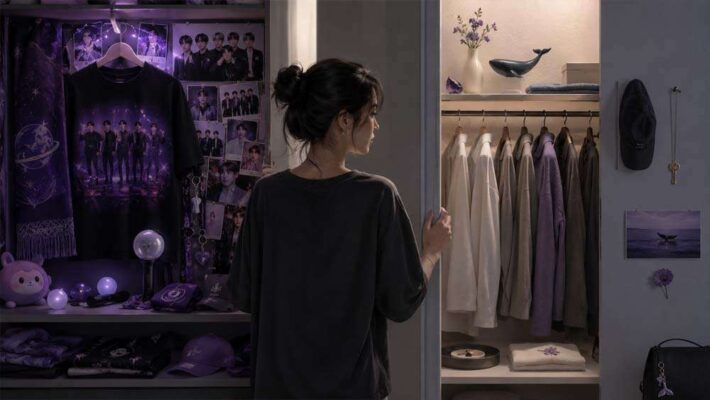
There is a clear shift in how BTS apparel functions over time.
In early fandom, clothing often works as public display. A fan may want the logo, the member name, the tour date, the album graphic, or the recognizable image to be visible. These pieces help them feel connected to the group and identifiable to other fans. The goal is often outward recognition.
This stage is important. Loud merch can feel joyful and freeing. It allows fans to claim their place in the community. It helps them say, “I am part of this.” For younger fans or newer fans, that visible declaration can feel emotionally necessary.
But long-term fandom often moves from public display to personal meaning.
Instead of wearing a large group photo, an adult fan may choose a small symbol connected to a song. Instead of a bright tour hoodie, they may prefer a neutral sweatshirt with one embroidered detail. Instead of a design that says BTS directly, they may choose a flower, a whale, a moon, a door, a purple accent, or a lyric fragment that only another fan would understand.
This is not a downgrade. It is a shift in emotional function.
The clothing is no longer primarily trying to tell strangers, “I am a fan.” It is telling the wearer, “Remember what this means.”
That difference is crucial. Public display seeks recognition from others. Personal meaning creates recognition within the self. The fan does not need everyone to understand the reference because the emotional value no longer depends on being seen by everyone.
A subtle symbol can hold more memory than a large logo because it is connected to interpretation, not just identification. That is also why symbolic BTS designs can feel more personal than loud merch: the emotional value often comes from resonance, not visibility.
Why Recognition Is No Longer the Goal
When someone first enters a fandom, recognition often feels exciting.
A visible BTS shirt might attract another fan at school, at a concert, in a cafe, or on the street. That moment of being recognized can feel powerful, especially for someone who has recently found a community that makes them feel less alone. Clothing becomes a way to invite connection.
But long-term fans often reach a different stage. They already know they belong.
At that point, recognition is no longer the main goal. The fan may still enjoy being noticed by another ARMY, but they do not need constant external confirmation of their identity. Their connection has become stable enough to exist privately.
This is one of the strongest reasons subtle clothing becomes appealing. It allows the fan to choose when and how visible their fandom is. The symbol is there, but it does not demand explanation. It can be recognized by the right person and ignored by everyone else.
That selectiveness creates intimacy.
A large logo speaks to the public. A tiny symbol speaks to those who know the language. For many adult fans, that smaller audience feels more meaningful. They do not need to broadcast the fandom to the entire room. They only need to carry the feeling with them.
This is also why hidden references can feel emotionally stronger than obvious merchandise. They create a private layer of identity beneath the surface of ordinary life. The fan can sit in a meeting, walk through an airport, teach a class, or run errands while carrying a small reminder of a song, era, concert, lyric, or emotional period that shaped them.
Recognition becomes optional. Meaning becomes central.
The Rise of Symbol-Based Apparel
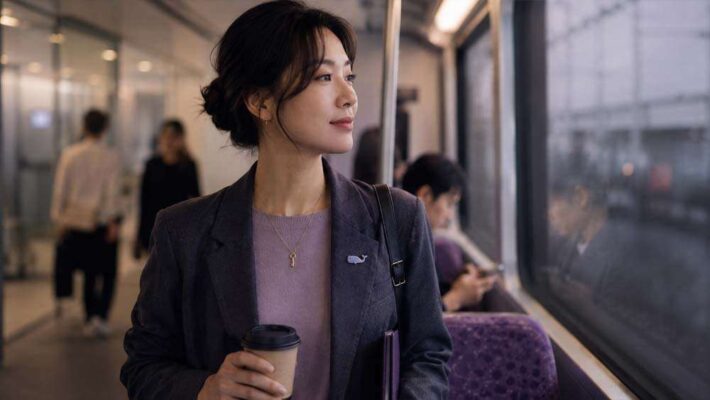
Subtle BTS clothing often relies on symbols rather than direct branding.
This works because BTS fan culture already has a rich symbolic language. Fans do not need a shirt to say the group’s name if a whale, purple heart, door, flower, moon, or small lyric can communicate the emotional reference more elegantly.
Symbol-based apparel works because it carries two meanings at once. On the surface, it looks wearable in normal life. Underneath, it holds a fandom-specific emotional code.
The Whale
The whale works because it carries the feeling of being unheard.
A small whale motif does not have to announce “Whalien 52” directly. Fans understand the emotional reference: isolation, emotional distance, and the pain of calling out without knowing whether anyone can hear you. A minimalist whale on a necklace, tote bag, sweatshirt, or journal cover can feel less like merchandise and more like a quiet acknowledgment of survival.
The whale is especially effective as subtle apparel because it looks gentle and ordinary to outsiders. But for fans, it can hold the memory of loneliness, resilience, and finally finding people who understand the same frequency. This is why the 52-Hertz whale became such an emotional symbol in BTS culture, especially for fans who know the pain of having a voice that does not seem to reach anyone.
Purple
Purple is the easiest BTS symbol to carry into adult fashion because it does not require any graphic at all.
A lavender cardigan, a muted purple scarf, a violet phone charm, a small gemstone ring, or a purple thread detail can all function as BTS-coded clothing without looking like fan merchandise. Purple works as stealth fandom because its meaning is emotional rather than literal.
For ARMY, purple carries trust, continuity, and the phrase “I purple you.” It can signal belonging without needing a logo. That makes it ideal for workplace-safe fandom. It is subtle enough for professional spaces but meaningful enough for the wearer to feel connected.
Purple is not just a color choice. In BTS culture, it is a portable emotional signature, which is why purple remains one of the most important symbols in BTS fan culture.
Magic Shop
Magic Shop appears in subtle clothing through images of doors, keys, cups of tea, small rooms, stars, or quiet architectural motifs.
These symbols work because Magic Shop is already imagined as a psychological refuge. It is not only a song reference. It is a place fans return to mentally when they feel overwhelmed, anxious, burned out, or in need of comfort. Wearing a small key or door symbol can become a private reminder to pause, breathe, and return to that inner room.
This type of design is especially powerful in stressful adult environments. A fan may not be able to stop working, cancel responsibilities, or explain their emotional state to everyone around them. But a small Magic Shop reference can act as a wearable reminder that they still have an internal place to rest.
That is why Magic Shop works as a psychological refuge beyond the song itself. It gives fans a symbolic place to return to when ordinary life becomes too loud.
Flowers
Flowers work beautifully in BTS-inspired apparel because they can carry healing, fragility, growth, and self-compassion without appearing obviously fandom-coded.
Some fans may connect floral imagery to the Love Yourself era, the Smeraldo flower, or broader BTS themes of blooming, healing, and becoming. A small flower embroidered on a collar or sleeve can feel elegant to outsiders while holding a deeper emotional reference for the wearer.
Flowers are subtle because they are already common in fashion. But in BTS culture, they can represent the slow work of learning to care for oneself. They do not need to be loud because healing itself is often quiet. This is why the Love Yourself era and its architecture of healing translate so naturally into floral, delicate, and symbol-based fan expression.
That is why symbol-based apparel works so well. The design can be aesthetically simple while emotionally dense.
Understanding Workplace-Safe Fandom

Workplace-safe fandom exists because adult fans live in environments that require social flexibility.
A corporate office, hospital, graduate seminar, courtroom, client meeting, school, or professional conference has its own dress codes. Even when there is no formal uniform, there are still expectations around presentation. People are judged by how polished, appropriate, serious, or reliable they appear.
In those environments, loud pop merchandise can feel difficult to wear. Not because the fan is embarrassed, but because the clothing may not match the role they have to perform that day.
Subtle BTS clothing solves this tension.
It allows the fan to remain connected to their emotional world without disrupting the expectations of the external environment. A muted purple blouse, a minimalist whale pendant, a tiny embroidered flower, or a clean geometric design inspired by an album concept can fit into professional life while still carrying fandom meaning.
This is the heart of workplace-safe fandom: integration.
The fan does not have to split themselves completely between “professional adult” and “person who loves BTS.” Instead, they can create a bridge between the two. The fandom becomes part of the texture of daily life rather than something reserved only for concerts, online spaces, or private rooms.
This matters because adult fans often have fewer spaces where they can be fully emotionally expressive. They may spend most of the day being competent, calm, efficient, and composed. A subtle piece of BTS-coded clothing allows them to carry a softer part of themselves into those spaces.
This tension between public presentation and private identity also connects to Map of the Soul and the exhaustion of the persona, where the gap between who someone appears to be and what they carry inside becomes emotionally central.
It is a small act of continuity. Even when life demands professionalism, the fan does not have to abandon the music, symbols, and memories that helped them become who they are.
Why Subtle Designs Often Feel More Authentic
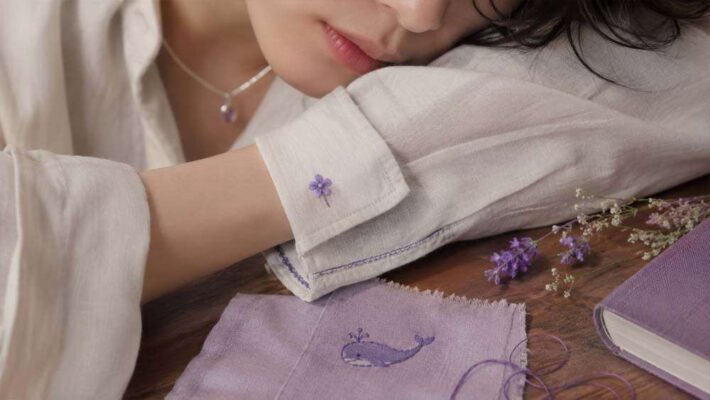
For many long-term fans, subtle designs eventually feel more authentic than obvious merchandise.
At first, this may seem strange. A shirt with a large BTS logo is clearly connected to the group. A tiny symbol or hidden lyric is less obvious. But emotional authenticity does not always come from visibility. Sometimes it comes from specificity.
A large logo represents the public identity of the group. It says BTS. It identifies the brand, the artist, and the fandom. That can be meaningful, especially in public fan spaces.
But a subtle symbol often represents the fan’s lived relationship with the music. A small whale may connect to a period of loneliness. A purple detail may recall trust and continuity. A key may remind the fan of Magic Shop during a time of anxiety. A flower may represent the slow process of self-acceptance.
These references feel authentic because they are not generic. They require personal interpretation. They point to the emotional reason the fan stayed, not just the fact that they became a fan.
Subtle clothing also creates a feeling of quiet ownership. The wearer knows what the design means, even if no one else does. That private knowledge can make the item feel more intimate than official merchandise designed for mass recognition.
This is why many adult fans prefer pieces that only one in a hundred people might understand. The rarity of recognition makes the connection feel more precise. When another fan does notice, the moment feels special because it depends on shared emotional literacy, not obvious branding.
A subtle design says less to the world, but often says more to the person wearing it.
Clothing as Emotional Memory
One of the deepest reasons fans wear subtle BTS apparel is that clothing can hold emotional memory.
A fan may not wear a BTS-coded piece to advertise the group at all. They may wear it because it reminds them of a specific era in their life. A hoodie might be connected to the year they survived burnout. A pin might remind them of a concert they attended after a difficult season. A purple accessory might recall the comfort they felt during a period of loneliness. A flower design might belong to the version of themselves that was learning self-love for the first time.
At this stage, the clothing becomes less about the artist as public figure and more about the fan’s own life story.
This is why subtle apparel can feel so emotionally powerful. It does not only represent BTS. It represents who the fan was when BTS mattered most.
A person may wear a small whale charm because it reminds them of the time they felt unheard and still kept going. They may wear a Magic Shop reference because it reminds them that they once needed a place to rest and eventually found one. They may wear purple because it connects them to a long-term promise of trust during years when many other things changed.
Clothing is physical. It touches the body. It moves through daily routines. It becomes part of commutes, workdays, errands, travel, grief, celebration, and ordinary mornings. When a fandom symbol is worn often enough, it becomes attached to lived experience.
That is what makes clothing different from a poster or playlist. It does not stay in one room. It accompanies the fan through life.
For adult fans, this matters. Their fandom is not only something they remember. It is something they carry.
When Clothing Stops Being Merchandise
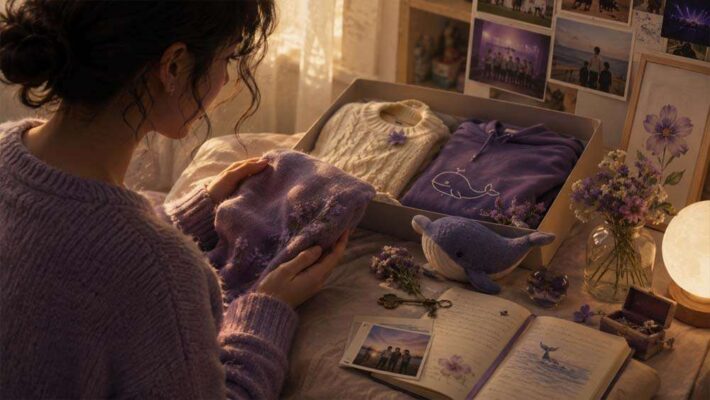
The final stage of subtle BTS apparel is when clothing stops feeling like merchandise and starts feeling like a personal artifact.
Merchandise is usually understood as something bought to show support, commemorate an event, or identify with an artist. It often belongs to a public fan economy: concerts, drops, collections, limited editions, and official releases.
A personal artifact works differently. It may still be bought, but its value is no longer defined mainly by price, rarity, or official status. Its value comes from the emotional history attached to it.
A simple shirt can become an artifact if it was worn during a turning point. A tiny necklace can become an artifact if it helped someone feel less alone during a difficult year. A tote bag with a quiet symbol can become an artifact if it traveled with the fan through work, school, airports, heartbreak, healing, or new beginnings.
This is why subtle clothing often lasts longer in an adult fan’s wardrobe than louder merchandise. It is easier to integrate into daily life, but it also becomes more personally layered over time.
The item is no longer just about BTS as a group. It is about BTS as part of the fan’s emotional history.
When clothing reaches this point, it becomes almost invisible to outsiders but deeply meaningful to the wearer. It may not look like fandom anymore. It may look like style. But that is precisely the point. The fandom has become integrated into the fan’s identity so naturally that it no longer needs to announce itself.
It simply stays.
Conclusion
For many long-term fans, subtle BTS apparel is less about showing fandom and more about carrying a familiar emotional language into everyday life.
As fans grow older, their lives become more complex. They enter workplaces, build families, manage responsibilities, and move through environments where loud fan expression may not always fit. But the emotional connection to BTS does not disappear. It adapts.
That adaptation often takes the form of workplace-safe fandom: tiny symbols, muted colors, hidden references, and designs that hold meaning without demanding public attention. A whale, a purple accent, a key, a door, or a flower can carry more emotional weight than a large logo because it points to the fan’s personal history with the music.
Subtle BTS clothing works because it allows fans to keep something close without needing to explain it. It turns fandom from an external announcement into an internal companion. It lets adult fans move through ordinary life while still carrying the songs, symbols, eras, and memories that helped shape them.
In the end, subtle apparel is not a quieter form of love. It is a more private one.
It proves that for many fans, BTS clothing is no longer just merchandise. It is emotional memory made wearable.