
How BTS Meaning Changes as Fans Grow Older
The same song can feel completely different at eighteen and thirty.
At eighteen, a BTS song might feel like validation. It gives language to anger, loneliness, ambition, or the need to be taken seriously. At thirty, the same song may no longer sound like rebellion. It may sound like memory, grief, self-recognition, or quiet comfort. The lyrics have not changed. The listener has.
This is one reason BTS has remained emotionally relevant to so many long-term fans. For many artists, fandom is tied to a specific age or life stage. People love the music during adolescence, grow older, and eventually return to it only as nostalgia. BTS often works differently. Instead of being something fans simply outgrow, the music often becomes something they grow into.
That does not mean every fan hears the songs the same way forever. The opposite is true. As fans move through school, early adulthood, career pressure, relationships, family responsibilities, burnout, healing, and self-redefinition, the emotional function of BTS changes with them.
This long-term reinterpretation is one of the clearest reasons BTS symbolism, eras, visual identity, and fan culture remain meaningful beyond a single album cycle. BTS songs do not only preserve a memory of who the listener used to be. They keep meeting the listener again at new stages of life, offering different meanings depending on what that person is finally old enough, tired enough, or honest enough to understand.
Why Fans Rarely Stay Emotionally Static

Fans rarely stay emotionally static because people do not experience art from one fixed version of themselves.
Music often works like a mirror. When a listener changes, the reflection changes too. A song that once sounded empowering may later sound painful. A lyric that once felt abstract may suddenly feel exact. A concept that once seemed dramatic may become surprisingly realistic after the listener has lived through enough failure, loss, responsibility, or emotional exhaustion.
This is especially important in BTS culture because the group’s discography is not built only around temporary pop scenarios. Many BTS songs deal with themes that return at different stages of life: pressure, shame, ambition, loneliness, self-worth, identity, fear, desire, exhaustion, and healing. These are not problems people solve once and leave behind forever. They reappear in new forms.
A teenager may hear a song about pressure and think of school. A person in their twenties may hear the same song and think of career anxiety. An adult may hear it and think of the quiet pressure to remain functional for everyone around them. The emotional setting changes, but the song remains available.
This is why BTS meaning can expand over time. The music does not require the fan to remain the same age emotionally. It allows reinterpretation. As the listener gathers more experience, they may discover layers that were always present but not yet personally accessible.
In this way, long-term fandom is not simply repetition. It is re-reading. Fans return to the same music with a different nervous system, a different history, and a different understanding of what certain emotions actually cost.
The Teen Years: Validation and Rebellion

For many fans who discover BTS during their teenage years, the first emotional connection is often built around validation.
Teenagers are frequently told that their stress is exaggerated, their sadness is temporary, their anger is immature, and their dreams are unrealistic. BTS’s early discography speaks directly to that frustration. Songs about school pressure, rigid expectations, social judgment, and the demand to follow a predetermined path can feel intensely validating to young listeners.
At this stage, the music often functions like a megaphone. It says the things the listener may not yet know how to say out loud. It gives shape to frustration with parents, teachers, systems, peers, and the constant feeling of being measured before being understood.
The emotional power here is not subtle. Teen fans may connect with BTS because the music makes them feel less irrational for being angry. It tells them their pressure is real. It tells them their desire to resist is not meaningless. It gives them a sense that someone is taking their inner world seriously.
This is why early BTS themes can hit so hard for younger listeners. The music does not speak down to youth. It treats teenage pain as worthy of attention. For a young fan, that alone can feel life-changing.
But the teenage relationship to BTS is often immediate and urgent. The listener may not yet understand every layer of the songs, but they understand the need to push back against a world that feels too narrow.
The Twenties: Identity and Uncertainty
In the twenties, the emotional center often shifts.
The fan may no longer be fighting only against school systems or parental expectations. Instead, they begin facing a more unstable question: Who am I supposed to become now?
This is why BTS can feel especially powerful during early adulthood. The twenties are often romanticized as a decade of freedom, but they are also filled with confusion. People enter first jobs, leave old friend groups, compare themselves to peers, question their talents, move cities, fail privately, change dreams, and realize that adulthood does not come with the clarity they expected.
During this stage, BTS often stops functioning as a megaphone and starts functioning as an anchor.
The music is no longer only saying, “Your anger is valid.” It begins saying, “Your confusion is survivable.” That difference matters. A twenty-something fan may return to eras like HYYH because the emotional atmosphere of youth, beauty, instability, and fear of losing oneself suddenly feels more accurate than it did before.
At this age, fans may relate more deeply to songs about uncertainty, longing, self-doubt, and the ache of becoming. The question is no longer simply, “Why won’t the world understand me?” It becomes, “What if I do not understand myself either?”
That is why the twenties can create a deeper relationship with BTS. The fan is old enough to recognize that freedom can be frightening. They begin to understand that dreams are not only inspiring; they are also heavy. They realize that identity is not something found once, but something built and rebuilt under pressure.
BTS becomes useful here because the music does not demand a clean answer. It allows confusion to exist. It gives fans a place to feel unfinished without feeling failed.
Adulthood: Comfort Over Escape
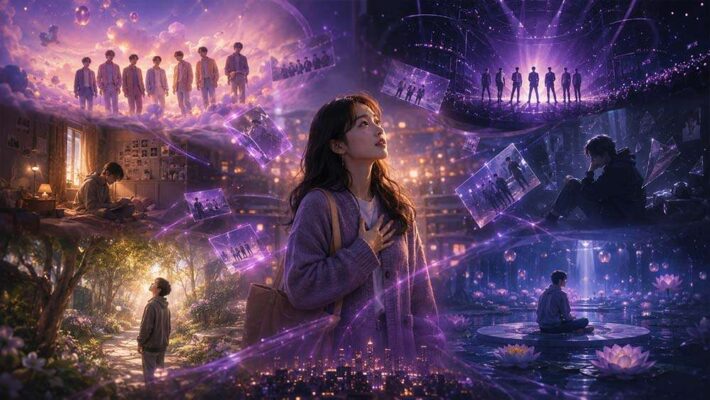
As fans move into late twenties, thirties, and beyond, the emotional function of BTS often changes again.
Adult listeners are usually not looking for the same kind of escape they needed when they were younger. They may still enjoy performance, beauty, humor, and fandom energy, but their deeper emotional need often becomes quieter. They are not always looking for a fantasy world. They are looking for a place to rest.
Adulthood brings responsibilities that are less dramatic but more permanent. Work has to be done. Bills have to be paid. Families have to be managed. Relationships require maintenance. Bodies get tired. Grief becomes more familiar. The future becomes less abstract and more practical. Even joy can start to feel scheduled.
At this stage, BTS meaning often shifts from rebellion to restoration.
Adult fans may find themselves drawn to the softer parts of the discography: songs that offer reassurance, reflection, gratitude, grief, self-compassion, or emotional shelter. Concepts like Magic Shop as a psychological refuge become more meaningful because they do not ask the listener to fight the world. They offer a place to breathe before returning to it.
This is a major difference between teenage and adult listening. A teenage fan may use BTS to feel stronger against the world. An adult fan may use BTS to feel human after surviving the world all day.
That is why comfort becomes more valuable than escape. Escape suggests leaving reality behind. Comfort allows the listener to return to reality with a little more strength. For adults, that distinction matters. They cannot always abandon responsibility, but they can create small private spaces where their inner life is protected.
BTS becomes part of that emotional maintenance. Not a cure. Not a fantasy. A refuge.
Why Fans Often Revisit Old Eras
Long-term BTS fans do not revisit old eras only because they miss the past.
Nostalgia is part of it, but it is not the whole story. When fans return to older albums, performances, concepts, or lyrics, they are often looking for an emotional tool they once used to survive a specific period of life.
A fan may return to an early rebellious track when they need courage again. They may revisit HYYH when they feel lost in transition. They may return to Wings when shame, temptation, or inner conflict becomes newly relevant. They may seek out Love Yourself when self-worth feels fragile. They may return to Map of the Soul when they are trying to understand the masks they wear in adult life.
This kind of revisiting is not passive nostalgia. It is emotional retrieval.
The fan is not simply saying, “I miss who I was.” They may be saying, “I need the version of myself who survived that time to help me survive this one.”
That is why old BTS eras can feel strangely new. A fan may replay a song they have known for years and suddenly hear a different message because their life has created a new need. The era becomes a container for memory, but also a resource for the present.
This is one of the reasons BTS fandom can remain active across years. The archive is not dead. It is emotionally reusable. Fans do not only move forward with new releases. They move backward and sideways through the discography, looking for the era that matches their current wound.
The Phenomenon of Emotional Era Switching
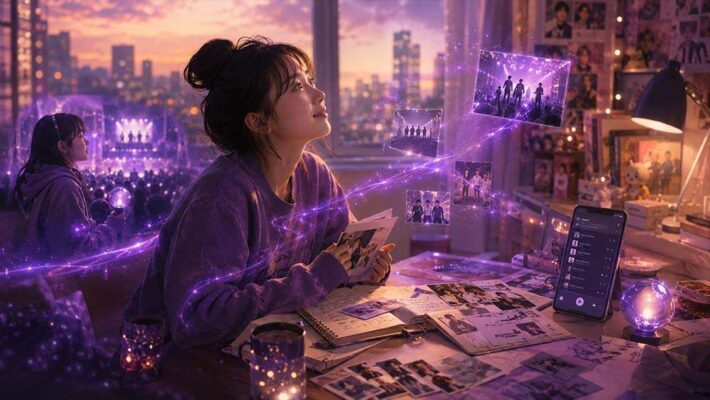
One of the most distinctive experiences in long-term BTS fandom is what can be called emotional era switching.
This happens when a fan suddenly connects to an era, album, or song they did not fully understand when they first encountered it. The content was always there, but the emotional key had not yet been earned through life experience.
A fan at eighteen might experience Wings mainly through its dark visuals, dramatic symbolism, and intense atmosphere. They may understand that it deals with temptation, growth, and inner conflict, but not feel the full emotional weight of those themes. At that age, the era may feel beautiful, mysterious, or aesthetically powerful.
Then, years later, the same fan may return to the psychological themes of the BTS Wings era after experiencing failure, shame, desire, betrayal, moral confusion, or the painful realization that they are not as simple or good as they once hoped. Suddenly, the era feels different. It is no longer only beautiful. It is personal.
That is emotional era switching.
It can happen with any BTS era. HYYH may not fully hit until someone is old enough to understand that youth is often remembered as beautiful precisely because it was unstable. Love Yourself may seem simple at first, then become harder and more meaningful when the fan realizes self-love is not a slogan but a lifelong practice. Map of the Soul may feel abstract until adulthood forces the listener to confront persona, shadow, ego, and the gap between public identity and private self.
This phenomenon is powerful because it creates the feeling that BTS music has been waiting for the listener. The song did not change. The fan finally arrived at the emotional place where the song could reach them.
That is why long-term fans often say they “understand it now.” They are not only talking about lyrics. They are talking about timing. Some meanings cannot be accessed through explanation alone. They have to be lived into.
Why Long-Term Fans Continue Finding New Meaning

Long-term fans continue finding new meaning in BTS because the music is emotionally flexible without becoming vague.
Many pop songs are tied to one clear situation: a breakup, a party, a crush, a summer, a moment of confidence. Those songs can still be meaningful, but their emotional use may remain narrow. BTS’s discography often deals with broader psychological patterns, which allows songs to change function as the listener ages.
A song about pressure can belong to school, work, family, fame, or self-expectation. A song about loneliness can belong to teenage isolation, adult burnout, grief, or emotional distance inside relationships. A song about identity can belong to adolescence, the twenties, midlife, or any moment when a person realizes they have been living through a version of themselves that no longer fits.
This is why BTS is not easily outgrown by fans who remain emotionally connected. The music does not only document youth. It documents the process of becoming, failing, questioning, hiding, healing, and trying again. Those processes do not end at a specific age.
Long-term fans also continue finding new meaning because BTS themselves have grown publicly. The group’s trajectory from young artists confronting systems to adults reflecting on identity, success, exhaustion, and change mirrors the listener’s own movement through life. Fans are not only aging away from the music. In many cases, they are aging alongside it.
That shared maturation creates unusual durability. The fan can return to an old song and hear their younger self. They can listen to a newer solo work and hear adult complexity. They can move through the catalog like a map of different emotional ages.
This is what separates long-term BTS connection from simple nostalgia. Nostalgia says the past was meaningful. Continued reinterpretation says the past is still speaking.
This is also why fans may emotionally connect to different BTS members at different stages of life. The same member, song, or era can answer a completely different emotional need once the listener has changed.
Conclusion
The music stays the same. The listener changes.
That is the simplest explanation for why BTS meaning evolves as fans grow older. A song that once gave a teenager validation may later give an adult comfort. An era that once felt visually interesting may years later become emotionally devastating. A lyric that once seemed encouraging may become painful, or a painful lyric may become healing.
BTS has remained meaningful to many long-term fans because the discography allows for this kind of growth. It does not trap the listener in the age they were when they first discovered it. It waits for them at different stages of life, offering new meanings as they become ready to hear them.
Fans revisit old eras not only because they miss the past, but because those eras hold emotional tools they still need. They switch eras not because their loyalty is unstable, but because their lives keep changing. They continue finding new meaning because the music is built around human questions that do not expire.
The true power of BTS is not that every song means one perfect thing forever. It is that the same song can meet the same listener more than once, each time speaking to a different version of who they have become.
The music stays the same. The listener changes. And somewhere between those two facts, BTS keeps becoming meaningful again.