
Why Certain Songs Become Personal Time Capsules
It usually happens when you are not trying to remember anything.
You are in a car, a store, a coffee shop, a gym, a hallway, or someone else’s playlist. The song begins before you have time to protect yourself from it. Maybe it is only the drum sound, the first chord, the texture of the vocal, or a tiny production detail you had forgotten you knew.
Then the present loosens.
For a few seconds, you are still where you are, but another time has entered the room. Not as a clear story. More like weather. A street you used to walk. A person you have not spoken to in years. A version of yourself who thought life was going to turn out differently. A season that seemed ordinary while you were living through it, but now feels strangely complete because a song has brought it back.
That is what happens when certain songs become personal time capsules.
They do not only remind us of music we used to like. They preserve the feeling of a chapter. The song may not be the best track on the album. It may not be critically important. It may even be a song we would not defend very hard in a debate. But it was there when life was forming a memory.
In the larger map of music fan culture, memory, and identity, personal time capsule songs are the most private layer. They show how music can become part of autobiography without announcing itself as important at the time.
The Song That Catches You Off Guard
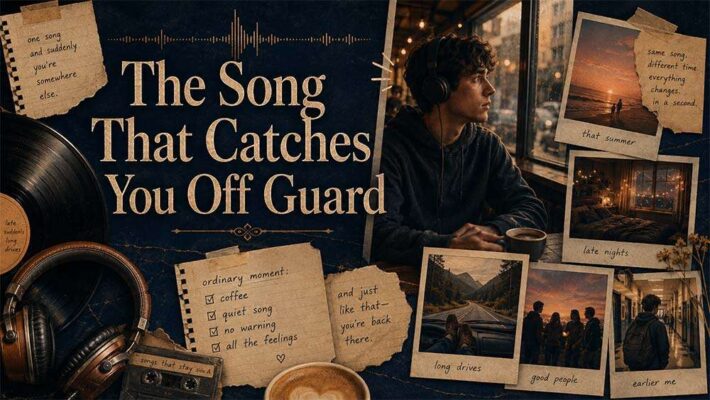
A personal time capsule song rarely asks for permission before opening.
You may think you are finished with a period of life. You may not talk about it much anymore. You may have stopped playing the playlist, deleted the photos, moved cities, changed routines, or become a person who seems far away from the one who first loved that song.
Then the first seconds return.
The strange part is how fast the body responds. The mind may still be trying to place the song, but the feeling has already arrived. The chest tightens. The face warms. The mood shifts before there is a clear explanation. Music memory often works faster than ordinary recall because the sound is tied to atmosphere, not only information.
You are not remembering a fact. You are re-entering a room.
That is why the experience can feel almost unfair. A song can bring back something you did not choose to revisit. It can return a person, a year, a hope, a mistake, or a version of yourself with more force than a photograph.
The song may last four minutes, but the memory it opens can be much larger.
Background Music Becomes Evidence
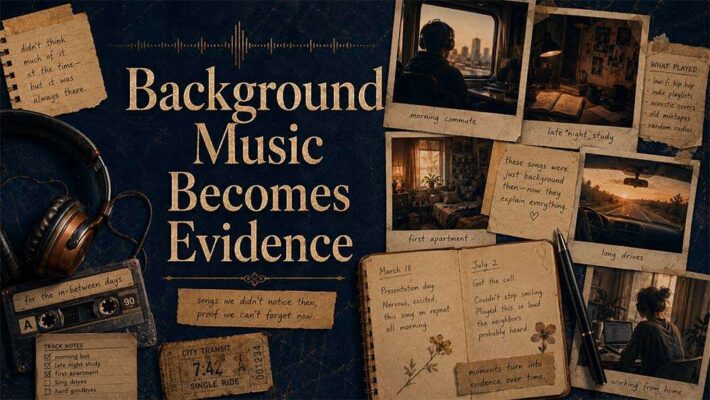
Many important songs begin as background.
They play during a commute, a school year, a first apartment, a long work shift, a summer that felt open, or a winter that felt difficult to get through. At the time, the listener may not treat the song as meaningful. It is just what happens to be on repeat.
Later, that ordinary repetition becomes evidence.
A track can hold the smell of a room, the route to a job, the light outside a window, the feeling of waiting for a message, or the quiet stress of trying to become someone new. None of that is inside the recording in a literal way. Still, when the song returns, those details return with it.
This is why the most powerful memory songs are not always masterpieces. Memory does not care about rankings the way critics do. It cares about timing.
A simple radio hit can become more emotionally loaded than a famous album track because it happened to be present during a real change in someone’s life. A song from a playlist can become impossible to hear casually because it belongs too strongly to a person, a place, or a period the listener has not fully sorted out.
The music did not create the chapter by itself.
It stayed close enough for the chapter to attach to it.
Repetition Turns a Track Into a Place
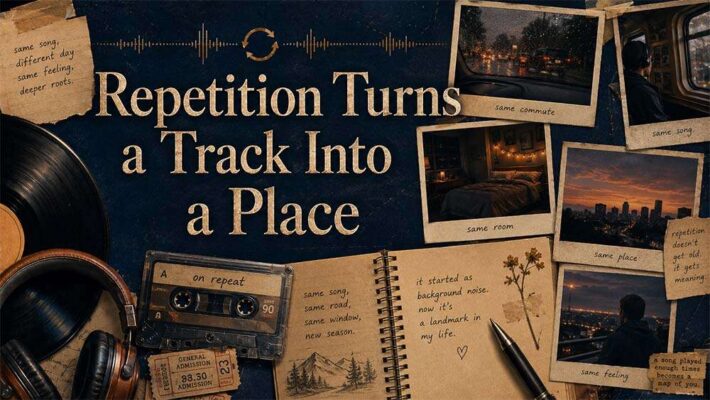
One listen can create a moment. Repetition creates a location.
When a song appears again and again during a certain stretch of life, it begins to feel built into that period. The listener may play it while walking to work, driving at night, cleaning a small apartment, waiting at a station, studying late, recovering from something, or trying to keep a mood steady.
The song becomes part of the furniture of that time.
Years later, hearing it again can feel less like remembering a track and more like entering a place. The listener may not recall every event clearly, but the emotional layout returns: what felt possible, what felt heavy, what was ending, what had not yet begun.
This is why old playlists can feel risky.
A playlist from a past relationship, a lonely season, a college year, a grief period, or a short time when life felt unusually alive may not simply contain songs. It may contain the rhythm of that entire chapter. Pressing play can bring back more than the listener expected.
Repetition teaches memory where to store music.
After enough listens, the song stops floating freely. It belongs somewhere.
The Ordinary Song That Becomes Untouchable
Every person has at least one song that looks ordinary from the outside but feels untouchable from the inside.
It may not be rare. It may not be deep. It may not even match the listener’s current taste. Someone else might hear it and shrug. The fan hears it and immediately knows where it belongs.
That private attachment can be hard to explain.
The song might be tied to a person who is gone, but not always through loss. It might belong to a friend group that drifted apart, a drive taken too many times, a version of home that no longer exists, or a short period when life felt clear before it became complicated.
This is one reason people can become protective of certain songs. The attachment is not only musical. It is biographical. If someone mocks the song, the listener may know the criticism is fair and still feel a small sting.
The track has become part of the record of their life.
That does not mean the song is objectively great. It means greatness is not the only way music becomes important.
Some songs matter because they witnessed us.
When the Memory Is Not Happy
Not every time capsule song is nostalgic in a warm way.
Some songs return with pain attached. A breakup, an illness, a failure, a year of pressure, a period of loneliness, or a grief that made ordinary life feel unfamiliar. At first, those songs can be difficult to hear again because they bring the old emotional temperature back too quickly.
But time can change the relationship.
A song that once felt like a wound may later become a marker. The listener hears it and realizes the chapter did not last forever. The person who was trapped inside that feeling eventually moved. The song still carries pain, but it also carries proof that the listener survived the period where that pain felt permanent.
This is one reason darker or sadder music can become meaningful instead of damaging for many fans. The music does not rush to brighten the room. It lets the difficult feeling exist with some honesty. That emotional function is explored more directly in why dark music helps people feel understood, but inside memory songs, the role is slightly different.
The song does not only understand the pain.
It helps place the pain in time.
Meeting the Person You Used to Be
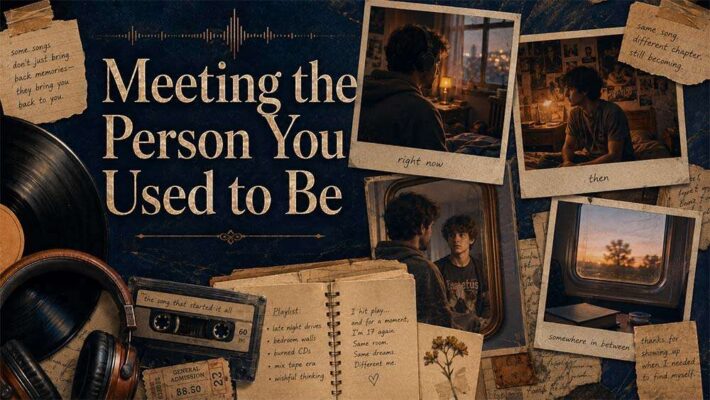
The deepest part of a personal time capsule song is often not the memory of an event.
It is the memory of the self who lived through it.
When an old song plays, you may remember what happened, but you also remember how you understood life then. The things you feared. The things you wanted. The people you trusted. The future you assumed was coming. The version of yourself who did not yet know what the next few years would change.
That can be tender or uncomfortable.
A song from youth may bring back someone dramatic, hopeful, wounded, reckless, shy, or certain in ways you no longer are. A song from a hard period may bring back a self who was doing their best with less strength than people realized. A song from a happy time may hurt because the happiness belonged to a life that cannot be reassembled in the same way.
This is why old songs can feel more emotionally complicated than new ones.
New music may be excellent, but it has not yet carried your former selves. Old music arrives with witnesses. It knows who you were before you became the person hearing it now.
A personal time capsule song is not only a bridge to the past.
It is a meeting with the person who lived there.
The Song Changes Because the Distance Changes
A time capsule song does not stay emotionally frozen.
The recording remains the same, but the distance between the listener and the memory keeps changing. A song that once felt like freedom may later feel like innocence. A song tied to heartbreak may eventually sound peaceful. A song once connected to anger may reveal sadness underneath it after the listener has grown older.
This is one reason old music can surprise people.
They return expecting the old feeling, but the song now carries a different one. The chapter is still there, but the listener is standing farther away from it. Distance can soften, deepen, complicate, or even rescue a song from the pain it once held.
Lyrics often change in a similar way. A line that sounded simple at one age can become heavier after life gives it more context, which is why lyrics feel different when fans grow older. With time capsule songs, the shift is wider than words. The whole track becomes a conversation between an earlier life and the current listener.
The song has not moved.
The listener has found a new angle from which to hear it.
How These Songs Become Part of Identity
Some songs remain favorites. Others become part of the private structure of a person’s life.
The difference is not always obvious from the outside. A favorite song may be admired, repeated, and enjoyed. A time capsule song carries a life chapter. It contains enough personal history that the listener cannot separate the track from who they were when it mattered.
Over time, these songs become part of a person’s internal map. They mark where someone came from, what they survived, who they loved, what they lost, and which versions of themselves still matter.
This is why personal memory and music taste are connected. People do not build taste only from what sounds good. They build it from what stayed. That wider relationship between listening and selfhood is explored in why music taste becomes part of personal identity.
A person’s meaningful songs often reveal a hidden biography. Not every listener will explain it. Not every song will make sense to outsiders. But the pattern is there.
The music we keep often knows more about us than our public answers do.
The Songs Becoming Important Right Now
Time capsule songs are not only old songs.
Some are forming quietly in the present.
A track that feels casual today may become emotionally loaded years from now because of what is happening around it. A playlist that now feels ordinary may later return the exact mood of this season. A song you barely notice may become tied to a person, a room, a decision, a job, a city, or a version of yourself you do not yet understand as temporary.
We often do not know which songs are becoming important while they are becoming important.
That is part of the mystery of music memory. Meaning collects slowly. A song lives beside ordinary days until those days are gone. Then it returns later with more information than you realized it had been carrying.
This can make present listening feel different.
The song playing in the background today may one day become the sound of who you used to be.
What These Songs Keep For Us
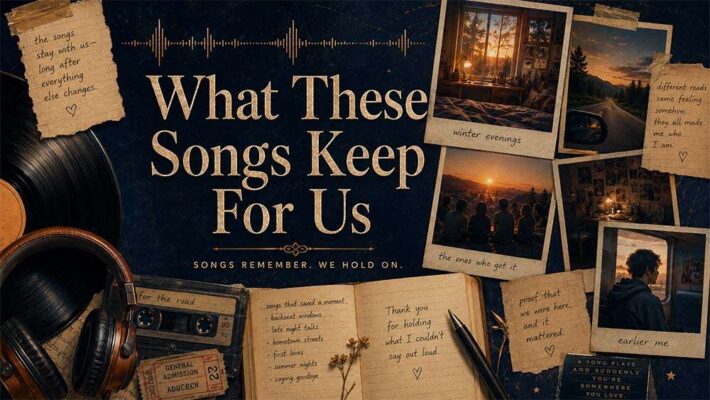
Personal time capsule songs matter because memory is unstable.
Life edits itself as it moves. Details disappear. Conversations blur. Places change. People leave. Even our own past selves can become difficult to access clearly. A song cannot bring everything back, but it can return the feeling of a chapter with unusual force.
That is why certain songs remain with us long after trends change.
They hold emotional evidence.
They remind us not only what we listened to, but what life felt like when we listened. They bring back rooms, roads, seasons, relationships, fears, and hopes that might otherwise become vague. They let us revisit the past without fully living inside it again.
In the end, a personal time capsule song is not valuable because it preserves the past perfectly. It is valuable because it preserves enough.
Enough to remember where you were.
Enough to recognize who you used to be.
Enough to hear, for a few minutes, the life that was happening when the song first found you.
Pingback: Why Music Taste Becomes Part of Personal Identity
Pingback: Why Lyrics Feel Different When Fans Grow Older
Pingback: Why Fans Attach Meaning to Symbols, Colors, and Album Eras