
How Music Fandom Turns Songs Into a Shared Language
You can usually tell when someone has moved from casual listener to fan.
They stop hearing only the songs.
A title starts to carry a whole situation. A lyric becomes a sentence fans use outside the track. A concert moment becomes a reference people understand without explanation. A joke from an old interview keeps returning in comments years later. A color, logo, hand sign, stage image, or album era begins to work like a shortcut.
From the outside, it can look confusing. Why are people reacting so strongly to one phrase? Why does a certain song title make the whole comment section emotional? Why does a tiny visual detail bring back an entire era? Why do fans laugh at something that barely looks like a joke?
Because inside fandom, music does not stay only as music.
It becomes language.
That is what makes music fandom shared language so powerful. Fans are not just collecting songs. They are building a system of references that lets strangers recognize one another, share emotion quickly, preserve memories, and feel close to a community that may be spread across cities, countries, and generations.
This article works like a field guide to that language: the song title, the lyric, the inside joke, the symbol, the concert ritual, the archive, and the moment a new fan starts to understand what everyone else has been saying all along.
The First Sign: A Song Title Stops Being Just a Title

In casual listening, a song title is mostly practical. It helps someone find the track.
Inside a fandom, the title can become much heavier.
One title may refer to a painful era. Another may remind fans of a specific performance. Another may become the song people mention when someone needs comfort. A deep cut may work like a quiet test of longtime attention, not in a hostile way, but because it shows someone has spent time beyond the obvious hits.
A fan does not always need to explain the whole feeling. They can mention the title and other fans will understand the room it belongs to.
This happens because songs collect context. They gather live performances, fan reactions, artist comments, anniversaries, edits, interpretations, and private stories. Over time, the title no longer points only to the recording. It points to everything the fandom has placed around it.
A casual listener may hear the title and think of a track.
A fan may hear the title and remember a period, a mood, a stage, a message, a fan project, or a year when that song seemed to appear everywhere.
That is one of the first ways fandom turns music into communication. The title becomes a small container for a larger shared history.
The Quote That Leaves the Song
Lyrics are easy to carry.
They fit into captions, comments, handwritten signs, tattoos, fan art, notebooks, profile bios, and messages sent to another fan who already knows the reference. A lyric can move farther than the song because fans can use it in daily conversation.
The line changes once it leaves the track.
Inside the song, it belongs to the artist’s structure. Inside fandom, it becomes something fans can borrow when ordinary words feel too flat. A lyric may become a comfort phrase during hard times, a celebration phrase during milestones, or a quiet way to refer to an era without naming the whole story.
This is not only about quoting beautifully written lines. Sometimes the lyric matters because of when fans used it together. A line may become tied to a concert, an anniversary, a difficult period in the fandom, or a moment when many listeners felt the same thing at once.
That is how lyrics become vocabulary.
The deeper process of changing lyric meaning over time belongs in why lyrics feel different when fans grow older. In fandom language, the role is more social. A lyric gives fans a sentence they can pass between each other.
It is not only “I like this line.”
It is “You know what this line means here.”
The Joke Nobody Explains Twice
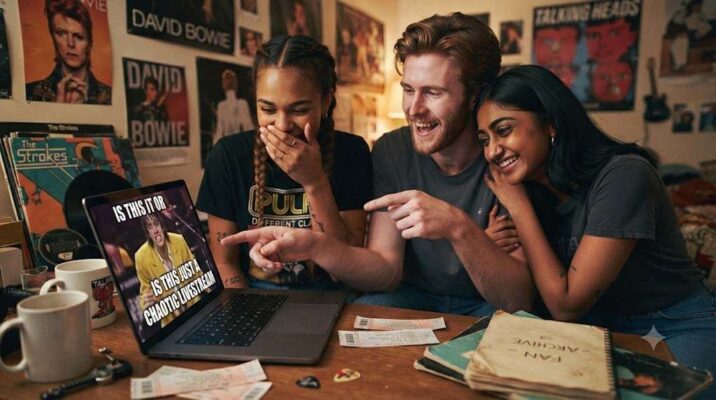
A fandom without jokes would become too heavy to live in.
Music can carry grief, longing, hope, anger, devotion, and personal memory. But fan communities also survive through humor. An awkward interview moment, a misheard phrase, a tiny habit, a strange outfit, a chaotic livestream, a stage mistake, or an old fan edit can become part of the community’s everyday speech.
Inside jokes make a large fandom feel smaller.
They tell fans who has been around long enough to recognize the reference. More importantly, they give people a way to belong without always being serious. A fan can laugh at a silly phrase and still care deeply about the music. Humor does not weaken devotion. It makes the community easier to inhabit.
The strange thing about inside jokes is that they often look meaningless from the outside. Someone new may see fans repeating a phrase and wonder why everyone finds it funny. The explanation may be long, oddly specific, and not very funny once explained.
That is part of the point.
The joke is not only the content. It is the shared memory behind it. Fans are laughing with the history of having seen it before, repeated it, changed it, and kept it alive.
A meme can act like a tiny archive. It stores a moment that would otherwise disappear.
The Image Fans Read Without Speaking
Fandom language is not only verbal.
A color, logo, album cover, stage outfit, tour poster, lightstick, patch, or profile image can say a lot without saying anything directly. Fans learn to read these images the way people learn to read tone in conversation.
A certain logo may signal a band’s whole history. A color may point to a fandom identity. A cover image may bring back an era. A tour visual may remind fans of a specific live period. A symbol on a jacket may let two strangers recognize each other before either one mentions a song.
Visual language is especially powerful because it crosses normal language barriers. Fans from different countries may not share a first language, but they can still recognize the same album image, color scheme, concert symbol, or era reference.
This visual side deserves its own focus, which is why it is explored more fully in why fans attach meaning to symbols, colors, and album eras. In this article, the important point is that images often work like quick signals inside fandom.
They help fans say, “I know this world,” without needing a paragraph.
The Concert Rules Nobody Prints
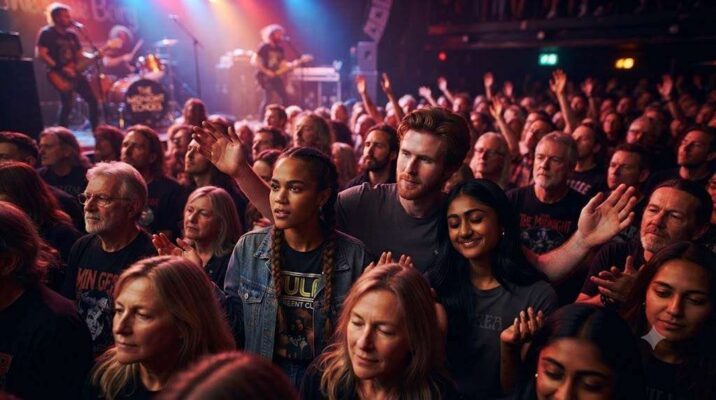
Every fandom has live behaviors that new fans learn by watching.
Some are obvious: sing the chorus, cheer after the solo, hold up lights, respond to a chant. Others are more subtle. Fans know when to be quiet, when to let the artist speak, when a certain line belongs to the crowd, when a song is rare, when a setlist choice is surprising, or when an opening note means the room is about to change.
No one hands out a manual at the door.
The crowd teaches the language in real time.
At a K-pop concert, fan chants and synchronized lights can turn the audience into part of the performance. At a jam-band show, setlist knowledge, song transitions, and live version memory become part of the shared experience. In metal, punk, or rock spaces, movement, call-and-response moments, and crowd energy can communicate belonging just as strongly as words.
This is where fandom language becomes physical. Fans are no longer only quoting lyrics online or recognizing symbols on screens. They are using timing, volume, silence, and movement together.
The wider question of why a concert feels different from a recording is explored in why live music feels different from recorded music. Here, the focus is narrower: live shows reveal how much fans already know together.
A crowd can speak without forming a sentence.
The Online Archive That Teaches the Language
Online fandom moves fast, but it also remembers a surprising amount.
A new fan can discover an artist today and find years of context waiting: old clips, translation threads, concert edits, fan timelines, archived interviews, lyric explanations, meme histories, setlist discussions, anniversary posts, and debates about eras that ended long before they arrived.
This changes how fandom language is learned.
In older local scenes, fans learned through record stores, zines, school friends, parking lots, venues, and older listeners who passed down stories. Those paths still matter, but online spaces make the archive much easier to enter. A person can spend one night moving from a viral clip to a full album, then to a live performance, then to fan explanations of why that performance mattered.
The internet also complicates the language. References spread quickly. Jokes mutate. Small moments become exaggerated. Misreadings travel alongside careful explanations. Fandom history can become both more accessible and more chaotic.
Still, the archive matters because it prevents the language from disappearing.
A joke from years ago can resurface. A lyric interpretation can be revisited. A concert clip can introduce late fans to a moment they missed. A fan-made timeline can teach someone how one era led into another.
Online fandom gives new listeners a way to catch up, even if they arrived long after the first conversation started.
The New Fan Learning to Read the Room
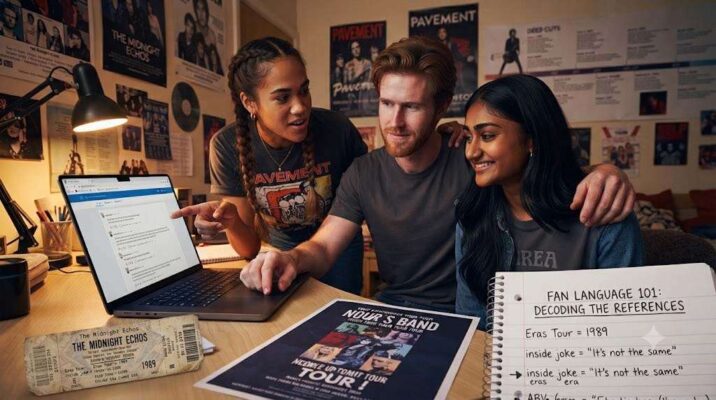
Every fan starts somewhere outside the language.
At first, the community can look dense. People use abbreviations without explaining them. They mention performances by date or city. They refer to eras through colors, outfits, hairstyles, album covers, or inside phrases. They quote lyrics in situations where the meaning seems obvious to everyone except the newcomer.
That confusion is normal.
Learning fandom language is not only about collecting facts. It is about learning which references carry emotion and which ones are just information. A new fan begins to understand why one song comforts people, why one performance is treated as legendary, why one joke still circulates, why one visual era is remembered with unusual softness, or why a certain lyric appears whenever fans talk about growth.
At some point, the references stop feeling like a wall.
They become doors.
The fan no longer needs every phrase explained. They start recognizing patterns, moods, and emotional cues. They can join a conversation without feeling like they are translating each sentence from the outside.
That is when fandom becomes less like content consumption and more like participation.
The music brings the person in. Context helps them stay.
The Moment Private Listening Becomes Social
Many people come to music alone.
They find a song during a hard week, a boring commute, a breakup, a period of change, or a year when they cannot explain themselves well. At first, the song belongs to private life. No one else needs to know what it means.
Then the fan enters a community and sees other people using the same song with similar care.
That moment can be powerful. The listener realizes that the emotion they thought was private has a public echo. Other fans have also attached memory, hope, grief, comfort, humor, or identity to the same music.
This does not erase personal meaning. A song can still belong to one person’s life in a specific way, which is explored in why certain songs become personal time capsules. Fandom adds another layer. It lets private meaning sit beside shared meaning.
The song becomes both personal and social.
That is why fandom language can make people feel less alone. It gives them a way to point toward an emotion without explaining every detail. A song title, lyric, joke, symbol, or concert reference can carry enough meaning for another fan to understand the direction of the feeling.
The language does not replace friendship or real-life support. But it can create small moments of recognition that matter.
When the Language Becomes Too Closed
There is one danger in fandom language: it can become a gate.
Shared references can make people feel close, but they can also make newcomers feel excluded if the community uses them as tests. A fan who does not know every old joke or every deep cut is not necessarily less sincere. They may simply be earlier in the learning process.
Healthy fandom language welcomes curiosity.
It lets people ask what a reference means. It explains without turning every answer into a lecture. It allows new fans to enter through a popular song, a viral clip, a visual era, or a live performance without immediately treating them as shallow.
The best fan communities know the difference between context and gatekeeping.
Context says, “Here is why this matters.”
Gatekeeping says, “You should already know.”
Only one of those helps the language survive.
A fandom that refuses to teach its language slowly turns inward. A fandom that teaches generously gives the music more room to travel.
Why the Language Lasts
Fandom language lasts because fans need ways to carry meaning together.
A song title can hold a whole mood. A lyric can become a phrase people reach for when ordinary words feel too plain. A joke can keep an old moment alive. A symbol can let fans recognize each other across distance. A concert ritual can turn shared knowledge into action. An online archive can help latecomers understand a culture that started before they arrived.
None of this replaces the music.
It grows from the music.
The artist creates the songs, but fans build the living conversation around them. They repeat, reinterpret, explain, joke, translate, save, argue, and remember. Over time, those habits become a language.
That is why fandom is more than liking the same artist. It is the process of learning how a community hears together.
The strongest fandom language does not only prove who belongs. It gives people a way to recognize feeling in one another.
A person says a song title.
Another fan understands the season attached to it.
Someone posts a lyric.
Others know why that line returned today.
A symbol appears in a crowd.
People who have never met feel, for a second, that they are standing inside the same reference.
That is the work of fandom language.
It turns listening into recognition.