
Why Symbolic BTS Designs Feel More Personal Than Loud Merch
Not all fan merchandise creates the same emotional response. Interestingly, some of the most meaningful BTS-related items contain almost no obvious BTS branding at all.
A shirt with a large logo can immediately tell the world, “This is BTS.” But a tiny whale, a purple thread, a small door, a flower, a moon, or a hidden lyric can communicate something much more personal. These symbols do not simply identify the group. They carry the emotional history of how the fan experienced the music.
This is why many long-term fans eventually gravitate toward symbolic BTS designs. The shift is not only about fashion or minimalism. It reflects a deeper change in how fans relate to the group. As the connection matures, the need to announce fandom often becomes less important than the need to carry meaning privately.
This shift makes more sense inside the wider system of BTS symbolism, eras, visual identity, and fan culture, where songs, colors, images, and eras often become emotional language rather than simple references.
Symbolic designs feel personal because they do not explain everything at once. They leave room for memory, interpretation, and emotional ownership. A logo says what the item represents. A symbol lets the wearer decide what the item means.
The Difference Between Recognition and Resonance
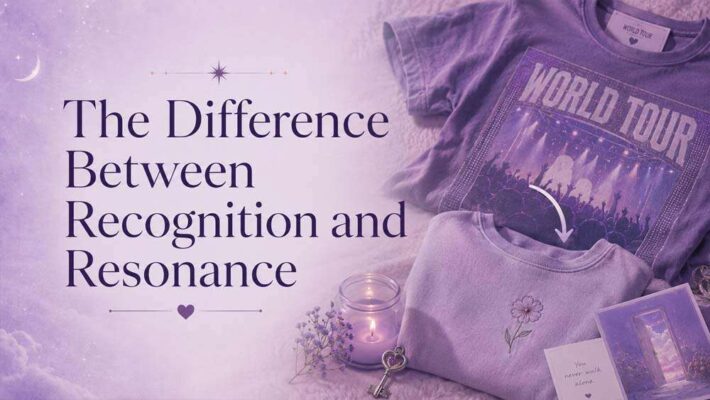
The key difference between loud merch and symbolic design is the difference between recognition and resonance.
Recognition is immediate. A large BTS logo, member photo, tour date, or album title tells people exactly what they are looking at. It functions as public identification. It allows strangers to recognize the artist, the fandom, and the wearer’s connection to both.
Recognition can be powerful, especially for newer fans. Wearing obvious merch can feel exciting because it makes belonging visible. It can help fans find one another in public spaces, start conversations, or feel part of something larger than themselves. There is nothing shallow about that stage of fandom. Sometimes people need to be seen.
But resonance works differently.
Resonance is not only about being recognized by others. It is about feeling something privately. A symbolic design may not announce BTS to everyone in the room, but it can speak directly to the wearer. It may remind them of a song that helped them through grief, an era that shaped their identity, a concert where they felt alive again, or a friendship built through the fandom.
Recognition says, “This is BTS.”
Resonance says, “This means something to me.”
That distinction explains why subtle symbols can feel more intimate than loud branding. Recognition depends on external visibility. Resonance depends on internal meaning. A fan may enjoy both, but they serve different emotional purposes.
Why Symbols Carry More Emotional Weight Than Logos
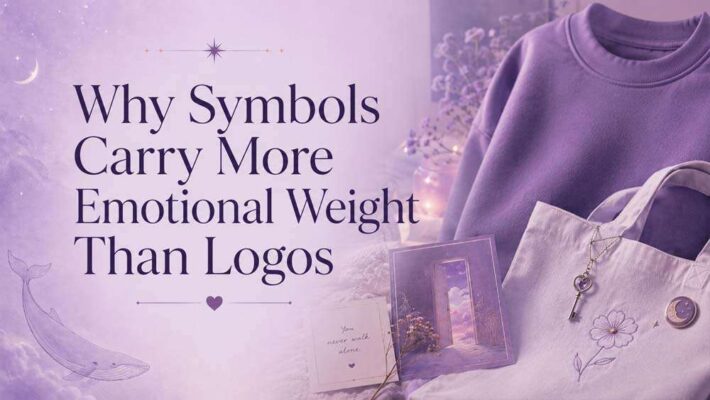
Logos are built for clarity. Symbols are built for depth.
A logo usually has one main function: to identify. It tells people which artist, company, brand, or group is being referenced. In fan apparel, a logo can be useful because it creates instant recognition. But its meaning is often fixed. It points outward toward the public identity of the group.
A symbol can hold more emotional weight because it points inward.
A whale does not only refer to “Whalien 52.” For fans, it can carry the feeling of being unheard, misunderstood, or emotionally distant from the world around them. This is why the 52-Hertz whale became such an emotional BTS symbol, especially for fans who recognize the pain of calling out without knowing whether anyone can hear them.
A flower does not only refer to an era or visual motif. It can hold ideas of growth, healing, fragility, and self-compassion. A door does not only suggest Magic Shop. It can represent psychological refuge, the act of entering a safer inner space, or the hope that fear can be exchanged for comfort.
Purple is another example. A plain purple accessory may not look like BTS merchandise at all. But inside ARMY culture, it carries trust, continuity, and the emotional promise of “I purple you.” It does not need the group’s name printed across it to be understood by the people who know the language. That is why purple remains such a powerful symbol in BTS fan culture.
This is why symbols can feel heavier than logos. They are not limited to identification. They store emotion.
A logo tells people what you support. A symbol can remind you why you stayed.
The Psychology of Personal Interpretation
One reason symbolic designs feel so personal is that they invite interpretation.
A logo usually has a narrow meaning. It is meant to be recognized the same way by everyone. That is the point. It reduces ambiguity so people immediately understand the reference.
A symbol works in the opposite direction. It creates space.
The same flower can mean different things to different fans. One person may connect it to the Love Yourself era and the difficult work of healing. Another may see it as a reminder of softness after a harsh period of life. Another may associate it with a specific lyric, performance, fan project, or friendship. The design is the same, but the emotional meaning changes depending on the wearer’s history.
That flexibility is psychologically powerful. It allows fans to personalize the object without changing its appearance. The symbol becomes a container for private memory.
This is why subtle BTS designs often feel less mass-produced even when many people own similar items. The emotional interpretation belongs to the wearer. A small whale charm may look identical on two people, but one fan may attach it to teenage loneliness while another attaches it to adult burnout. A tiny door may remind one fan of panic attacks and another of the first time a song made them feel safe.
The symbol does not force one meaning. It absorbs the meaning the fan brings to it.
That is the difference between wearing something that identifies you and wearing something that understands you.
How Fans Attach Memories to Symbols
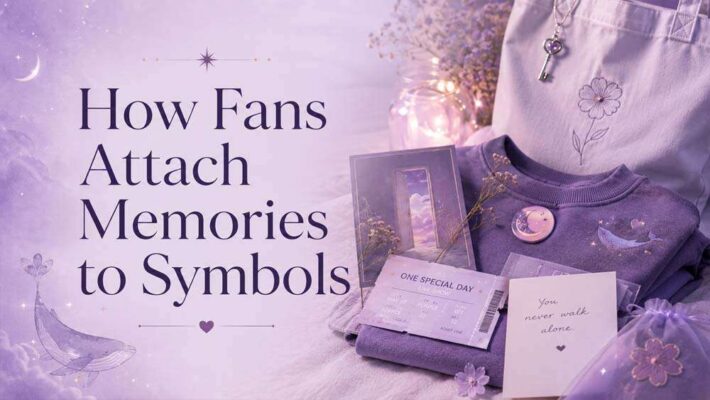
Fans rarely attach meaning to symbols in a purely abstract way. Usually, the meaning comes from memory.
A symbol becomes powerful because it is connected to a specific time, place, or emotional state. It may remind the fan of the year they discovered BTS, the era they associate with healing, the concert they attended with friends, the album that arrived during a difficult transition, or the online community that made them feel less alone.
Over time, a small design can become a wearable timeline.
A whale may remind someone of a period when they felt invisible but kept trying to speak. A purple detail may hold the memory of waiting through uncertainty while still trusting the bond between BTS and ARMY. A Magic Shop-inspired key may recall the months when the fan needed comfort more than motivation. A flower may represent the slow, painful process of learning to treat themselves with more kindness.
This is why symbolic apparel can become emotionally dense. The object is small, but the memory attached to it is large.
The fan is not simply wearing a reference. They are wearing a chapter of their own life.
That is also why symbolic designs often remain meaningful long after a promotional cycle ends. A tour shirt may commemorate an event. A symbol can continue gathering meaning for years. It can move with the fan through new jobs, new cities, heartbreaks, friendships, healing periods, and stages of adulthood.
This is closely tied to how BTS meaning changes as fans grow older, because the same symbol can carry a different emotional meaning depending on the life stage the fan is moving through.
The design stays the same, but the memories around it keep expanding.
Why Minimalism Works So Well in BTS Fan Culture
Minimalism works especially well in BTS fan culture because the emotional material is already complex.
BTS’s discography and visual world contain heavy themes: identity, shame, youth, ambition, loneliness, self-love, burnout, persona, shadow, healing, and the fear of being misunderstood. These ideas are emotionally large. If every design tried to represent them loudly, the result could easily feel overwhelming.
Minimalism gives those themes a quieter form.
A single line drawing of a whale can hold loneliness without making the design feel heavy. A small door can suggest refuge without explaining the entire Magic Shop concept. A purple stitch can carry years of fandom history without turning the garment into a slogan. A flower can represent healing without needing to announce pain.
This is why minimalism is not just an aesthetic choice. It is a psychological container.
It allows fans to carry complicated feelings in a form that feels calm, wearable, and integrated into daily life. The design does not need to display the full emotional story. It only needs to point toward it.
Minimalism also respects privacy. Many fans do not want to explain their emotional connection to BTS every time they get dressed. A subtle design lets them keep the meaning close without making it public property. It gives the wearer control over who gets access to the story.
That control is part of the comfort.
When Merchandise Becomes Storytelling
Symbolic BTS designs turn merchandise into storytelling.
A loud logo identifies the fandom quickly, but a small symbol can suggest an entire emotional narrative. A tiny embroidered door may tell the story of a fan who used Magic Shop as a mental refuge during anxiety or grief. A whale design may tell the story of someone who once felt unheard and found comfort in knowing others understood that frequency. A flower may tell the story of self-forgiveness, growth, or learning to soften after years of self-criticism.
The design does not tell the whole story to everyone. It does not need to.
Its power comes from compression. A symbol can hold a large emotional history in a small visual form. To outsiders, the image may look simple. To the wearer, it may contain years of memory.
This is where merchandise becomes more than proof of fandom. It becomes a narrative object.
The fan is not just wearing something connected to BTS. They are wearing a symbol that connects BTS to their own life. The item becomes part of how they remember who they were, what they survived, and what the music helped them understand.
This kind of storytelling is quiet, but it is not weak. In many ways, it is more powerful because it does not depend on being explained. The wearer knows the story. That knowledge is enough.
Why Some Fans Outgrow Traditional Merch
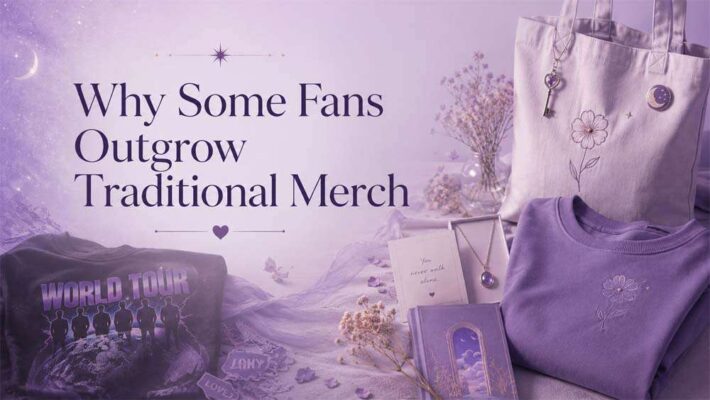
Some fans eventually outgrow traditional merch, but that does not mean they outgrow BTS.
This distinction matters. Choosing fewer logo-heavy shirts does not mean the fan is embarrassed, less dedicated, or less emotionally connected. Often, it means their relationship with the fandom has changed form.
Early fandom is often full of discovery and public excitement. A fan may want the hoodie, the logo, the poster, the tour shirt, the visible sign that says, “I am here.” That stage can feel joyful because the fan is building identity and finding community.
Later, the emotional need may shift.
Long-term fans may no longer need clothing to prove that they belong. They already know. Their connection has become stable enough to move inward. Instead of wanting every item to broadcast fandom, they may want pieces that fit naturally into work, school, travel, family life, and ordinary routines.
This is especially true for adult fans. A loud shirt may still be loved, but it may not fit every environment. A subtle symbol can move through more spaces. It can be worn to the office, on errands, during travel, or in quiet daily life without requiring explanation.
This is the same logic behind workplace-safe fandom, where adult fans learn to carry BTS into professional and everyday spaces through smaller, more private visual cues.
The fan has not rejected merch. They have refined what they need from it.
Traditional merch often says, “I support BTS.” Symbolic design says, “BTS is part of my inner life.”
Both are valid. But for many long-term fans, the second statement becomes more emotionally accurate.
The Appeal of Designs Only Other Fans Understand
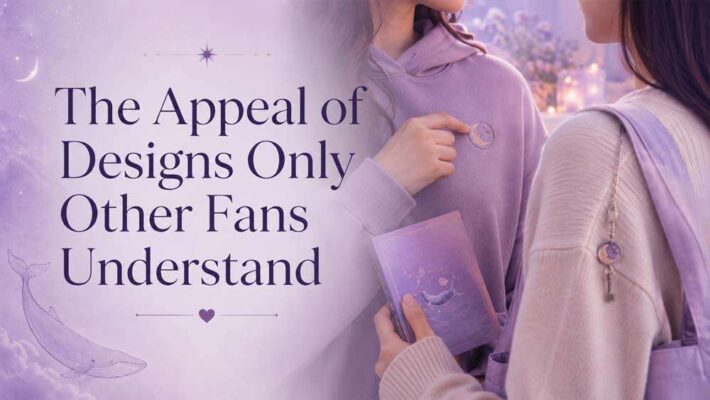
There is a special appeal in wearing something that looks ordinary to most people but speaks clearly to the right few.
Symbolic BTS designs create an insider language. They allow fans to recognize one another without shouting. A stranger may see a simple whale, flower, key, moon, or purple detail and think it is just a design choice. Another ARMY may see it and immediately understand that there is a deeper reference.
That moment of recognition can feel more meaningful than being noticed for a large logo.
Why? Because it depends on shared emotional literacy.
The person who recognizes the symbol is not only identifying BTS. They are recognizing the emotional world around BTS. They understand the song, the era, the phrase, the fandom history, or the feeling behind the image. The connection feels more precise because it is not available to everyone.
This creates a quiet form of belonging. The fan does not need to announce themselves to the entire room. The symbol acts like a filter, reaching only the people who know how to read it.
For long-term fans, that can feel deeply satisfying. It turns clothing into a small secret shared with strangers who are not really strangers. A brief glance, a compliment, or a knowing smile can become enough.
The design works quietly, but the recognition feels intimate.
Conclusion
The most meaningful fan apparel often works quietly, relying on shared symbols rather than obvious branding to communicate belonging.
Loud merch has its place. It can be joyful, public, and community-building. But symbolic BTS designs offer a different kind of emotional connection. They move beyond recognition and into resonance. They allow fans to carry memories, eras, songs, friendships, grief, healing, and personal growth in a form that does not need to explain itself.
A logo tells the world what the fan loves. A symbol reminds the fan why that love mattered.
That is why a tiny whale, a purple thread, a flower, a door, or a hidden lyric can feel more personal than a large printed name. These designs create space for interpretation. They turn clothing into memory, merchandise into storytelling, and fandom into a private emotional language.
For fans drawn to identity, public masks, and the gap between outer presentation and inner life, this also connects to Map of the Soul and the exhaustion of the persona. Subtle design lets the inner meaning stay present without requiring the outer self to explain everything.
For many BTS fans, the strongest symbols are not the loudest ones. They are the quiet references that stay close to the body, understood by the few, and meaningful even when no one else notices.