
Why the 52-Hertz Whale Became an Emotional Symbol in BTS Culture
Few BTS symbols have remained emotionally relevant as long as the whale.
For many listeners, the image first enters BTS culture through “Whalien 52,” a song built around the story of the 52-hertz whale. But the reason the whale stayed in ARMY culture is not simply because the song was sad, poetic, or unusual. It stayed because it gave fans a shape for a feeling many people struggle to explain: the pain of having a voice, but not knowing whether anyone truly hears it.
That distinction is important. The whale is not only a symbol of loneliness. Loneliness alone would be too simple. In BTS culture, the 52-hertz whale became a symbol of emotional distance, misunderstood communication, and the quiet exhaustion of trying to reach others from a frequency they do not seem able to receive.
This is why the image has lasted beyond the song itself. It speaks to teenagers who feel unseen, but it also continues to resonate with adults who have jobs, families, responsibilities, and social lives that may look functional from the outside. The whale endures because the fear of being unheard rarely disappears with age.
To understand why this image became so durable, it helps to place it inside the broader system of BTS symbolism, eras, visual identity, and fan culture, where songs and images often become emotional tools fans use long after the original release.
Understanding the Original Whale Story

The original 52-hertz whale story does not need to be explained like a biology lesson to understand why it became powerful in BTS culture.
The basic idea is simple: the whale is known for calling at an unusually high frequency compared with many other whale calls. Because of that, it became popularly known as the “loneliest whale in the world,” a creature singing through the ocean without certainty that another whale could answer in the same language.
Whether the popular version of the story is scientifically complete is less important than the emotional image it created. A whale moving through a vast ocean, calling again and again, became an almost perfect metaphor for misunderstood people. It is not silent. It is not passive. It is not refusing connection. It is calling out. The tragedy is that its call may not reach the listener it hopes for.
That is the emotional doorway BTS opened with “Whalien 52.” The song does not use the whale as a random sad image. It uses the whale to represent a person who keeps expressing themselves even when the world does not seem to respond. The symbol works because it captures a very specific kind of loneliness: not the absence of voice, but the absence of response.
Why Loneliness Became a Universal Theme
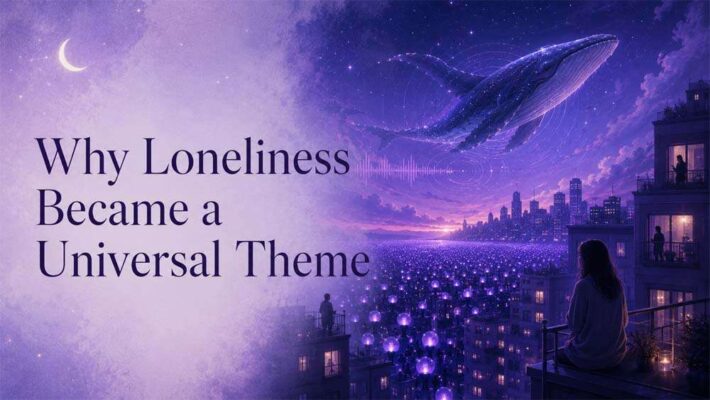
Loneliness is one of the most common themes in music, but the whale made it feel unusually specific.
A person can feel lonely in many ways. They can be physically alone, socially excluded, emotionally distant from others, or surrounded by people who still do not understand them. The 52-hertz whale touches the deepest version of that experience: the feeling that you are communicating from a place no one else can tune into.
That is why the symbol became universal within BTS fan culture. ARMY is a global fandom made up of people from different languages, countries, ages, and backgrounds. Not every fan has the same life story, but many understand what it feels like to be misread. Some fans found BTS during adolescence, when identity feels unstable and the need to be understood can feel urgent. Others found BTS later, during burnout, grief, isolation, career pressure, or emotional transition.
The whale makes all of those experiences feel connected. It does not require every fan to have the same pain. It only requires them to recognize the same emotional pattern: trying to say something real and feeling like the world hears only noise.
That is why the whale became more than a song reference. It became a shared emotional metaphor for isolation, not being understood, and the distance between what someone feels internally and what others are able to perceive externally.
The Difference Between Being Alone and Being Unheard
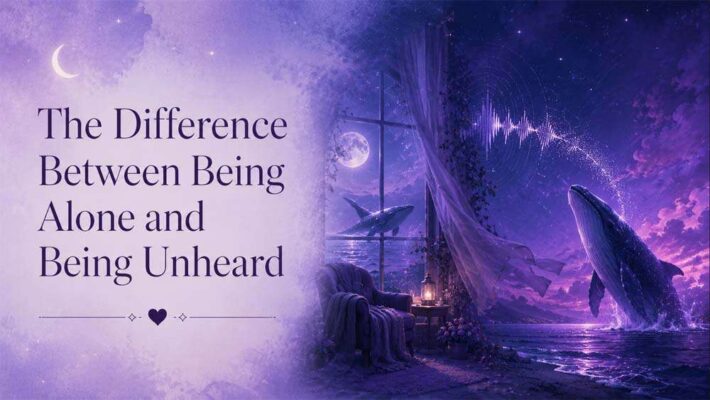
The strongest part of the whale symbol is that it separates being alone from being unheard.
Being alone is a condition. Being unheard is a wound.
Someone can be alone and still feel peaceful. Solitude can be chosen, restorative, and necessary. But being unheard is different because it implies failed connection. It means there was an attempt. There was a signal. There was effort. The pain comes from realizing that the message did not land.
This is why the 52-hertz whale hits harder than a generic image of sadness. The whale is not simply floating in silence. It is calling. It is participating in the act of communication. It is doing the vulnerable thing: sending something outward with no guarantee of return.
That is also why the symbol fits BTS so well. Much of BTS’s emotional world is built around the desire to speak honestly in systems that often flatten people. Their music has repeatedly returned to youth, pressure, alienation, ambition, shame, self-worth, and the difficulty of being understood. The whale becomes a natural extension of that language.
For fans, this distinction is deeply personal. Many people are not afraid of being alone in the literal sense. They are afraid of being surrounded by classmates, coworkers, family members, followers, or acquaintances and still feeling untranslated. They are afraid that their real voice exists at a frequency other people politely ignore, misunderstand, or never notice.
That is the emotional core of the whale in BTS culture. It is not only a lonely creature. It is a creature whose loneliness comes from communication without recognition.
Why Fans Adopted the Whale Beyond the Song
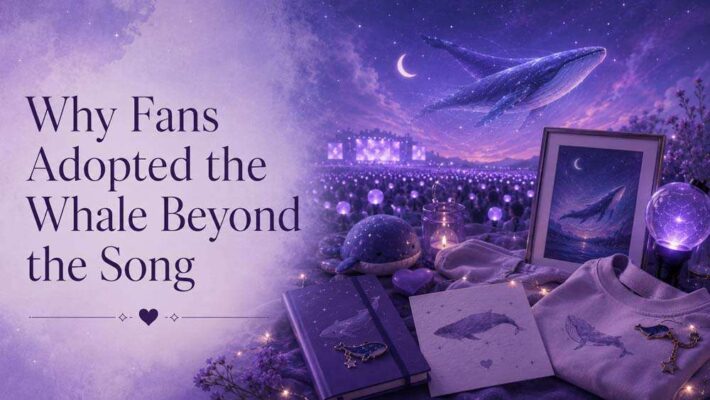
The whale moved beyond “Whalien 52” because fans recognized themselves in the metaphor.
A song can introduce a symbol, but a fandom decides whether that symbol survives. ARMY kept the whale alive because it offered a softer way to talk about pain. Instead of saying, “I feel invisible,” a fan could draw a whale. Instead of saying, “I keep trying to explain myself and no one understands,” they could use the image of a whale calling through the ocean.
That indirectness matters. Fandom symbols often become emotionally useful because they allow people to express complicated feelings without overexposing themselves. The whale gives fans a language that is vulnerable but not too direct. It lets them be honest while still feeling protected.
The image also fits the emotional atmosphere of BTS’s youth-centered eras. “Whalien 52” belongs to a period in BTS’s discography where beauty and uncertainty existed together. That is why the whale naturally connects to why HYYH feels different from other BTS eras, since HYYH captures youth as something beautiful, unstable, and emotionally unresolved.
Over time, fans adopted the whale as a symbol of persistence as much as loneliness. The whale keeps calling. That is crucial. It does not disappear just because it is unheard. It continues moving, singing, and existing. For ARMY, that persistence transformed the symbol from pure sadness into quiet resilience.
How the Whale Appears Across Fan Spaces
The whale appears across BTS fan spaces in ways that are often subtle, handmade, and deeply personal.
In fan art, the whale is often drawn floating through a galaxy, surrounded by stars, purple light, clouds, or ocean waves. This visual blending matters because it turns the whale into something between sea and sky, reality and dream. It becomes a creature that carries loneliness but also wonder.
In journals and planners, fans use whale stickers, sketches, and handwritten quotes to mark emotional reflections. The whale becomes part of private self-documentation, a symbol placed near thoughts that may never be posted publicly. In this context, it functions less like decoration and more like a companion image for inner life.
In clothing and accessories, the whale often appears in minimal forms: a small embroidered outline, a pendant, a charm, a tote bag print, or a soft blue-purple graphic. Like many BTS symbols, it does not need to be loud to be meaningful. To outsiders, it may simply look like a pretty whale design. To another ARMY, it can signal a whole emotional history.
This is why the whale works so well inside symbolic BTS designs. A small visual reference can carry the emotional memory of a song, an era, and a personal period of loneliness without needing a large logo to explain it.
In digital communities, the whale appears in edits, usernames, profile icons, moodboards, wallpapers, and fan-made graphics. It is especially common in posts about comfort, loneliness, healing, or being misunderstood. This repeated use keeps the symbol alive beyond the song’s release date. Every time a fan uses the whale to express something difficult, the image gains another layer of emotional memory.
The whale works across these spaces because it is flexible. It can be cute, sad, cosmic, elegant, nostalgic, or comforting depending on how fans use it. That flexibility is one reason it has lasted so long.
Why the Whale Still Resonates With Adults

At first glance, the whale might seem like a symbol made for teenage loneliness. But its long-term power comes from the fact that adulthood does not erase the fear of being unheard.
Adults may become better at functioning, but that does not mean they always feel understood. In fact, adulthood can make emotional distance harder to name. A person can have a stable job, answer emails, attend meetings, support family members, pay bills, and still feel like no one is hearing their actual inner voice.
This is where the whale becomes especially powerful for adult fans. The symbol grows with them. As a teenager, the whale might represent school isolation, friendship anxiety, or the pain of feeling different. As an adult, it may represent workplace invisibility, emotional labor in family roles, burnout, quiet disappointment, or the difficulty of maintaining identity inside responsibility.
Many adults are not lonely because they lack people around them. They are lonely because their most honest self has very few places to speak. They may be praised for being reliable, productive, polite, or strong, while the more vulnerable parts of them remain unheard. The whale captures that contradiction with painful accuracy.
This is why the symbol has not faded as ARMY has aged. It is not trapped in adolescence. It follows fans into new life stages because the need to be understood changes form rather than disappearing. This is part of how BTS meaning changes as fans grow older: the same symbol can shift from teenage isolation to adult emotional invisibility.
The ocean becomes the office, the family home, the group chat, the commute, the relationship, the city. The call remains the same.
Why the Whale Became a Symbol of Hope, Not Just Sadness
Although the 52-hertz whale is often associated with loneliness, BTS fan culture rarely treats it as only tragic.
The whale is sad, but it is not defeated. It calls. It moves. It survives. It continues through a vast space that may not answer immediately. That persistence is what gives the symbol its hope.
For many fans, the whale does not only say, “I am lonely.” It also says, “I am still here.” That difference is essential. The image allows pain to exist without turning it into an ending. It gives loneliness motion. It suggests that even an unanswered voice has value because the act of calling is itself proof of life.
This is one reason the whale fits so naturally with BTS’s wider emotional language. BTS often does not erase sadness. Instead, their music tends to sit beside it, name it, and look for a way through. The whale works in the same way. It does not promise that every person will be understood immediately. It promises that the voice is still worth using.
That hope also connects the whale to other BTS symbols of comfort and recognition. Where purple works as a shared emotional language, Magic Shop offers a psychological refuge for moments when the need to be heard becomes too heavy to carry alone.
That is why fans continue to return to it during difficult periods. The whale gives them a way to honor loneliness without romanticizing suffering. It says the pain of being unheard is real, but it also suggests that continuing to speak, create, and reach outward still matters.
Conclusion
The 52-hertz whale became an emotional symbol in BTS culture because it expresses a kind of loneliness that ordinary language often misses.
It is not only about being alone. It is about having a voice that does not seem to reach the people around you. It is about the distance between expression and recognition. It is about the quiet grief of trying to communicate and still feeling misunderstood.
ARMY adopted the whale beyond “Whalien 52” because it gave them a visual language for that experience. Through fan art, journals, clothing, digital spaces, and personal rituals, the whale became a symbol of isolation, persistence, and the hope that someone, somewhere, might understand the frequency of your voice.
For adult fans, the whale can even become part of workplace-safe fandom, appearing as a small charm, subtle embroidery, or quiet visual cue that carries meaning without needing public explanation.
The reason the whale still resonates is simple: people do not outgrow the need to be heard. They only encounter new versions of that need as they move through life.
The whale endures because the fear of being unheard rarely disappears with age.