
Why Black Sabbath Still Matters: The Sound, Fear, and Feeling That Built Heavy Metal
When people talk about the origins of heavy metal, the conversation often starts with volume. The image is easy to understand: louder amplifiers, thicker distortion, heavier guitars, and a sound strong enough to shake a room.
But that only explains part of Black Sabbath’s legacy.
Black Sabbath did not become one of the foundations of heavy metal simply by turning rock music louder. Their deeper achievement was emotional. They gave rock a slower, darker, more anxious language — one that could express fear, pressure, moral confusion, social dread, and the strange comfort of hearing those feelings turned into sound.
That is why their music still matters. A Black Sabbath song can feel heavy even before it becomes loud. The weight often comes from what the band leaves hanging in the air: the slow movement of a riff, the pause before the next chord, the uneasy vocal line, or the sense that the song is circling something people would rather not say directly.
Decades later, Black Sabbath still connects with listeners because their music does not feel like a museum piece. It feels like a starting point for many of the emotions heavy music continues to explore.
This pillar guide looks at why Black Sabbath remains so important through their sound, lyrics, riffs, albums, emotional darkness, and lasting influence on heavy metal culture.
Black Sabbath Did Not Just Sound Heavy — They Felt Heavy
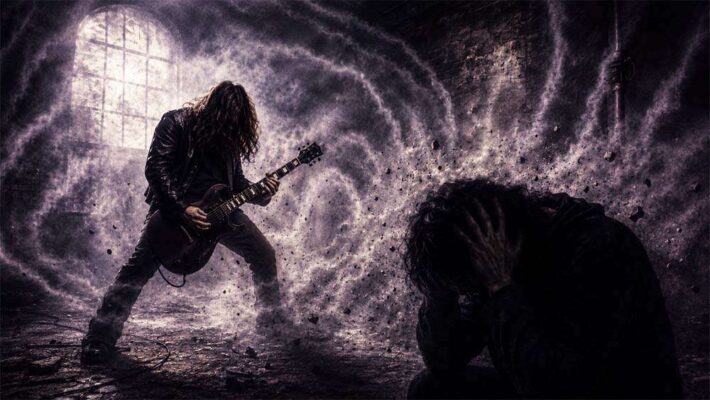
There is a difference between music that sounds heavy and music that feels heavy.
Modern metal can sound massive through down-tuned guitars, layered production, triggered drums, and extreme vocals. Black Sabbath’s early records did not have that kind of modern studio power. By today’s standards, the production can feel raw, open, and even sparse.
Yet the music still carries weight. That weight comes from how the band used:
- space
- tempo
- repetition
- atmosphere
Sabbath often allowed riffs to move slowly enough for each note to feel physical. Instead of rushing toward release, the songs often stayed inside tension. The result was not just a loud version of blues rock. It was something heavier in mood.
In the song “Black Sabbath,” the main riff does not feel like a normal hook. It feels like a warning. The slow movement, the ominous interval, and the open space around the guitar make the track feel larger than its actual parts. The song is not complicated in a technical sense, but it creates a room the listener has to sit inside.
That is one reason Black Sabbath still holds so much power today. Their heaviness is not only a matter of distortion. It is the feeling of pressure, waiting, dread, and release.
For a deeper look at this idea, read Why Black Sabbath Still Feels Heavy Without Sounding Modern.
The World That Shaped Black Sabbath’s Darkness
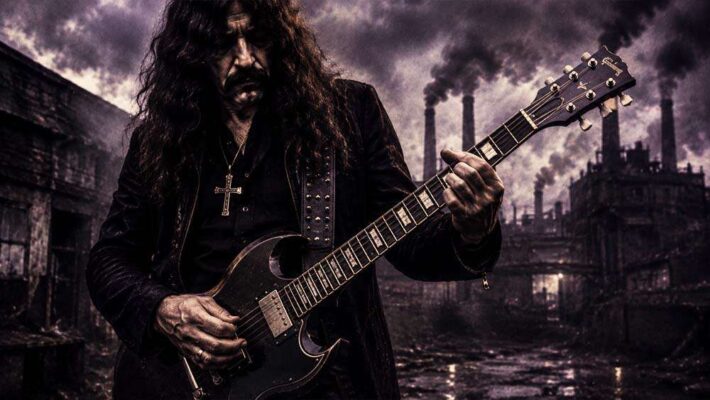
Black Sabbath’s darkness did not come from image alone. It came from a world that already felt heavy.
The band formed in Aston, Birmingham, an industrial area shaped by factories, working-class life, and the physical weight of postwar Britain. That background matters because Sabbath’s music never sounded glamorous. It sounded grey, mechanical, and grounded in real pressure.
This is part of what separates Black Sabbath from bands that later used darkness mostly as a theatrical style. Sabbath’s early sound felt connected to a place where escape was not guaranteed. The music carried the mood of factory noise, limited options, and the sense of living inside a world built from concrete, smoke, and repetition.
That does not mean every Sabbath song should be reduced to geography. But the environment helps explain why their darkness feels so tangible. It is not just fantasy darkness. It is the sound of people trying to make sense of a world that already felt bleak.
This grounded quality is one of the reasons Sabbath’s music still feels human rather than cartoonish. The fear in the music is not only supernatural. It often feels social, spiritual, psychological, and ordinary.
Tony Iommi’s Riffs Changed What Rock Guitar Could Do
Tony Iommi’s guitar work is central to why Black Sabbath changed rock music.
Before Sabbath, the rock guitar was often associated with blues movement, soloing, swagger, and forward motion. Iommi helped turn the guitar riff into something else: a source of atmosphere, pressure, and structure. In Sabbath, the riff was not just a memorable part of the song. It often became the song’s center of gravity.
“Iron Man” is simple enough to recognize immediately, but its power comes from more than memorability. It moves with a heavy, deliberate shape. It does not dance around the listener; it approaches slowly, almost mechanically.
“Into the Void” feels different again: deeper, thicker, and more physically grounded.
“Sweet Leaf” turns a lumbering groove into something hypnotic.
In each case, the riff does more than carry the song. It defines the space the song lives in.
Iommi’s genius was not complexity for its own sake. It was placement, tone, timing, and repetition. He understood that a riff could become heavier when it had room to breathe. He also understood that a repeated figure could feel less like a musical phrase and more like a force.
This approach shaped heavy metal songwriting. Later bands would become faster, more technical, more extreme, or more polished, but the idea of the riff as a source of immense physical weight owes a great deal to Sabbath.
For a focused breakdown of that influence, read How Tony Iommi’s Guitar Riffs Changed the Language of Rock.
Geezer Butler Wrote About Fear Before Metal Became a Style
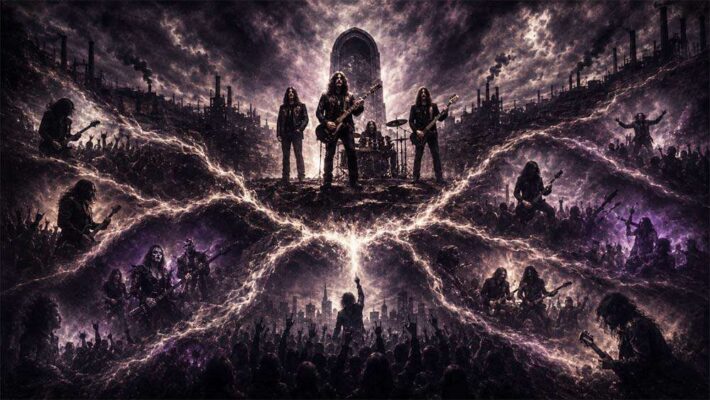
If Iommi gave Black Sabbath its physical weight, Geezer Butler gave much of that weight a psychological shape.
It is easy to misunderstand Sabbath’s darkness as simple horror imagery. But many of Butler’s lyrics are not about being evil for effect. They are about fear:
- fear of war
- fear of moral collapse
- fear of death
- fear of losing control
- fear of being trapped inside your own mind
That is why Sabbath’s darkness still feels more serious than its reputation sometimes suggests.
“War Pigs” is not frightening because it sounds occult. It is frightening because it turns political and military power into something monstrous. The song gives anger a moral edge. It is not just antiwar in a vague sense; it sounds disgusted by the people who can send others into destruction while staying untouched themselves.
“Paranoid” is much smaller in scale, but its fear is just as direct. It compresses mental unrest into a short, urgent song that still feels claustrophobic. The lyrics do not need elaborate storytelling. They work because the feeling is immediate: confusion, isolation, and the inability to settle inside your own life.
This is where Butler’s writing becomes important to the larger history of metal. He helped show that heavy music could deal with real human dread, not just fantasy danger. Sabbath’s songs gave listeners a way to hear their internal struggles echoed back at them.
For a deeper reading of these themes, read Geezer Butler’s Lyrics: The Human Fear Behind Black Sabbath’s Darkness.
Ozzy Osbourne Made the Darkness Sound Human
Ozzy Osbourne’s voice is sometimes discussed as strange, eerie, or iconic. All of that is true, but what matters most is how human he made Black Sabbath sound.
Ozzy did not sing like a distant villain controlling the darkness. He often sounded like someone standing inside it.
That quality changed the emotional effect of the band. If Sabbath’s riffs created the room, Ozzy’s voice made it feel occupied by a real person. His delivery could sound haunted, confused, pleading, or almost childlike in its directness. He did not make the music feel polished or heroic. He made it feel exposed.
This is one reason Sabbath’s darkest songs do not feel cold. There is vulnerability inside them. The listener is not only being threatened by the music; the listener is hearing someone else respond to the threat.
In later metal, darkness would often become more aggressive, more technical, or more theatrical. Ozzy’s role in early Sabbath was different. His voice gave fear a human face. That helped the band reach listeners who might not have cared about heavy riffs alone.
Paranoid Turned Anxiety Into a Heavy Metal Language
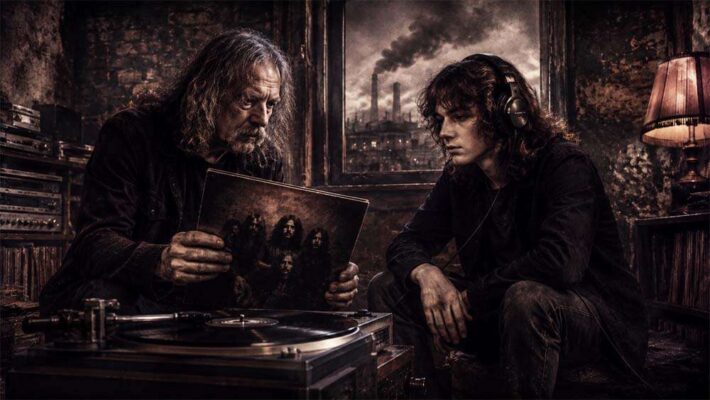
If one Black Sabbath album shows how the band turned modern fear into heavy metal, it is Paranoid.
The album is often remembered because it contains several of the band’s most recognizable songs. But its lasting importance is not only about famous tracks. Paranoid works because it gives different forms of anxiety a musical shape:
- “War Pigs” deals with power and destruction.
- “Paranoid” turns mental unease into something short and sharp.
- “Iron Man” carries a strange, tragic heaviness, turning a science-fiction-like story into a feeling of isolation and revenge.
- “Electric Funeral” pushes the fear of nuclear destruction into a slow, apocalyptic crawl.
Together, these songs show that heavy metal did not have to be escapist. It could look directly at the pressures of its time: war, alienation, political distrust, and psychological strain.
That is also why Paranoid still speaks to listeners who were born long after 1970. The historical setting has changed, but the emotional states have not disappeared. People still understand anxiety. They still understand the feeling of living under systems they cannot control. They still understand the search for music that does not pretend everything is fine.
For that reason, Paranoid is not just a classic album. It is one of the clearest examples of how Black Sabbath turned fear into a heavy metal language.
Read the full album-focused article here: Why Paranoid Still Speaks to Anxious Generations.
Why Black Sabbath’s Darkness Feels More Human Than Theatrical
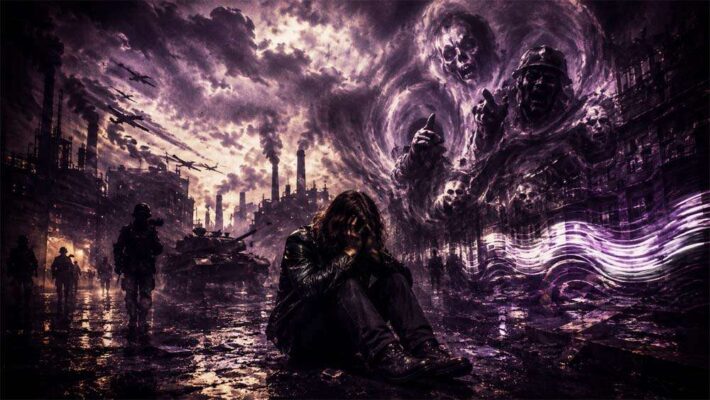
As heavy metal developed, darkness became part of the genre’s visual and musical identity. Many bands used horror imagery, occult symbols, extreme costumes, violent graphics, or shocking stage presentation. Some used those tools brilliantly. Others used them as decoration.
Black Sabbath’s darkness feels different because it is rarely only decorative.
Even when Sabbath used occult or supernatural imagery, the emotional center of the music often remained human. The songs return again and again to fear, guilt, confusion, isolation, war, and spiritual uncertainty. The listener may notice the horror atmosphere first, but the reason the songs last is that the horror points back to ordinary human anxieties.
That is why Sabbath can feel comforting to fans, even when the music sounds bleak. Heavy music often helps people because it does not deny difficult emotions. It gives those emotions a form. It lets the listener feel pressure, dread, anger, or sadness without having to translate those feelings into polite language.
Black Sabbath understood that before heavy metal had fully become a culture. Their music made darkness feel less like a costume and more like a shared emotional space.
For more on this side of the band, read Why Black Sabbath’s Darkness Feels More Human Than Theatrical.
How Black Sabbath Built the Emotional Blueprint of Heavy Metal
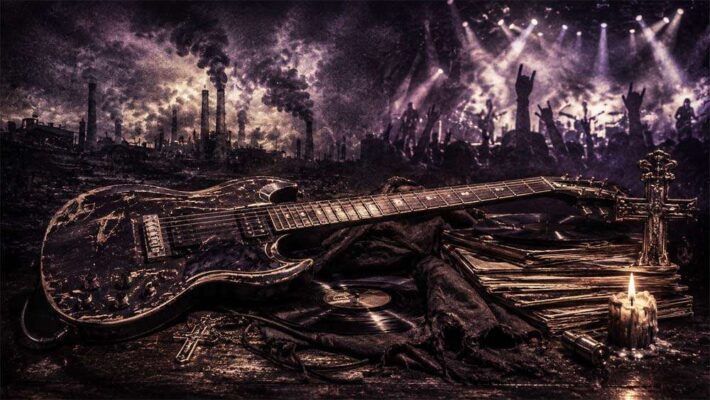
Black Sabbath’s influence is often summarized in a simple phrase: they helped create heavy metal.
That statement is useful, but it can flatten what they actually gave the genre.
Sabbath did not only influence guitar tone, riff structure, or stage imagery. They helped define what heavy metal would feel like. They showed that rock music could be slow without losing force. It could be dark without becoming empty. It could be simple without being shallow. It could use fear not only to shock listeners, but to release something inside them.
Many later styles of heavy music took different parts of that blueprint:
- Doom metal expanded the slow weight.
- Stoner and sludge metal drew from the thick riffs and physical groove.
- Traditional heavy metal developed the drama and scale.
- Thrash, extreme metal, and later subgenres pushed speed and intensity further, but they still inherited the idea that heavy music should carry emotional force.
This is why Sabbath’s legacy is bigger than a timeline. They are not only important because they came early. They are important because so many later forms of heaviness still return to questions they helped ask:
- What does fear sound like?
- How slow can rock become before it turns into something else?
- Can darkness be a form of honesty?
- Can heavy music make people feel less alone?
Those questions still sit at the center of heavy music. Black Sabbath did not answer all of them neatly, but they made them impossible to ignore.
Why Black Sabbath Still Connects With New Listeners
Nostalgia explains part of Black Sabbath’s appeal, but not all of it.
For older fans, Sabbath may carry the memory of discovering heavy music for the first time. The records may be tied to bedrooms, record stores, older siblings, late-night listening, or the feeling of finding a sound that matched something they could not yet explain.
For newer listeners, the connection is different. They are not returning to Sabbath as a memory. They are finding the source of a feeling that still exists in modern music.
A young listener can hear Master of Reality or Paranoid today and recognize the emotional language immediately: unease, distrust, heaviness, isolation, and release. The production may sound older, but the feeling does not. If anything, the rawness can make the songs feel more direct.
That is one of the strongest signs of Sabbath’s lasting importance. Their music does not depend only on historical context. It still gives listeners a place to put feelings that are difficult to carry alone.
Older generations may hear Black Sabbath as a return. Newer generations may hear Black Sabbath as a discovery.
Both responses are valid, and both point to the same truth: the band created music that still feels emotionally usable.
Further Reading in This Black Sabbath Cluster
This guide introduces the main reasons Black Sabbath still matters, but each part of their legacy deserves a closer look. These related articles explore the sound, lyrics, riffs, albums, and emotional darkness behind the band’s influence:
- Why Black Sabbath Still Feels Heavy Without Sounding Modern
- Geezer Butler’s Lyrics: The Human Fear Behind Black Sabbath’s Darkness
- How Tony Iommi’s Guitar Riffs Changed the Language of Rock
- Why Paranoid Still Speaks to Anxious Generations
- Why Black Sabbath’s Darkness Feels More Human Than Theatrical
The Real Legacy of Black Sabbath
The real legacy of Black Sabbath is not only that they made rock heavier. It is that they made heaviness meaningful.
They helped rock music speak about the darker side of life without softening it. Their songs gave shape to fear, pressure, moral doubt, mental strain, social anger, and spiritual unease. They did not always explain those feelings neatly, and that is part of the power. The music often works because it sounds like it is standing inside the confusion rather than commenting safely from outside it.
That is why Black Sabbath still matters.
They are not just an old band with a famous name. They are one of the reasons heavy music became a place where listeners could face what frightened them, frustrated them, or made them feel separate from the world around them.
Black Sabbath helped define heavy metal not only as a sound, but as an emotional language. And for many listeners, that language still says something they need to hear.
Listening Note
This article is written from a close-listening perspective, focusing on how Black Sabbath’s riffs, lyrics, atmosphere, and emotional weight continue to shape the way fans understand heavy music. It treats the band not only as a historical milestone, but as music that still gives listeners a place for pressure, release, memory, and emotional recognition.