
The Meaning of Purple in BTS Fan Culture
Most pop culture fandom colors work like visual branding. They make an artist easier to recognize, give merchandise a consistent look, and help fans signal who they support. In BTS fan culture, however, purple became something more intimate than a brand color. It became a shared emotional language between BTS and ARMY.
That distinction is important. Purple was not simply assigned to the fandom as a marketing identity. Its meaning grew from a direct moment between an artist and fans, then expanded because ARMY kept using it in ways that felt personal, protective, and emotionally specific. Over time, the color became shorthand for trust, memory, loyalty, and the kind of long-term connection that outlives a comeback cycle.
Anyone trying to understand BTS through symbolism, eras, visual identity, and fan culture eventually has to understand why purple matters. It is not only a color attached to BTS. It is one of the clearest examples of how a fandom can turn a small spontaneous phrase into a durable emotional system.
Why Purple Became More Than a Fandom Color
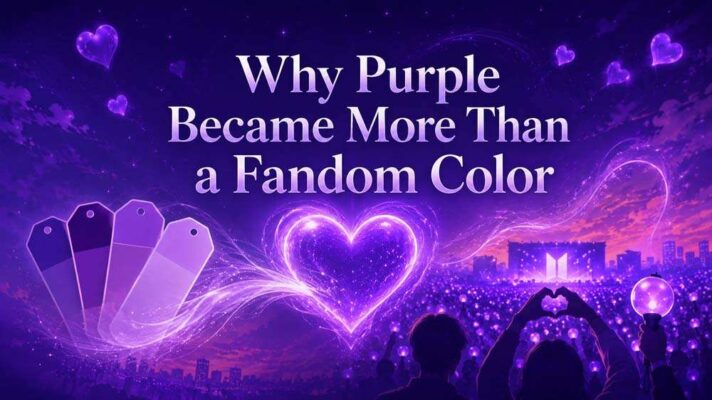
In the entertainment industry, colors are often chosen from the top down. A company decides the visual identity, designers apply it across albums and merchandise, and fans gradually learn to associate that palette with the artist. BTS’s purple symbolism developed in a different way.
The phrase “I purple you” was coined by V, also known as Kim Taehyung, during BTS’s 3rd Muster fan club event in November 2016. As the venue was lit in purple, he explained that purple is the last color of the rainbow and gave it a personal meaning: trusting and loving someone for a long time.
That origin matters because it changes the emotional ownership of the symbol. Purple did not feel like a slogan created in a campaign meeting. It felt like a phrase born inside the relationship between BTS and ARMY. Fans did not adopt it because they were told to. They adopted it because it gave language to something they were already feeling.
This is why purple functions differently from many fandom colors. It does not simply say, “I am a fan of this group.” It says, “I understand the history behind this bond.” The color carries a memory of the moment it was created, but also every moment ARMY has used it since.
Understanding “Borahae” Beyond the Literal Definition
“Borahae,” often translated as “I purple you,” can sound simple to people outside the fandom. At the surface level, it is a creative way of expressing affection. Inside BTS fan culture, though, it works more like a promise.
Fans do not use Borahae only to say they love BTS. They use it to express continuity. In a digital culture where trends disappear quickly and fandom attention can move from one artist to another overnight, Borahae suggests staying. It means continuing to trust the relationship even when the group is between albums, exploring solo work, serving in the military, or entering a new phase of adulthood.
That is why the phrase has lasted. It is flexible enough to fit many emotional situations. It can be celebratory during a concert, comforting during uncertainty, nostalgic during anniversaries, and reassuring during long periods of waiting. A purple heart emoji can carry the emotional weight of years without requiring a long explanation.
This is the power of Borahae: it turns affection into endurance. It does not only capture a feeling in the present. It points toward the future and says the connection is meant to continue.
Why Purple Works Across Cultures
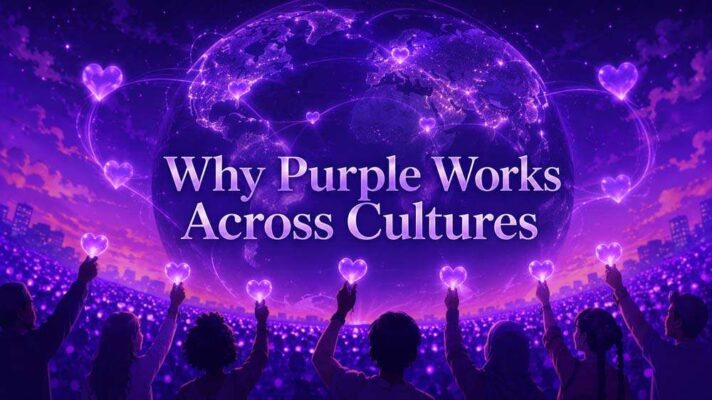
BTS has one of the most globally diverse fandoms in modern music. ARMY includes fans across languages, countries, ages, and cultural backgrounds. That kind of scale can easily make a fandom feel too large to be intimate. Purple helps solve that problem.
A fan in Vietnam, Brazil, Germany, the Philippines, India, South Korea, or the United States may not share the same first language, but a purple heart is instantly legible within ARMY spaces. It functions as a visual translator. Instead of explaining the whole emotional context of BTS and the fandom, fans can use one color to communicate recognition, comfort, loyalty, and shared history.
This is especially important in online fan culture. Social media moves fast. Posts are short. Platforms change. Language can be messy. But symbols travel quickly. A purple heart in a comment section, username, profile bio, fan edit, or livestream chat can immediately signal belonging.
Purple works because it reduces emotional distance. It lets a massive international fandom feel smaller, warmer, and more recognizable. In that sense, it is not just a symbol of BTS. It is a tool ARMY uses to find each other.
Purple as a Daily Fan Ritual
The strongest fandom symbols are not powerful because they appear once. They become powerful because people repeat them in emotionally meaningful settings. Purple appears across BTS fan culture in exactly that way.
It shows up in ARMY Bomb light oceans at concerts, purple heart emojis on social media, birthday cafe events, fan-made banners, themed cupsleeves, handmade gifts, profile pictures, phone cases, tote bags, jewelry, nail art, and subtle clothing choices. It can be part of a massive public concert project or a tiny personal object someone carries in their bag.
That range is important. Purple works at both extremes: it can fill a stadium, but it can also live quietly on someone’s wrist, notebook, or phone charm. It can be collective and private at the same time.
At concerts, purple becomes visible proof of shared presence. A stadium glowing purple is not just pretty lighting. It is thousands of people agreeing, without speaking, that they are part of the same emotional world. Online, the same color becomes a softer kind of signal. A purple heart under a post can mean support, comfort, celebration, or “I’m here too.”
This is how purple stops being decoration. It becomes ritual. Fans do not merely look at the color; they use it to welcome, comfort, recognize, celebrate, and remember.
From Private Feeling to Public Symbol
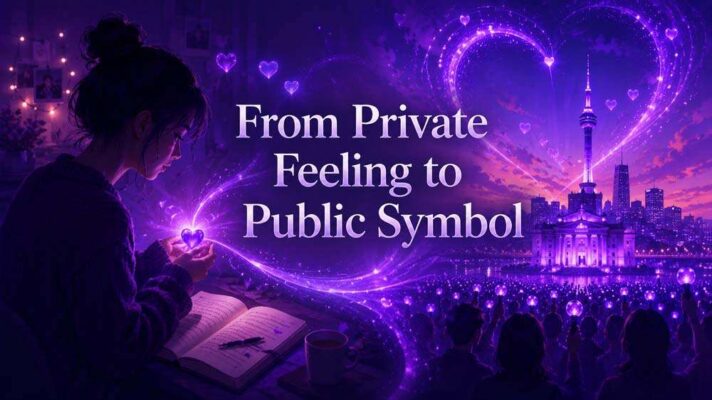
One reason BTS’s purple symbolism has remained strong is that it can move between private fan life and public culture.
In some moments, purple is deeply personal. A fan might use it because BTS helped them through loneliness, burnout, grief, anxiety, or a difficult period of self-doubt. The color becomes attached to a private story that no one else may fully know.
In other moments, purple becomes public. Major BTS-related events have used purple lighting and city-scale displays, such as when landmarks in Busan were illuminated purple around BTS’s 2022 concert and related events. These large-scale moments show how a fandom symbol can move beyond online spaces and become part of a city’s visual atmosphere.
That movement between intimate and public meaning is rare. Many symbols work only as personal references. Others work only as promotional spectacle. Purple works as both. It can be a tiny purple heart in a fan’s bio or an entire bridge glowing violet. In both cases, ARMY understands the emotional code.
This is also why purple belongs beside other long-lasting BTS symbols, such as the 52-Hertz whale as an image of being unheard and Magic Shop as a psychological refuge. Each symbol gives fans a different way to translate emotional experience into something recognizable.
Why Fans Continue Using Purple Years Later
Trends fade when they rely only on novelty. Purple has lasted because it is attached to memory.
For many fans, the color is connected to specific eras of their own lives. It may remind them of the Love Yourself era, when BTS’s music helped them think more deeply about self-worth. It may connect to the introspection of Map of the Soul, the comfort of online concerts, the emotional release of returning to live shows, or the patience required during solo chapters and military service.
In this way, purple does not only represent BTS’s timeline. It also represents the fan’s timeline. People remember who they were when they first discovered the group, what they were struggling with, which lyrics stayed with them, which performances they replayed, and which fan spaces made them feel less alone.
That is why the color still matters even as fans grow older. Adult ARMYs may have different responsibilities now: work, relationships, family, studies, careers, but purple can still carry the emotional memory of what BTS gave them. It becomes a small, stable reminder of a community and a musical catalog that helped them make sense of themselves.
The symbol lasts because it is not frozen in one era. It grows with the people who use it, which is part of why BTS meaning changes as fans grow older instead of staying locked to one specific comeback or life stage.
How Purple Changed Fan Expression
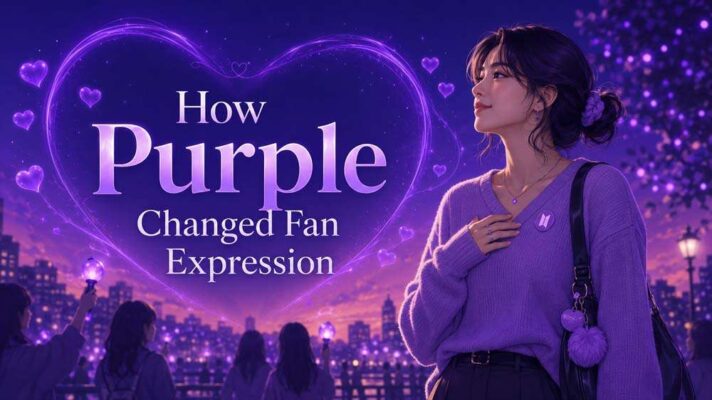
Because purple holds so much internal meaning, it does not need to be visually loud. This is one of the reasons it fits BTS’s adult fandom especially well.
Many fans express their connection through subtle details rather than obvious logos. A lavender sweater, a purple gemstone ring, a small enamel pin, a phone charm, a notebook, a hair clip, or a thin purple thread on a shirt can all function as quiet fandom markers. To someone outside ARMY, these choices may look like ordinary personal style. To another fan, they can communicate recognition instantly.
This creates a form of fandom expression that fits real adult life. Fans can carry the symbol into offices, hospitals, airports, classrooms, cafes, and daily routines without needing to explain themselves. Purple becomes a low-friction identity marker: visible to those who understand it, invisible or neutral to those who do not.
That subtlety is part of its emotional intelligence. BTS fan culture is often discussed through scale: huge numbers, huge stadiums, huge online activity. But purple shows the smaller side of fandom: the quiet object, the private signal, the small reminder that helps someone feel connected during an ordinary day.
This is why purple naturally fits into workplace-safe fandom, where adult fans use small visual cues to keep BTS close without turning every outfit into a public announcement.
Why Purple Avoids Becoming Just Merchandise
The risk with any fandom symbol is commercialization. Once a color becomes popular, it can be printed on products, sold repeatedly, and flattened into an aesthetic. Purple has certainly become part of BTS-related merchandise and fan-made goods, but its meaning has not been reduced to shopping.
The reason is that ARMY’s use of purple is not dependent on official products. Fans can create the symbol themselves with a heart emoji, a handmade banner, a cafe cup sleeve, a ribbon, a lightstick project, or a simple clothing choice. The meaning does not require a purchase. It requires recognition.
That is what protects purple from becoming only a commodity. Its emotional value comes from shared memory, not from ownership of an object. A fan does not need the rarest item or most expensive merchandise to participate in the symbol. A single purple heart can be enough.
This makes purple unusually democratic as a fandom language. It belongs to fans with different budgets, countries, ages, and levels of visibility. It can be grand, but it does not have to be expensive. It can be public, but it does not have to be loud.
For the same reason, purple also explains why symbolic BTS designs can feel more personal than loud merch. A small color cue can carry emotional history without needing a large logo to prove its meaning.
Conclusion
Purple persists in BTS fan culture because it answers a basic human need: the desire to belong without having to explain everything.
Its power comes from origin, repetition, and memory. V gave the color a meaning. ARMY repeated it until it became a shared language. Years of concerts, lyrics, online spaces, fan projects, waiting periods, and personal growth turned it into something deeper than a fandom color.
That is why purple remains one of the most meaningful symbols in BTS culture. It is not only associated with a famous group. It carries the feeling of being seen by the music, recognized by a community, and connected to a promise that was always about lasting trust.
Purple is not just the color of BTS fandom. It is the color ARMY uses when words are too small for the history behind them.